





Georgian Mantle Clock
A georgian mantle clock is a heavy timber and brass timepiece that anchors a room with mechanical precision and centuries of presence.
Georgian Mantle Clock
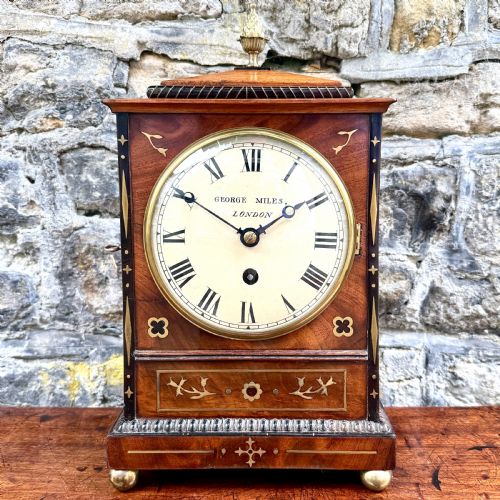
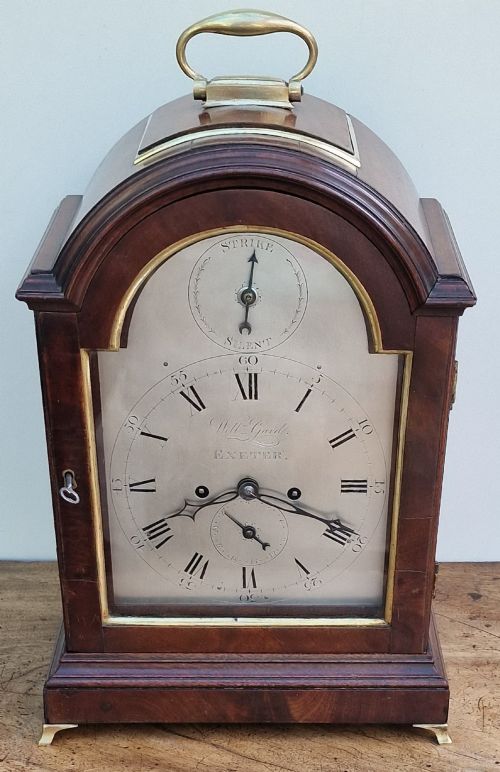
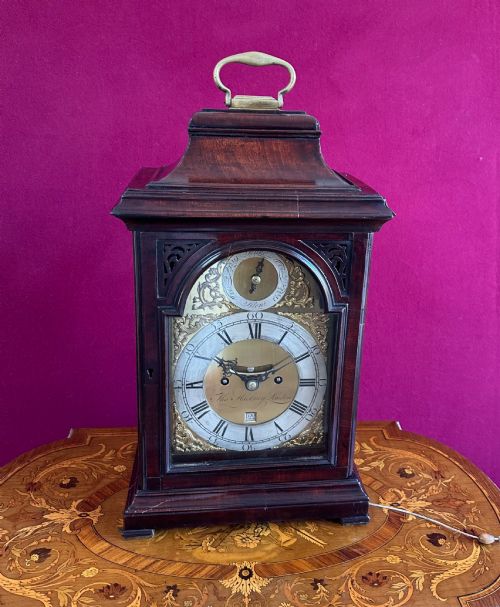
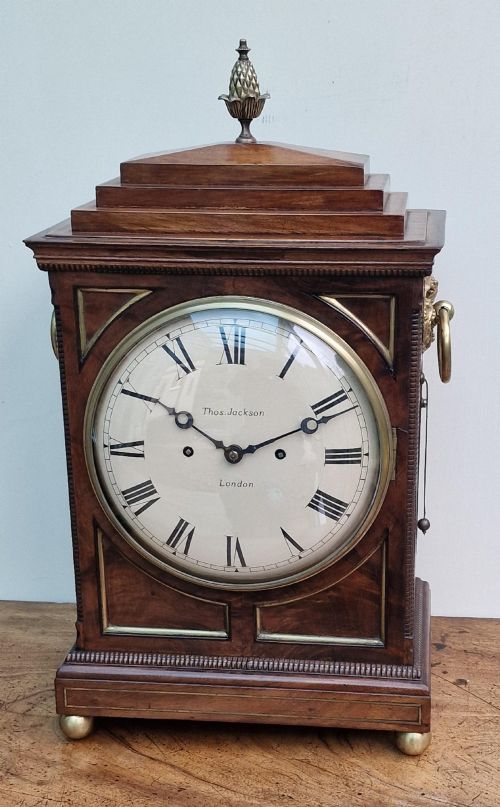
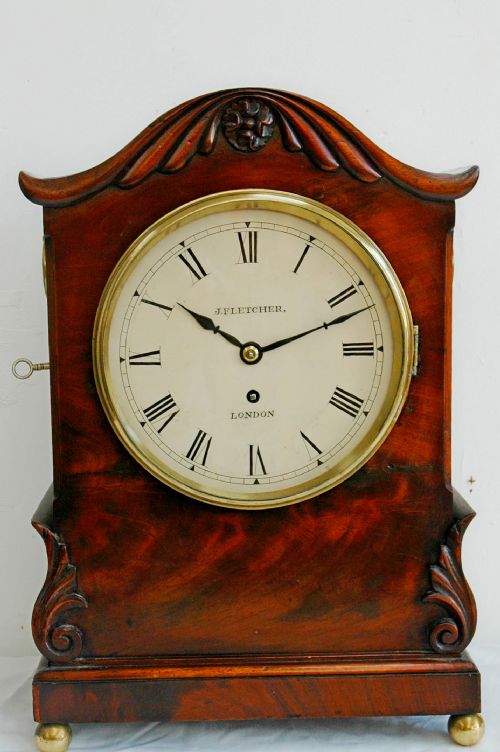
When you search for a georgian mantle clock, you encounter wooden timepieces built across the eighteenth and nineteenth centuries, including items styled in later revival periods. The most frequent pieces on this page are mahogany bracket clocks featuring brass dial work and fusee movements.
Makers housed these mechanisms in mahogany, walnut, and ebonised wood cases shaped with bell tops, pad tops, or lancet arches. Many examples originate from London workshops, alongside pieces from regional makers across England and Scotland.
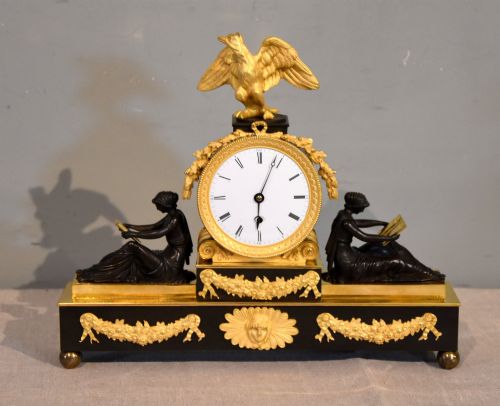
The form encompasses portable bracket clocks designed for tables and library desks, alongside architectural mantel pieces meant to sit stationary on a hearth or sideboard.
Materials and Construction
Craftsmen built these cases primarily from solid and veneered mahogany, frequently accented with brass inlay, silk panels behind sound frets, and polished glass viewing panels. Ebonised wood and burr walnut also appear, providing deep dark tones or rich grain patterns across the wooden bodies.
The interior mechanical work relies on brass plates, wheels, and escapement components driven by fusee cord or chain mechanisms. Enamel dials carry the painted numerals, often paired with finely pierced steel hands.
Several examples on this page include alarm mechanisms, ensuring that even a distinguished library clock could rouse a sleeping owner.
Judging Quality and Execution
The refinement of the brass dial engraving and the crispness of the timber mouldings distinguish superior pieces from standard workshop output. Heavy cast brass carrying handles, well-proportioned brass feet, and neatly executed fretwork demonstrate a higher standard of manufacture.
Movement complexity and signature quality elevate certain items above others. Twin fusee striking trains, signed backplates, and original verge or anchor escapements reflect the tier of the maker who originally retailed the clock.
Mappin & Webb·L. Vick of Stroud·Webster Cornhill London·Cording of London·Somersall London·Chater & Son London·John Leroux London·Perigal & Duterrau·John Fletcher London·Watson London·James Evans·Isaac Hurley London·Ganthony of London·Adams of Lombard Street·Vulliamy·Baldwin of Loughborough·Mitchell & Russell of Glasgow·Winterhalder & Hoffmeier·John Scandrett of Worcester·William Gard Exeter
The Georgian Mantle Clock Glossary
- Fusee
- A conical pulley used in clock movements to maintain an equal pull as the mainspring unwinds. This device ensures more accurate timekeeping throughout the duration of the winding period.
- Bracket clock
- A portable tabletop clock originally designed to sit on a wooden wall bracket. These timepieces typically feature a handle on top for carrying between rooms.
- Verge escapement
- An early type of clock escapement mechanism that controls the release of the gear train. It relies on a crown wheel and a vertical rod with pallets to regulate the beat.
- Bell top
- A stylistic form of clock case roof shaped with a smooth curved dome reminiscent of a church bell. This silhouette was particularly popular during the eighteenth century.
- Ebonised wood
- Timber treated with a dark stain or finish to imitate the appearance of ebony. Makers used this technique to create high-contrast black framing around brass dials.
Georgian Mantle Clock: Frequently Asked Questions
How do I wind a fusee movement?
You insert the winding key into the dial aperture and turn it clockwise until the chain or cord is fully drawn up the conical fusee. Care must be taken not to overwind the mechanism.
Most eight-day movements require this action once a week to maintain accurate timekeeping across the brass gear train.
Where were these clocks placed originally?
These clocks were designed for placement on wooden brackets mounted to walls, or set directly upon tabletops, mantelpieces, and desks. Their portable nature allowed owners to move them between rooms as needed.
The brass handle fitted to the top of many bracket clocks facilitated this movement around the house.
What is the difference between a bracket clock and a mantel clock?
Historically, a bracket clock referred to a portable spring-driven timepiece with a carrying handle, built to rest on a wall bracket or table. Mantel clock is a broader term encompassing later nineteenth-century designs intended specifically for a fireplace mantel.
In modern usage, the terms often overlap when describing wooden table timepieces from the Georgian and Regency periods.
How do I identify a Georgian period piece?
You examine the timber species, case proportions, dial materials, and signature styles typical of the eighteenth and early nineteenth centuries. Mahogany and ebonised woods with hand-painted enamel dials and cast brass mounts are common indicators.
Internal movements featuring verge or early anchor escapements further point toward these earlier manufacturing dates.