


Georgian Mahogany Looking Glass
A Georgian mahogany looking glass brings warmth and depth to a room, reflecting light through centuries of timber work.
Georgian Mahogany Looking Glass
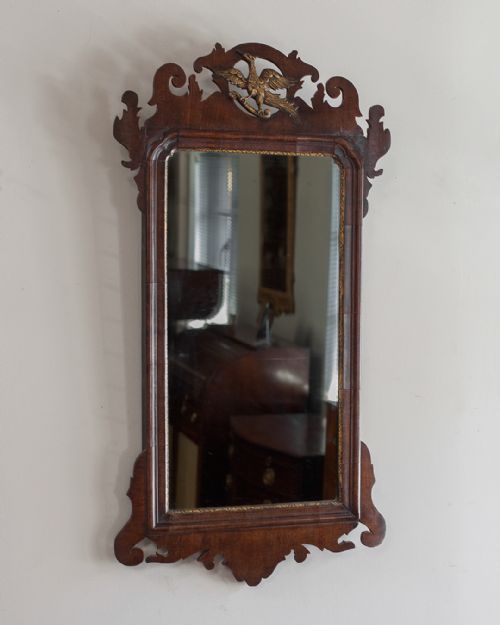
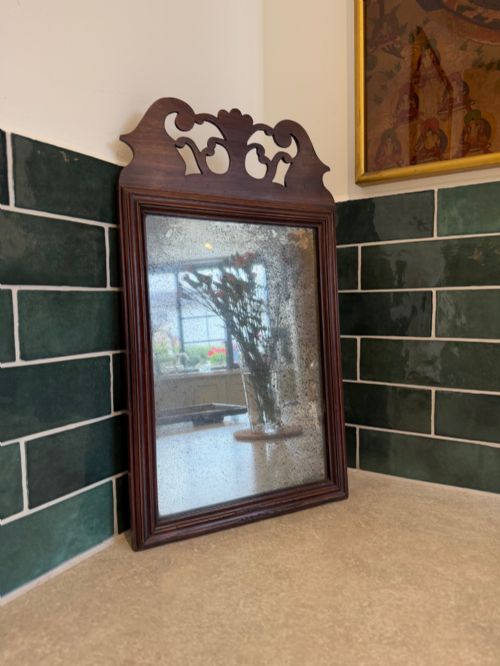
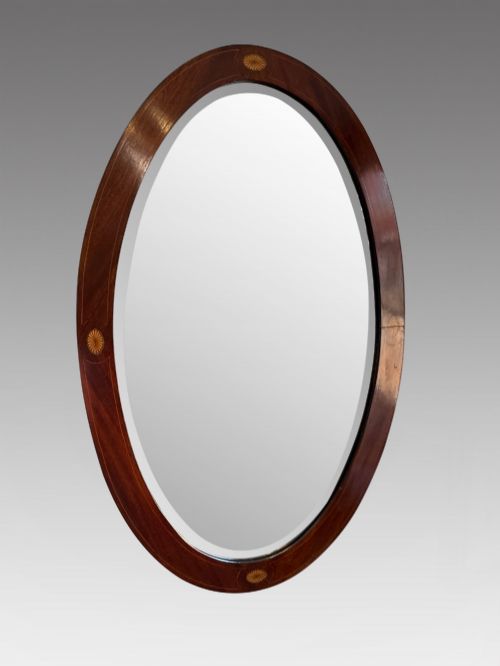
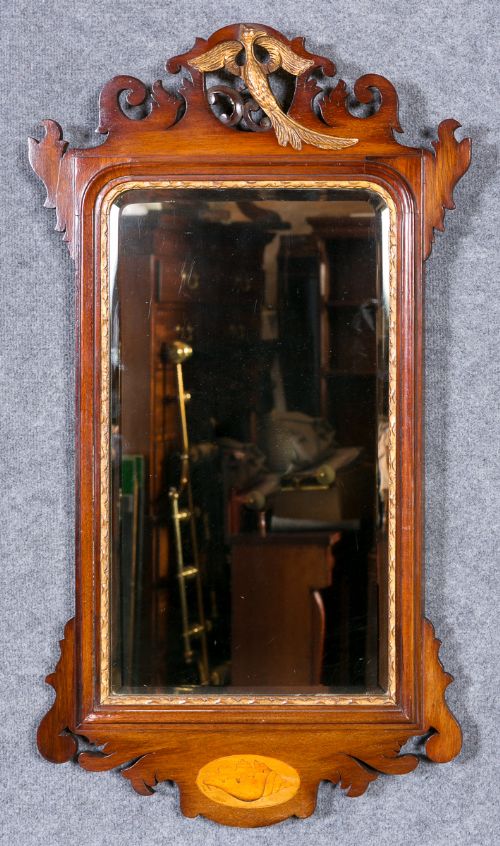
When you search for a georgian mahogany looking glass, you are looking at wall mirrors and dressing glasses made in rich timbers during the eighteenth and nineteenth centuries, alongside later revival pieces. The version you are most likely to meet on this page is a wall-hanging mirror framed in mahogany, often featuring fretwork or inlay.
The evidence shows examples spanning from the eighteenth century through the Regency period and into Edwardian and later revivals. These pieces function primarily as wall mirrors, designed to hang in reception rooms and hallways to brighten interiors.
Makers and craftsmen across these periods drew on Georgian and Chippendale styles, utilising the deep reddish-brown tones of the wood to anchor decorative schemes. Alongside standard wall mirrors, the record includes pier mirrors and overmantle designs that demonstrate the enduring appeal of the form.
How they were made
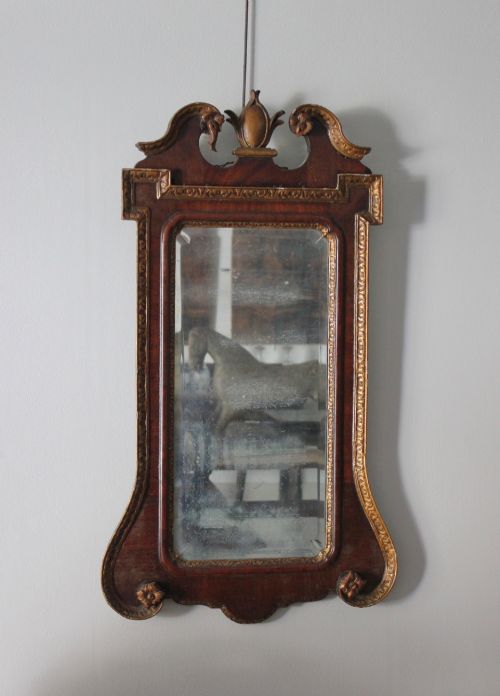
Cabinetmakers constructed these looking glasses using solid mahogany and mahogany veneers, frequently pairing the warm timber with gilded wood accents or giltwood mouldings. Artisans shaped the frames with fretted outlines or embellished them with delicate satinwood inlay.
Mirror glass was set within these timber frames, sometimes accompanied by marquetry details or architectural pediments. The combination of carved mahogany and reflective glass required precise joinery to ensure the frames held their shape over centuries.
Listings span the eighteenth century, the Regency era, and the Edwardian period, uniting wall mirrors in mahogany, giltwood, and satinwood inlay.
What varies in quality
The distinction between ordinary and exceptional looking glasses lies in the crispness of the fretwork and the depth of the timber grain. Finer examples display meticulous attention to proportion and carving, where every scroll and edge is rendered with intent.
Quality also rests in the preservation of the original materials, from the warmth of the aged mahogany to the character of the mirror plate. Pieces that retain their historic gilding and cohesive structure stand apart from later interpretations.
The Georgian Mahogany Looking Glass Glossary
- Fret mirror
- A wall mirror featuring an intricate silhouette sawn from thin boards, popular during the eighteenth century. This style often incorporates scrolled ears and pierced crests.
- Pier mirror
- A tall wall mirror designed to hang on the wall space between windows. These pieces frequently feature gilt wood details alongside mahogany framing.
- Overmantle wall mirror
- A wide mirror designed to sit directly above a fireplace mantelpiece. They often combine mahogany veneer with gilt decoration.
- Marquetry
- The art of applying decorative pieces of veneer to a structure to form intricate patterns. This technique frequently employs contrasting timbers like satinwood on a mahogany ground.
- Giltwood
- Wood that has been coated with gold leaf or gold paint to provide a bright finish. It appears alongside mahogany on mirrors from the Georgian period onward.
Georgian Mahogany Looking Glass: Frequently Asked Questions
Where should I hang a Georgian mahogany looking glass?
These mirrors suit hallways, living rooms, and bedrooms where they can reflect natural light and create a sense of space.
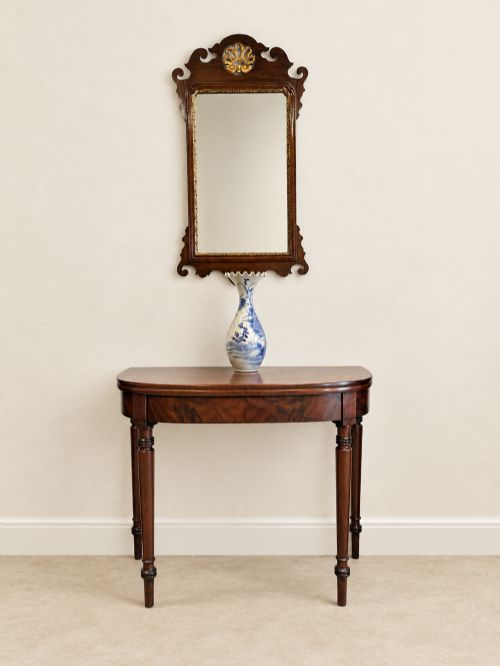
Hang them at eye level above a console table or mantelpiece to let the timber frame act as a focal point in the room.
How do I tell an 18th-century mirror from a later revival?
Eighteenth-century mirrors typically exhibit hand-cut construction details, older mirror plates with slight distortion, and timber that has oxidised deeply over time.
Revival pieces from the Edwardian era or the early twentieth century often show more uniform machine-sawn backing boards and cleaner, less variable glass.
What is the difference between a wall mirror and a pier mirror?
A standard wall mirror is proportioned to hang on any open wall space to provide reflection and decorative balance.
A pier mirror is traditionally taller and narrower, specifically scaled to fit the narrow expanse of wall between two windows.
Did these mirrors always have gilded details?
Many Georgian and Regency looking glasses combined dark mahogany with gilded wood accents, particularly on inner bezels and carved crests.
However, plain mahogany frames without any gilt decoration were also common, relying entirely on the figure of the wood for visual interest.