
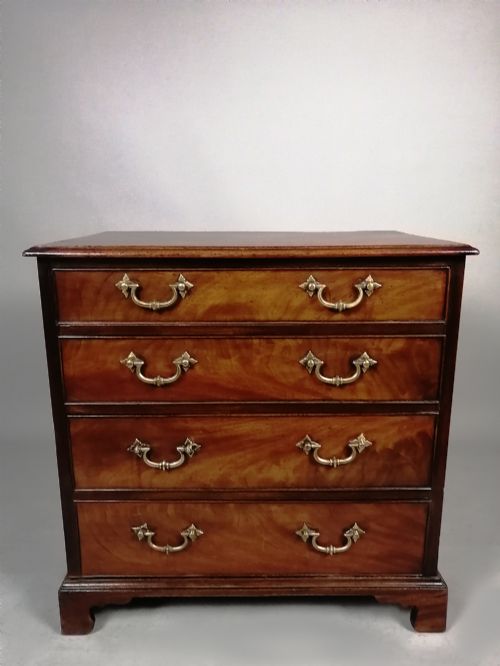
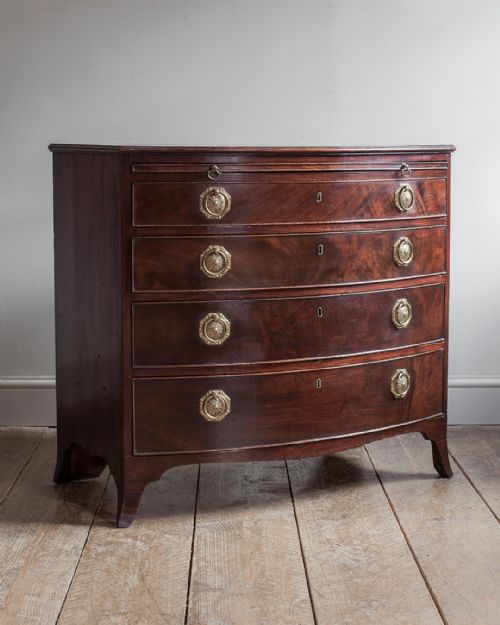
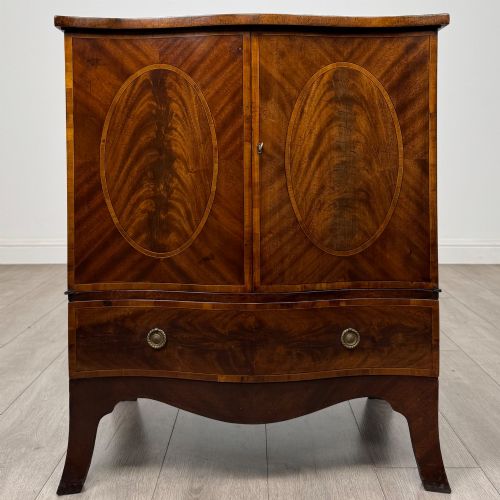

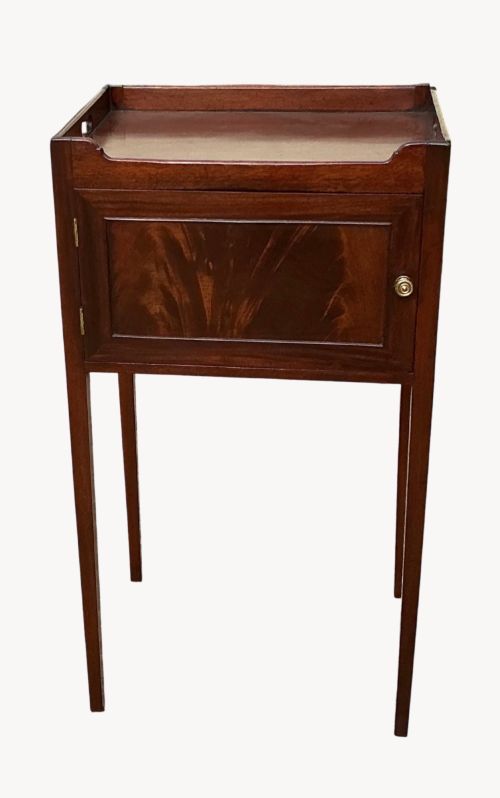
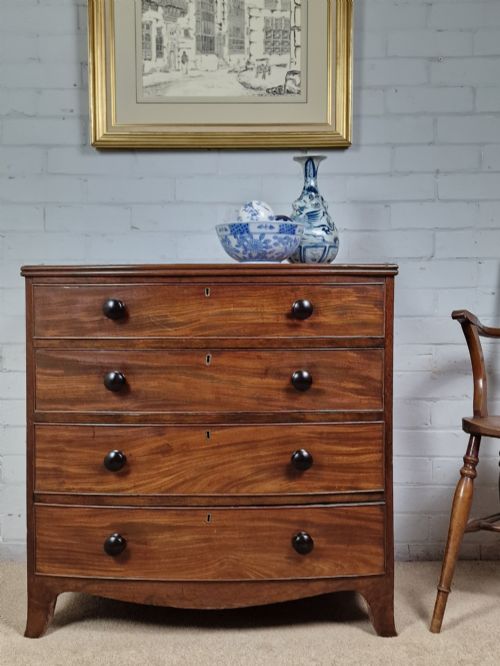
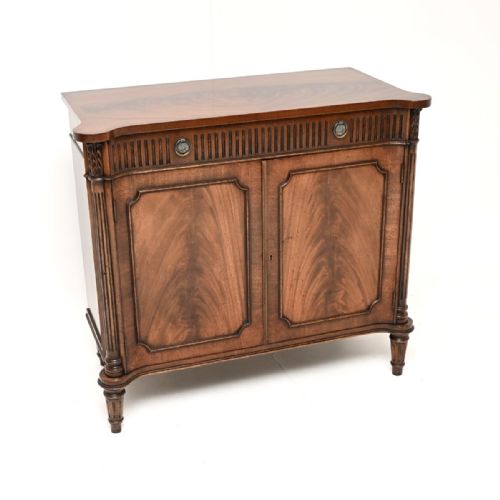
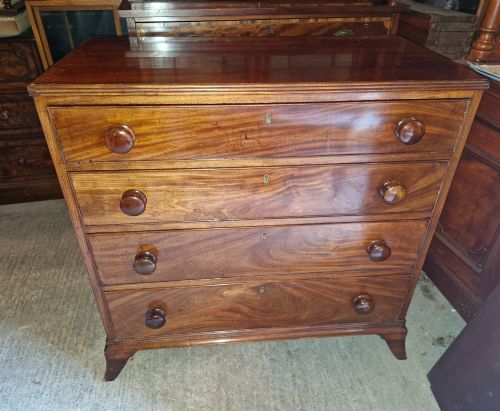
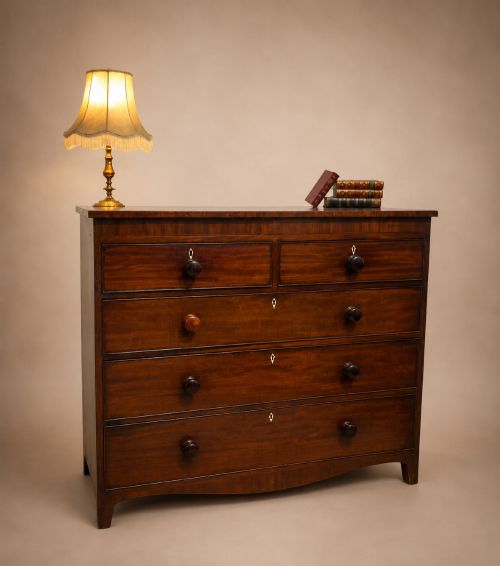
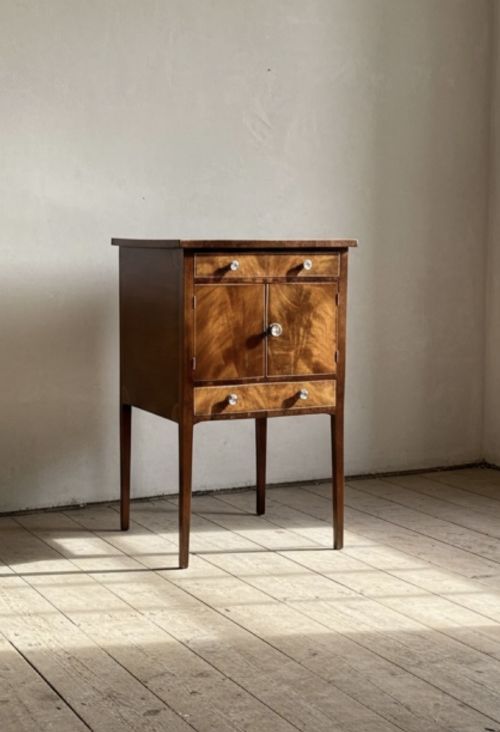

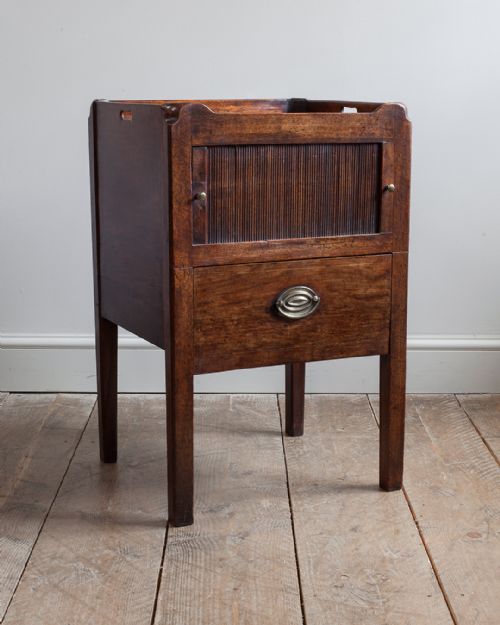
Georgian Mahogany Commode Cabinet
A georgian mahogany commode cabinet brings rich timber tones and functional storage to a room, offering classic proportions that suit period and modern interiors alike.
Georgian Mahogany Commode Cabinet
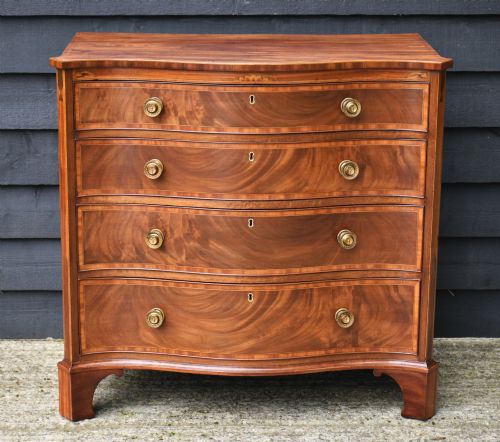
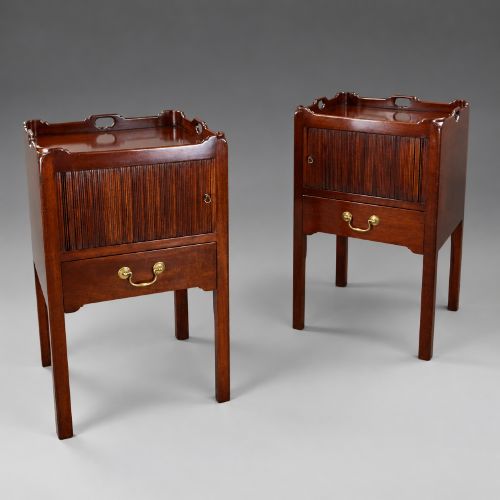
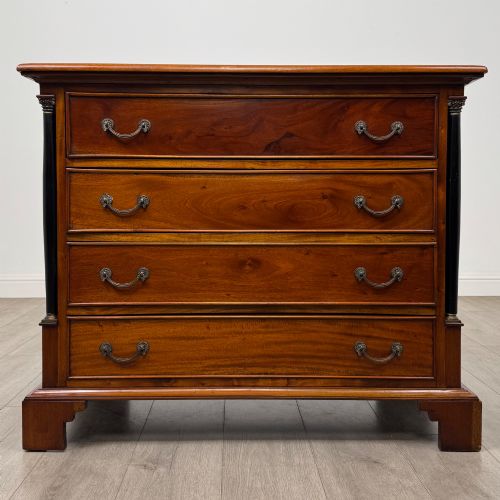
When you search for a georgian mahogany commode cabinet, you encounter versatile case furniture spanning the eighteenth and nineteenth centuries, including bedside tables, pot cupboards, and compact nightstands. These pieces range from simple functional bedroom fittings to serpentine chests of drawers and tambour front commodes.
The examples gathered here trace origins through the Georgian, George III, and Regency periods, alongside later Edwardian revivals. Most commonly, you find bedside cabinets and chests of drawers intended for private chambers, often displaying characteristic bow fronts or tray tops.
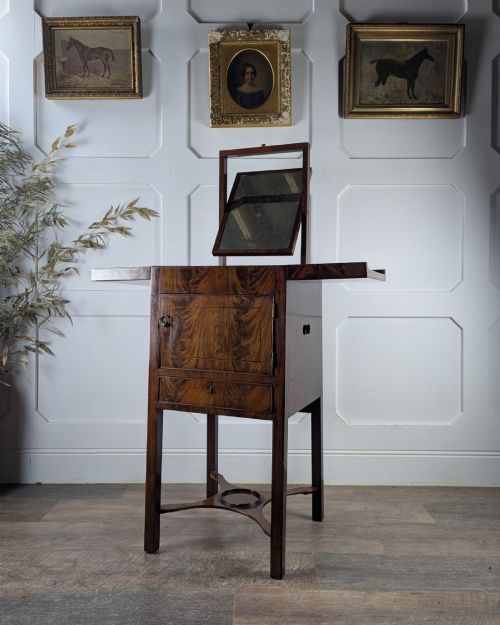
Makers of the period designed these cabinets to serve discrete domestic functions, such as housing wash basins or chamber pots behind panelled doors. Today, buyers utilise them as lamp tables or small side cabinets in reception rooms.
Materials and Construction
Cabinet makers relied primarily on solid mahogany and flame mahogany veneers, frequently enhanced with secondary timbers like oak and boxwood stringing. Workshops selected dense Cuban mahogany for its deep grain and resilience, applying veneer over stable pine or oak carcases.
Surface decoration often incorporated brass handles, escutcheons, and subtle inlay work to define drawer edges and cabinet doors. Skilled joiners constructed drawers with hand-cut dovetails, ensuring durability across centuries of opening and closing.
Listings feature eighteenth and nineteenth century mahogany, supported by brass hardware, satinwood inlay, and oak secondary timbers across various chest and cabinet forms.
Assessing Quality
Quality rests in the selection of timber figures, where book-matched flame mahogany veneer creates striking symmetrical patterns across drawer fronts and top surfaces. Plain, utility-grade boards sit at the lower end, while highly figured Cuban timber denotes superior workshop output.
The crispness of mouldings, the tightness of dovetail joints, and the retention of original brass hardware distinguish master craftsmanship from provincial output. Furthermore, pieces that retain their original polish and structural integrity without excessive timber replacement hold greater aesthetic authority.
The Georgian Mahogany Commode Cabinet Glossary
- Commode
- A low cabinet or chest of drawers, often containing concealed compartments or designed to enclose a chamber pot. In eighteenth-century usage, the term applied to various elegant bedside and standing cupboards.
- Tambour
- A flexible shutter door formed of narrow vertical strips of wood glued to canvas backing. It slides smoothly within grooved tracks to conceal interior shelving.
- Tray top
- A raised rim around the upper edge of a small table or cabinet designed to prevent items from rolling off. This feature appears frequently on eighteenth-century bedside commodes.
- Serpentine
- A front outline curving outward in the centre and inward at the sides, demanding high skill from the cabinet maker. It creates a flowing, undulating visual rhythm.
- Caddy top
- A tabletop with a moulded edge resembling the lid of a tea caddy. It sits neatly upon the upper framework of chests and cabinets.
Georgian Mahogany Commode Cabinet: Frequently Asked Questions
How were these cabinets used originally?
Original uses centred on the private dressing room or bedroom, where they functioned as nightstands, washstands, or enclosures for chamber pots. Their enclosed cupboards kept intimate domestic items discreetly out of sight.
Over time, changing domestic habits transformed these practical items into decorative accent furniture. Today, owners repurpose them as lamp tables, hallway storage, or bedside tables.
How do I spot a George III piece?
George III furniture typically displays restrained classical proportions, premium mahogany timbers, and meticulous hand-cut joinery. Look for subtle architectural mouldings and original brass drop handles that reflect eighteenth-century taste.
Later Victorian and Edwardian revivals often mimic these forms but tend to use different secondary woods and heavier interior construction methods.
Will a bedside cabinet fit modern lamps?
Most Georgian bedside cabinets offer sufficient surface area for standard reading lamps and small decorative items. Their compact square or rectangular tops accommodate modern lighting without cluttering the surface.
It remains wise to check the depth and height dimensions of the specific top surface against your intended lamp base before purchasing.
Are tambour doors difficult to maintain?
Tambour doors operate on vertical wooden slats backed by fabric running in internal tracks. They require gentle handling and occasional cleaning of the tracks to prevent sticking.
When properly waxed and kept away from extreme humidity, these flexible doors slide smoothly and function reliably for decades.