

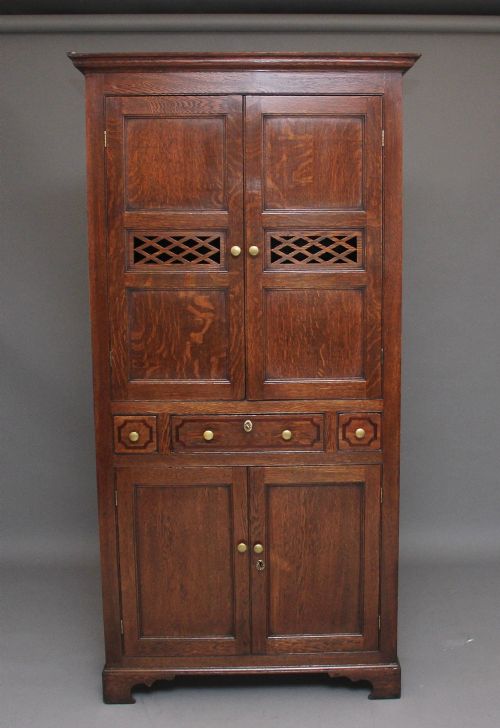

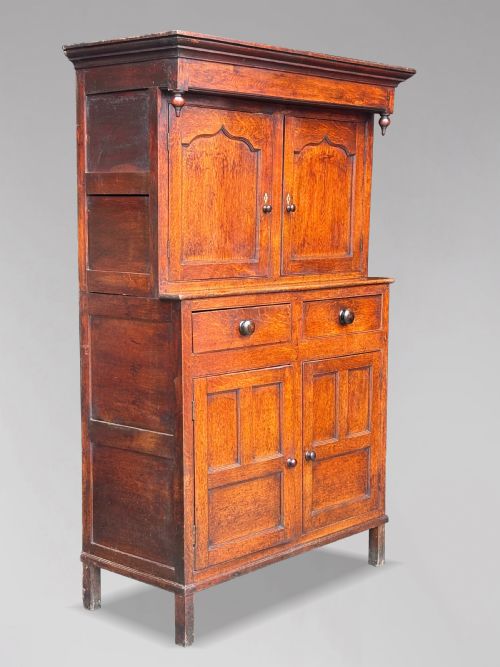


Georgian Livery Cupboard
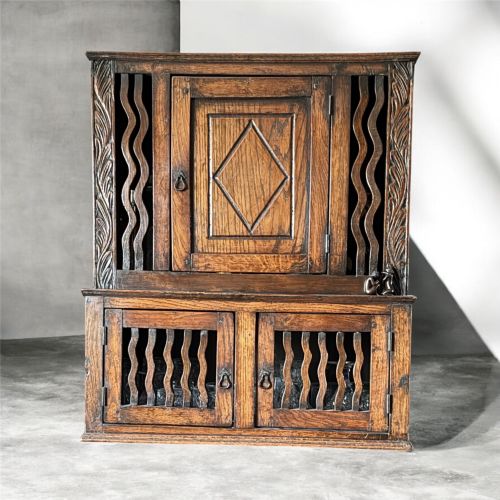
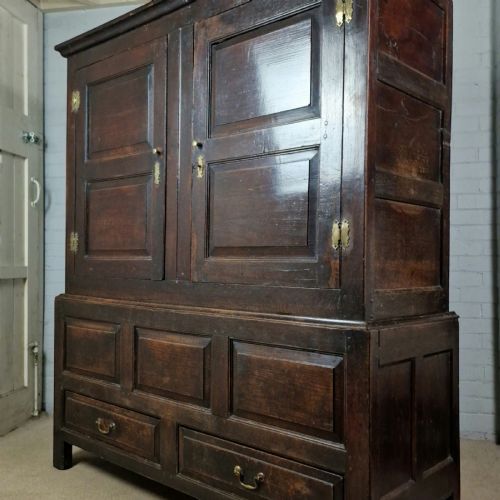
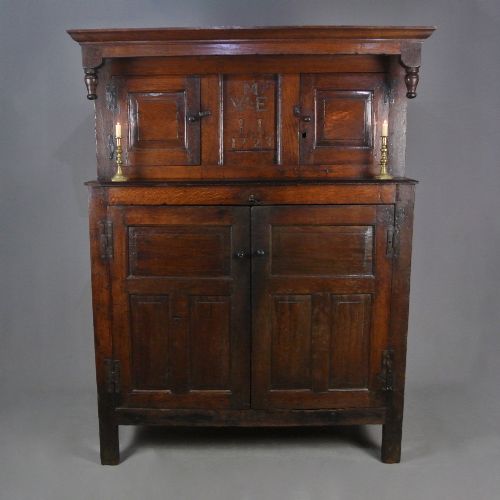
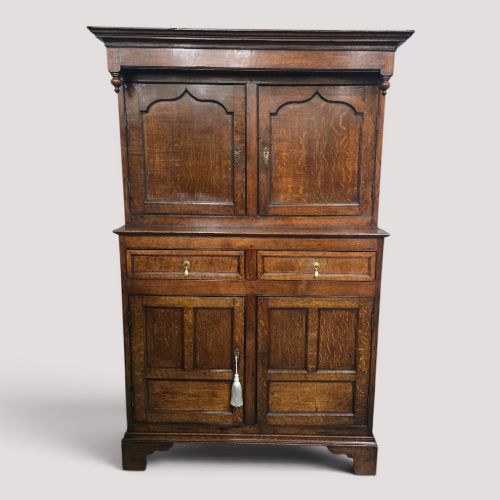
These robust pieces are a georgian livery cupboard, built to store provisions and textiles in traditional households.
Georgian Livery Cupboard
A georgian livery cupboard is a substantial storage furniture piece originating primarily in domestic country settings during the eighteenth and early nineteenth centuries. These items serve to hold household items like food, linens, and garments securely within panelled enclosures.
The versions most commonly met on this page span the eighteenth century and the early nineteenth century, heavily representing regional variations such as Welsh vernacular and English country styles.
Makers constructed these cabinets using sturdy native timbers, frequently incorporating hanging sections, press compartments, and court cupboard formats to accommodate varying domestic storage requirements.
How they were made
Carpenters built these cupboards primarily from solid oak, utilising traditional frame and panel construction to accommodate the natural movement of timber over time. Joinery relied on pegged tenons and mortises rather than modern mechanical fasteners.
Hardware such as hinges, latches, and escutcheons were fashioned from iron and brass, securing heavy doors and providing functional contrast to the dark timber grain.
Georgian Livery Cupboard Retail Price Guide 2026
Typical asking prices for georgian livery cupboard among the pieces listed under this phrase on Sellingantiques today, from the lower quarter to the upper quarter. They describe what is for sale here now, not the wider market.
The listings on this page span the eighteenth and nineteenth centuries, featuring oak as the dominant material alongside brass and iron hardware.
What varies in quality
The standard of a georgian livery cupboard rests on the architectural ambition of its carved decoration, the depth of colour in the timber, and the integrity of its original regional form. Pieces showing untouched surface patination and crisp moulding details command greater respect among collectors than heavily altered examples.
Proportion and structural balance also dictate worth, as provincial makers frequently adapted traditional court cupboard or deuddarn designs to suit local domestic spaces with varying degrees of success.
The Georgian Livery Cupboard Glossary
- Livery cupboard
- A traditional storage cabinet originally used to keep provisions, candles, and clothing. These pieces often feature panelled doors and internal shelving.
- Court cupboard
- An antique cabinet divided into upper and lower sections, commonly associated with seventeenth and eighteenth-century vernacular design. They frequently display carved friezes and recessed upper stages.
- Deuddarn
- A traditional Welsh two-tier cupboard used for storing household linen and food. These regional pieces often incorporate open shelves or panelled doors in the upper section.
- Linen press
- A tall storage cabinet featuring sliding trays or shelves in the upper section for folded textiles, paired with drawers or cupboards below. They are closely related in form to larger livery and press cupboards.
- Vernacular
- Architecture and furniture built by local craftsmen using regional traditions and native materials rather than high-style metropolitan designs. This approach defines much of the country oak furniture seen here.
Georgian Livery Cupboard: Frequently Asked Questions
How were these cupboards used?
These cupboards served as secure storage for perishable foods, household provisions, and valuable textiles before fitted kitchen cabinetry existed. Ventilation was often integrated through turned spindles or pierced panels to keep stored items fresh.
In larger country houses and farmhouses, they acted as central organizational points for domestic life. They kept daily necessities protected from household pests and dust.
Where were these cupboards made?
These pieces originate from various regional workshops across England and Wales. Provincial cabinet makers used native timber available in their immediate surroundings.
Distinct local styles emerged, such as the Welsh deuddarn or English country court cupboards. Each region developed specific carving motifs and structural proportions.
How do I live with a country oak cupboard?
Living with an antique oak cupboard involves placing it away from direct heat sources and drastic humidity changes to protect the timber. Regular treatment with appropriate natural waxes helps maintain the surface finish and rich colour.
These substantial pieces anchor a room visually, functioning well in dining spaces, hallways, or kitchens for storing tableware and linens.
How do I tell different periods apart?
Differentiating periods relies on observing shifts in decorative style, construction methods, and hardware. Earlier pieces from the early eighteenth century often display heavier proportions and geometric mouldings.
Later eighteenth-century and nineteenth-century examples incorporate refined classical details, lighter framing, and different combinations of brass and iron hardware.