





Georgian Lattice Chair
A georgian lattice chair brings architectural openwork backs and disciplined proportion straight into a dining room or study.
Georgian Lattice Chair
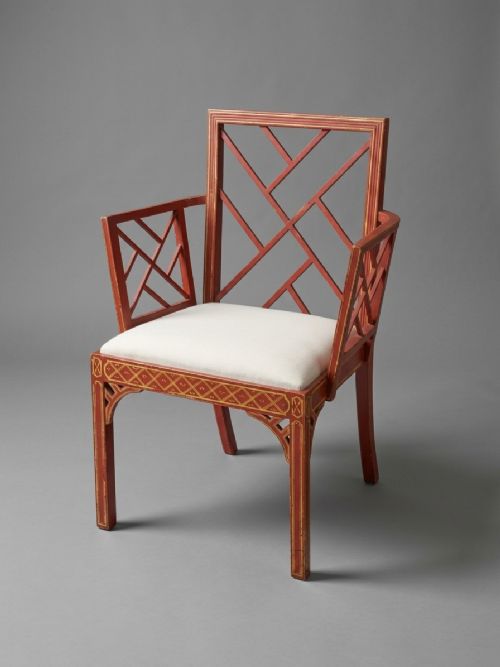
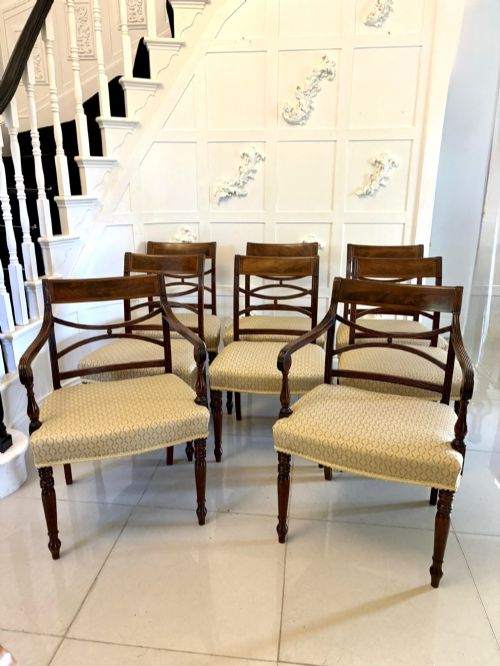
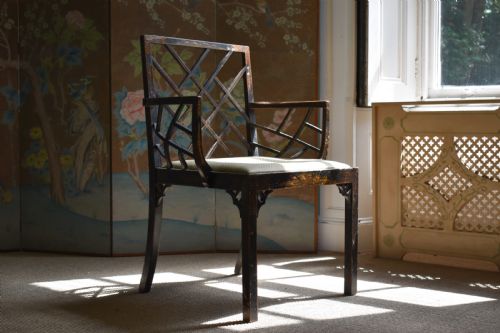
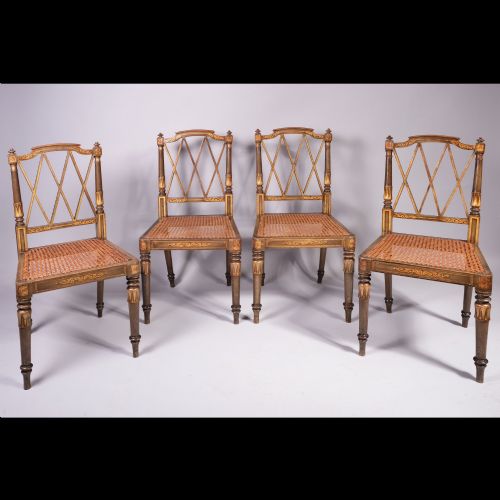
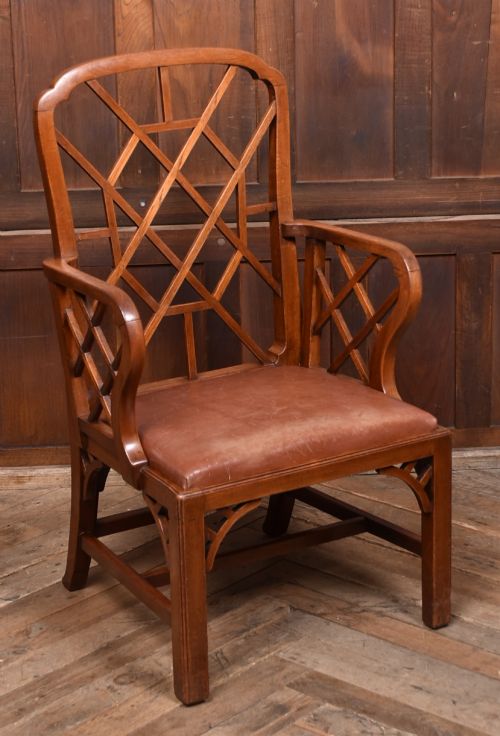
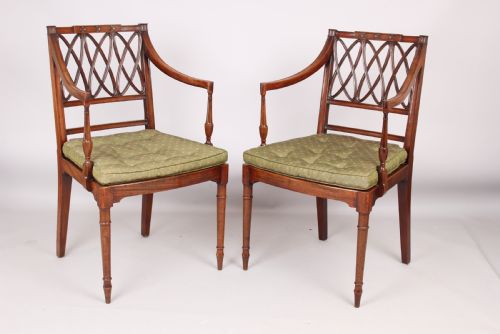
A georgian lattice chair sits among dining chairs and armchairs defined by open fretwork or interlaced splats in the backrest. These pieces draw on eighteenth-century vocabulary, appearing here across authentic periods as well as later revivals.
The versions met on this page range from George III originals to Chippendale Revival pieces, Regency interpretations, and Edwardian nods to Chinese Chippendale. Mahogany dominates the selection, accompanied by occasional elm, painted finishes, and ebonised wood.
Makers and workshops of various eras adopted these geometric pierced designs for both single elbow chairs and large sets of dining chairs. The forms balance structural rigidity with intricate woodwork that mimics woven ribbon or Chinese fretwork.
Materials and construction
Makers relied primarily on dense mahogany to achieve the slender, load-bearing members required for intricate lattice splats without snapping under weight. Elm and ebonised wood also appear where local tradition or specific stylistic whims demanded alternative grain patterns.
Joinery depended on precise mortise and tenon connections within the back frame and seat rail, often augmented by hand-carved details or applied lacquer and gold leaf. Upholstered drop-in seats covered in fabric, leather, or textile completed the structural assembly.
Georgian Lattice Chair Retail Price Guide 2026
Typical asking prices for georgian lattice chair among the pieces listed under this phrase on Sellingantiques today, from the lower quarter to the upper quarter. They describe what is for sale here now, not the wider market.
Assessing craftsmanship
Quality rests in the crispness of the fretwork carving and the depth of the timber grain rather than surface ornamentation alone. Superior examples maintain tight, unyielding joints where the pierced splat meets the top rail and seat.
The transition from eighteenth-century originals to later revivals introduces variance in timber selection and hand-shaping subtlety. Finer chairs exhibit careful proportioning in the rake of the back legs and the smoothness of the interior fret edges.
Thomas Chippendale·Brights of Nettlebed
The Georgian Lattice Chair Glossary
- Lattice splat
- The central vertical member of a chair back pierced and carved to resemble an open grid or geometric trellis. This element provides the visual anchor for the entire seat.
- Chippendale
- A style originating from the designs of Thomas Chippendale characterised by elaborate fretwork, ribbon-backed motifs, and robust cabriole or straight legs. It heavily influenced nineteenth and twentieth-century revival pieces.
- Cockpen
- A specific form of Chinese-inspired lattice chair featuring an open gridwork arm and back design derived from eighteenth-century Anglo-Chinese furniture. These pieces often utilise ebonised or lacquered wood.
- Elbow chair
- A traditional British term for an armchair, typically designed as part of a dining set to sit at the head of the table. They share the vocabulary of the smaller side chairs but add structural arm supports.
- Drop-in seat
- A removable wooden frame upholstered in textile or leather that drops into a rebate inside the chair seat rails. This construction method allowed for straightforward recovering over generations of use.
Georgian Lattice Chair: Frequently Asked Questions
How do I spot a revival piece?
Revival pieces often display machine-tooled precision in the fretwork and utilise timber seasoning methods inconsistent with the eighteenth century. Examining the underside of the seat rail and block construction reveals the true manufacturing era.
Later copies from the Edwardian period or nineteen-hundreds also tend to feature standardised dimensions compared to the slight irregularities found in genuine period furniture.
Were these chairs meant for everyday dining?
Original examples served wealthy households in formal dining rooms, where sturdy mahogany construction easily withstood daily use. The open lattice design provided lightweight strength without sacrificing the rigid support expected at the table.
Over time, many sets were dispersed, leading to the mixed groupings and partial sets frequently encountered today.
How should I care for antique upholstery?
Leather and textile seat covers benefit from gentle cleaning appropriate to their specific material without harsh chemical intervention. Keeping the chairs away from direct sunlight preserves both the fabric and the underlying timber finish.
Checking the drop-in frame stability periodically ensures the wood surrounding the upholstery does not suffer from undue strain.