





Georgian Lacquered Furniture
Georgian lacquered furniture brings orientalist elegance into British rooms, offering painted surfaces and gilded detail that elevate everyday storage and display.
Georgian Lacquered Furniture
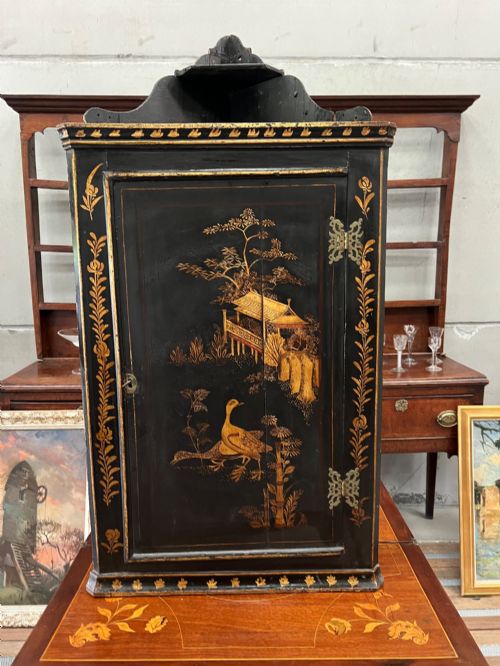
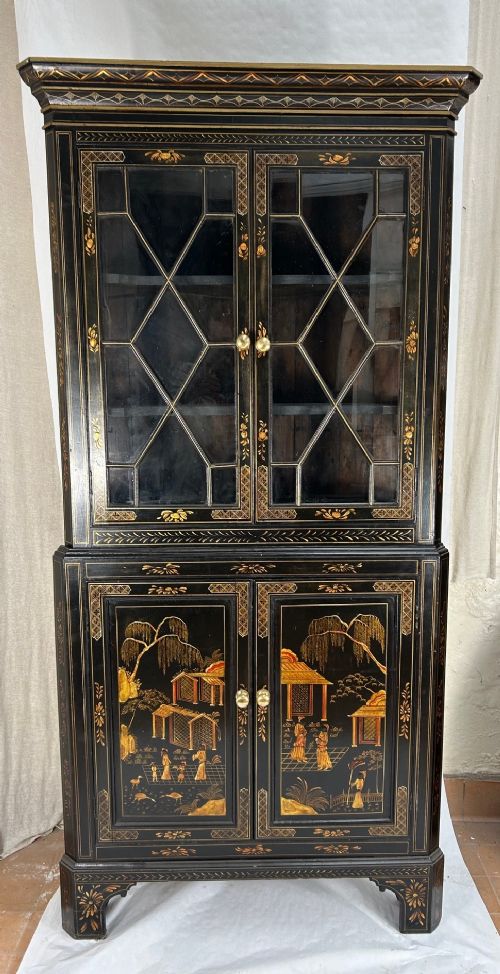
When buyers search for georgian lacquered furniture, they encounter a range of forms designed for display and utility, spanning corner cabinets, bureau bookcases, and games tables. These objects reflect a long-standing British fascination with eastern design motifs, adapted through local cabinet-making traditions across the eighteenth century and later revivals.
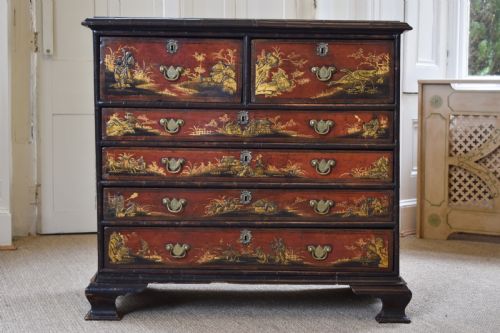
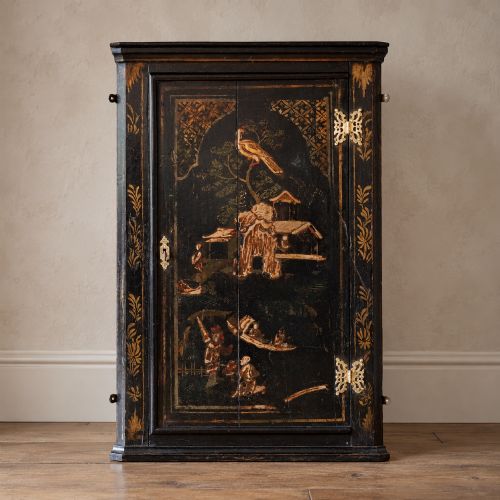
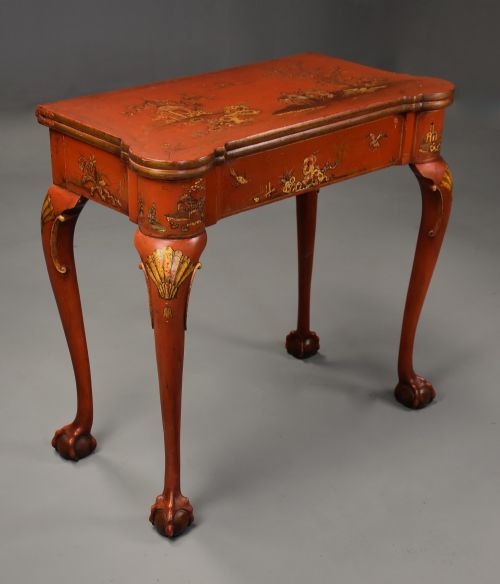
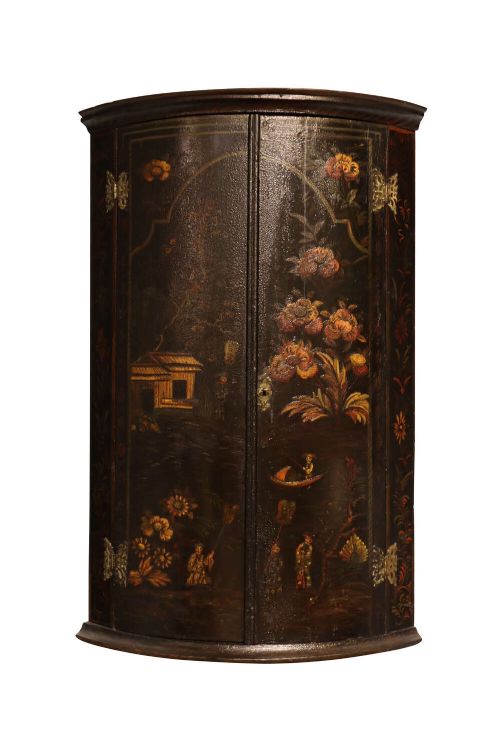
The pieces listed here frequently manifest in forms such as corner cupboards, dressing mirrors, and cabinets on stands. Alongside pieces originating in the eighteenth century, the selection includes Edwardian and early twentieth-century interpretations that adopt the distinctive Chinoiserie aesthetic.
Buyers are most likely to meet corner cabinets and cabinets on stands finished in dark or red lacquer with gold leaf decoration. These functional items served to brighten period interiors while providing secure storage for valued possessions.
How they were made
The construction of these items relies on solid timber carcases, frequently utilising pine and various woods, prepared to receive successive layers of lacquer. Artisans applied specialised paint finishes, often in black or red, building up a hard, smooth surface suitable for intricate decoration.
Ornamentation involved gold leaf, paint, and sometimes penwork to render pictorial Chinoiserie scenes of figures, pavilions, and landscapes. Brass hardware, including hinges and escutcheons, complemented the lustrous finished surfaces and added structural definition to doors and drawers.
Georgian Lacquered Furniture Retail Price Guide 2026
Typical asking prices for georgian lacquered furniture among the pieces listed under this phrase on Sellingantiques today, from the lower quarter to the upper quarter. They describe what is for sale here now, not the wider market.
Secret drawers inside miniature bureau bases offered Georgian users a private spot for miniature correspondence and stray pins.
What varies in quality
The standard of these objects depends heavily on the execution of the surface decoration and the integrity of the underlying woodwork. Superior examples display finely detailed pictorial work in gold leaf and paint, where figures and foliage maintain crisp outlines and depth.
Construction methods and timber selection also divide the range, with better-made pieces employing stable joinery that prevents warping in the lacquered panels. The handling of brass fittings and the preservation of the original painted or japanned surfaces further distinguish finer items from simpler productions.
The Georgian Lacquered Furniture Glossary
- Chinoiserie
- European decorative style reflecting Chinese artistic influences. It appears frequently in the painted and gilded scenes on cabinets and tables.
- Japanning
- European imitation of East Asian lacquerwork using heat-dried varnishes and paints. This technique created the glossy dark or red surfaces seen on chests and mirrors.
- Bureau bookcase
- Writing desk with shelving enclosed behind upper doors. The sloping fall-front opens to reveal compartments for correspondence.
- Penwork
- Decorative technique using ink or similar mediums to draw fine linear designs on wood. It provides intricate surface detail on Regency tables and cabinets.
Georgian Lacquered Furniture: Frequently Asked Questions
What is georgian lacquered furniture?
Georgian lacquered furniture comprises cabinets, desks, and tables finished with painted and varnished surfaces in the Chinoiserie style. These pieces utilise decorative techniques like japanning to mimic Asian lacquerwork.
Items range from corner cupboards to writing bureaux, featuring gold leaf and painted motifs on wood carcases.
How do I care for lacquered surfaces?
Lacquered surfaces require gentle dusting with a soft, dry cloth to prevent scratching the polished finish. Avoid placing pieces near direct heat sources or strong sunlight, which can cause wood movement and varnish deterioration.
Maintaining stable room humidity protects both the structural timber and the delicate paint layers from cracking.
Where were these pieces used?
These items functioned primarily in principal rooms such as drawing rooms, parlours, and bedrooms. Cabinets and corner cupboards displayed valued porcelain and silver, while tables served for games and writing.
Their decorative painted schemes were chosen to impress guests and brighten domestic interiors.
How do I distinguish periods?
Distinguishing periods involves examining the structural form, timber species, and stylistic details such as leg shapes and brass hardware. Eighteenth-century pieces display proportions and construction methods characteristic of the Georgian era.
Later Edwardian and early twentieth-century examples often revive these forms, using slightly different interior woods and construction markers.