





Georgian Kitchen Console
A georgian kitchen console provides solid utility and honest character, bringing practical workspace and traditional storage into modern homes.
Georgian Kitchen Console
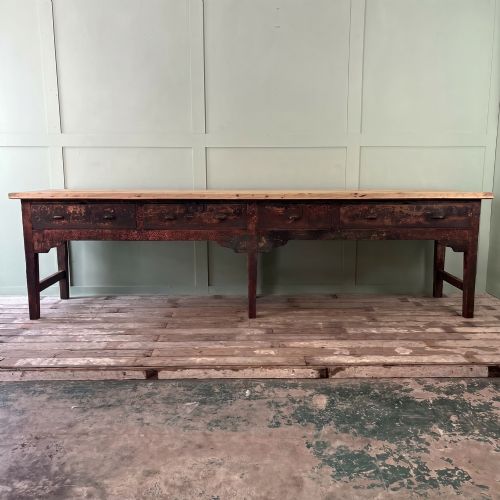
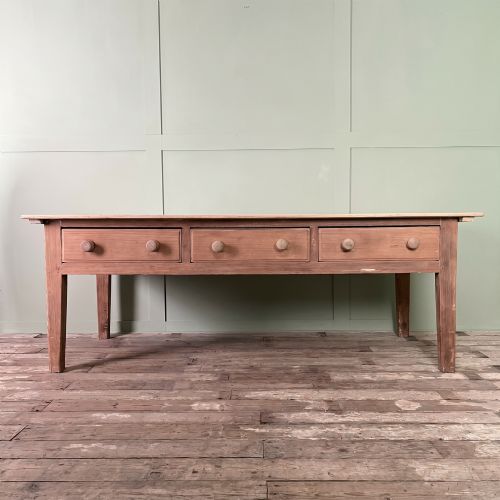
When searching for a georgian kitchen console, buyers encounter sturdy forms like dresser bases, serving tables, and dairy prep tables originating from the eighteenth and nineteenth centuries. These utilitarian items served everyday domestic tasks in country houses, farmhouses, and dairies, functioning as heavy-duty work surfaces and storage units.
The versions most commonly met on this page span English, Welsh, and Scottish origins, reflecting regional vernacular traditions. Styles range from plain English country and rustic farmhouse to George II and primitive rustic designs.
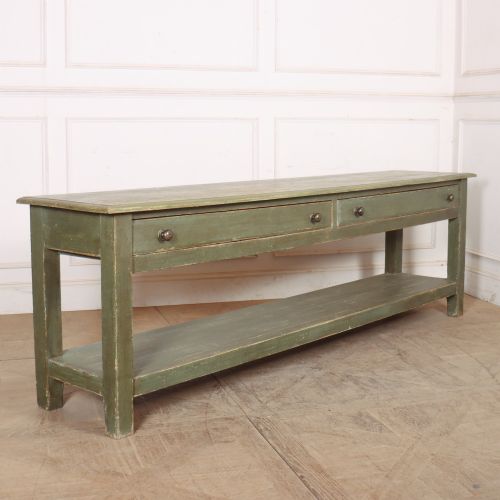
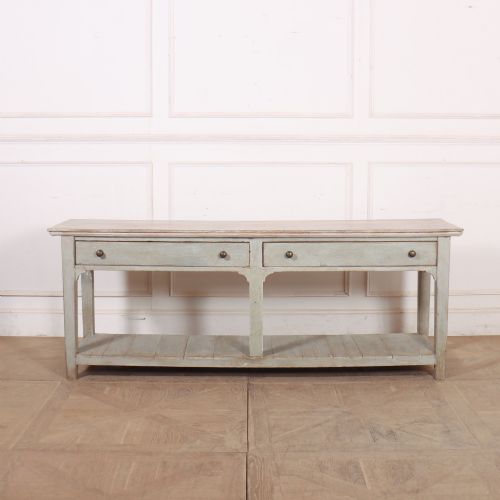
Forms typically feature functional layouts with deep drawers, open potboards, or drop leaves designed for active food preparation and storage. Their enduring appeal lies in this practical utility combined with aged surfaces shaped by generations of domestic use.
How they were made
Construction relies heavily on robust native timbers such as pine, oak, sycamore, and ash, selected for strength and daily wear. Cabinetmakers utilised sturdy joinery to withstand heavy kitchen labour, pairing dense top boards with solid framing.
Many surfaces retain original or early painted finishes alongside unpainted wood, showing the practical application of lead paint or simple washes. Brass hardware appears on select examples, while iron fittings provide structural reinforcement.
Georgian Kitchen Console Retail Price Guide 2026
Typical asking prices for georgian kitchen console among the pieces listed under this phrase on Sellingantiques today, from the lower quarter to the upper quarter. They describe what is for sale here now, not the wider market.
Dairy prep tables carry the faint, permanent ghost marks of centuries-old cheese moulds and chopping blades.
What varies in quality
Quality in a georgian kitchen console rests primarily on the integrity of the timber and the honesty of the surface patination. Pieces retaining deep, untouched patination on their work surfaces and original paint schemes command greater interest than those stripped down or heavily restored.
Proportion and regional carpentry traits also set better examples apart, as well-balanced proportions and clever storage integration reveal the skill of the original provincial maker.
The Georgian Kitchen Console Glossary
- Potboard
- An open lower shelf built into a dresser base or serving table. It was originally designed to hold heavy pots, pans, and utilitarian kitchenware off damp floors.
- Dresser base
- A low cabinet featuring drawers and sometimes a potboard or cupboards below. It served as a primary work surface and storage unit in country kitchens.
- Dairy prep table
- A heavy utilitarian table used for processing milk, cheese, or butter. These often feature scrubbed sycamore or pine tops chosen for hygiene and durability.
- Drop leaf table
- A table with hinged flaps on either side that can be raised to expand the surface area. This versatile design allowed furniture to be tucked away when space was limited.
- Patina
- The surface sheen and wear accumulated through decades of use, cleaning, and age. This gradual transformation distinguishes genuine period pieces from modern reproductions.
Georgian Kitchen Console: Frequently Asked Questions
Where were these tables used?
These items originated in domestic working spaces including country kitchens, dairies, pantries, and sculleries. They provided sturdy surfaces for food preparation and storage.
Today, buyers frequently utilise them in contemporary kitchens, hallways, or living areas as sideboards, console tables, or kitchen islands.
How do I identify the period?
Dating relies on timber selection, construction methods, and hardware styles characteristic of eighteenth and nineteenth-century vernacular woodworking. Hand-cut joints and native woods like oak, pine, and ash point toward these earlier eras.
Surface wear, tool marks, and traditional paint finishes also offer reliable clues to an object's age and regional origin.
Are painted finishes original?
Many pieces retain early or original painted finishes applied to protect the softwoods or decorate country furniture. These coatings often show distinct wear and craquelure developed over centuries.
Original paint adds significant character and historical value compared to surfaces that have been stripped or repainted in modern times.