



Georgian Japanned Mirror
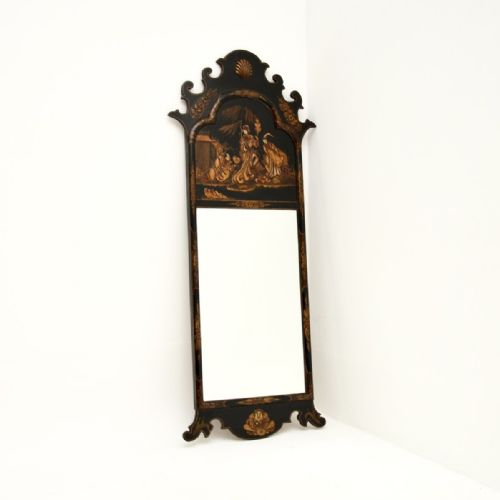
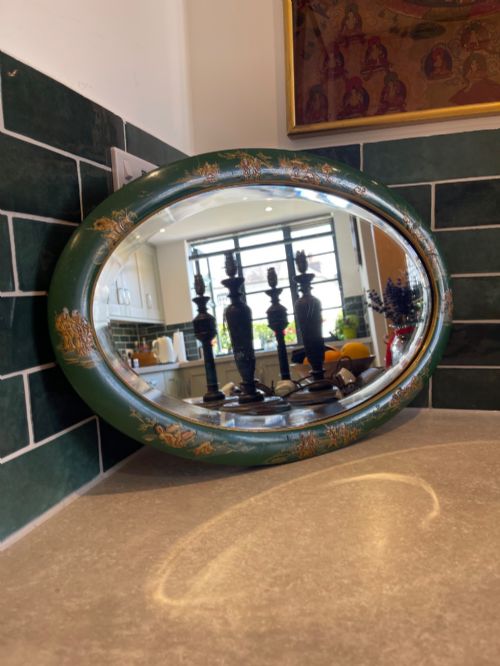
A georgian japanned mirror brings layered lacquer and oriental motifs to a room, offering striking depth through dark or scarlet finishes.
Georgian Japanned Mirror
A georgian japanned mirror combines European cabinet-making forms with simulated oriental lacquerwork, often rendered in deep black or rich scarlet. Buyers searching for a georgian japanned mirror encounter wall hanging pieces, pier mirrors, and smaller dressing or toilet mirrors designed for tabletops.
The versions most likely to appear on this page range from actual 18th century pieces to later revivals from the Edwardian era, 1870, and 1920. These later interpretations adopt earlier stylistic traits such as George I and George II aesthetics, alongside Chinese export influences and Chinoiserie detailing.
Forming the wider category alongside mirrors are related dressing tables and miniature bureau bases attached to toilet mirrors. Such variants showcase the adaptability of japanning across functional household furniture of the period.
Materials and construction
Makers constructed these mirrors using wood as the primary substrate, applying layered lacquer finishes to build up a hard, glossy surface. This lacquered wood often received hand-painted Chinoiserie decoration depicting figures, landscapes, or floral motifs.
Gilt highlights and gold leaf details frequently accent the black or red lacquer grounds, adding brilliance to the frame. Mirror glass, sometimes taking a convex form, is housed within frames alongside brass hardware and occasional carved giltwood elements.
Georgian Japanned Mirror Retail Price Guide 2026
Typical asking prices for georgian japanned mirror among the pieces listed under this phrase on Sellingantiques today, from the lower quarter to the upper quarter. They describe what is for sale here now, not the wider market.
Some toilet mirrors even double as miniature writing desks, packing an entire bureau into a tabletop footprint.
Evaluating quality in japanned mirrors
The refinement of the hand-painted Chinoiserie decoration dictates much of the visual success of the piece, distinguishing finely rendered pictorial scenes from rudimentary execution. Superior examples display intricate detailing and depth within the lacquered surface layers.
The integrity of the wooden substrate and the depth of the original japanning ground determine the longevity and visual richness of the frame. Authentic period materials, such as early mirror glass and genuine gold leaf accents, elevate the stature of the object.
The Georgian Japanned Mirror Glossary
- Japanning
- European imitation of East Asian lacquerwork, created by applying successive coats of varnish and resin, then curing and decorating them. This technique allowed craftsmen to replicate oriental surfaces on domestic furniture.
- Chinoiserie
- European artistic style reflecting Chinese and East Asian artistic influences, popular throughout the 18th century and later revivals. It manifests in whimsical landscapes, figures, and architectural motifs.
- Pier Mirror
- Tall, narrow mirror designed to hang on the wall between windows, often placed above a pier table. These mirrors maximise light reflection in period interiors.
- Toilet Mirror
- Small portable mirror mounted on a dressing stand or miniature bureau base, intended for tabletop use during grooming. They frequently feature small drawers for personal items.
Georgian Japanned Mirror: Frequently Asked Questions
What is a japanned mirror?
A japanned mirror is a looking glass set within a wooden frame finished with European lacquerwork that imitates Asian lacquer. These pieces utilise dark or brightly coloured grounds decorated with painted Chinoiserie motifs.
Craftsmen produced them across several centuries, leading to authentic 18th century examples alongside later 19th and 20th century revivals sharing the same decorative vocabulary.
Where were they placed in homes?
These mirrors found placement in principal reception rooms, bedchambers, and dressing areas. Wall hanging versions often occupied prominent spaces between windows to bounce light around the room.
Tabletop dressing mirrors sat atop bureau tables or dedicated dressing furniture, serving practical grooming needs while displaying decorative lacquer.
How do I distinguish periods?
Distinguishing periods involves examining the construction methods of the wooden frame, the composition of the mirror glass, and the style of the lacquer decoration. 18th century pieces exhibit period-specific joinery and genuine age within the lacquer surface.
Later revival pieces from the Edwardian period or the 1920s often adopt specific historical styles like George II, yet carry the material characteristics of their actual manufacturing date.
How do I live with one?
Living with a japanned mirror involves hanging it away from direct sunlight to protect the lacquer finish and gold leaf details from fading. Maintenance requires only gentle dusting with a soft cloth without abrasive cleaners.
Pairing the mirror with complementary period or eclectic furnishings allows the rich scarlet or black Chinoiserie surfaces to act as a distinct focal point in a contemporary or traditional interior.