




Georgian Hanging Shelf
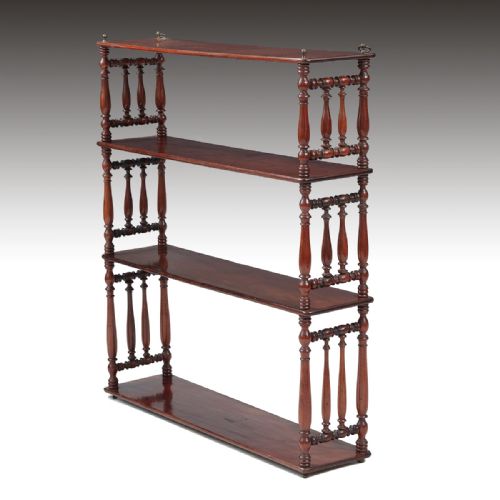
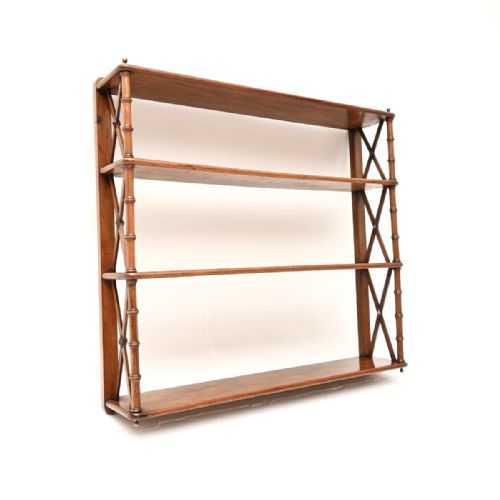
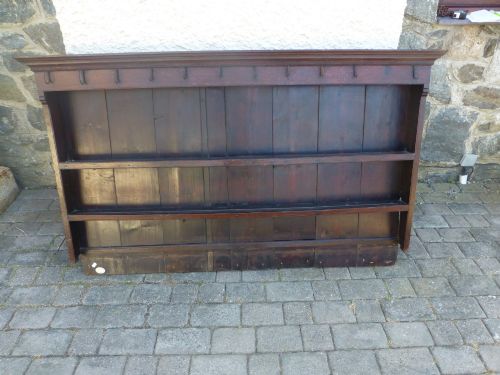
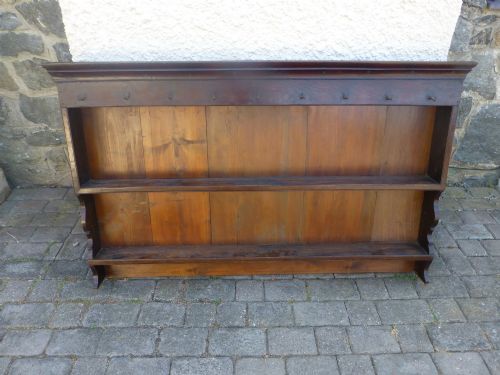
These georgian hanging shelf pieces span oak, mahogany and walnut forms designed to save floor space while displaying ceramics or books.
Georgian Hanging Shelf
A georgian hanging shelf is a wall-mounted storage unit designed to hold books, plates or small display items without taking up valuable floor space. The selection available here includes open plate racks, corner shelves, and enclosed wall cabinets dating from the eighteenth and nineteenth centuries.
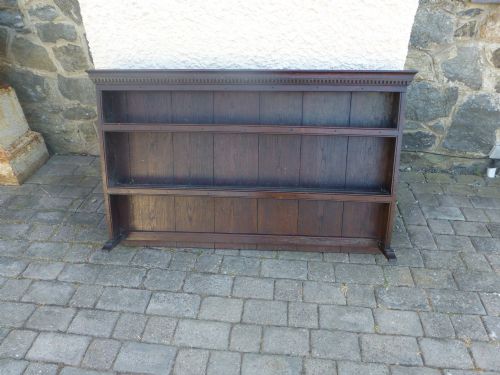
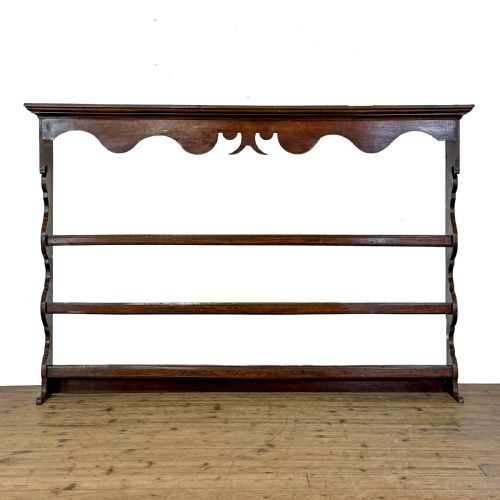
The most common formats you will encounter are mahogany sets from the Georgian and Regency periods alongside earlier oak delft racks. These pieces were originally made to serve practical domestic needs in kitchens, libraries and parlours, using local and imported timbers suited to daily utility.
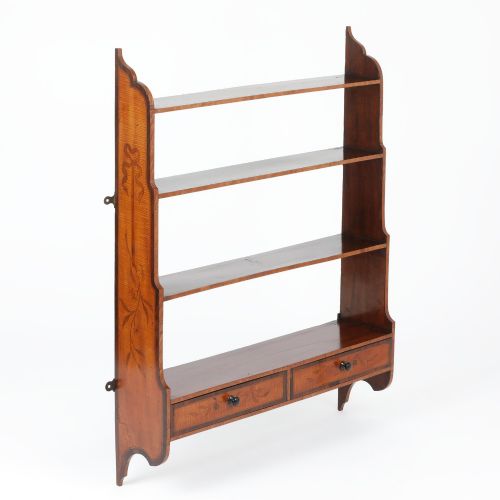
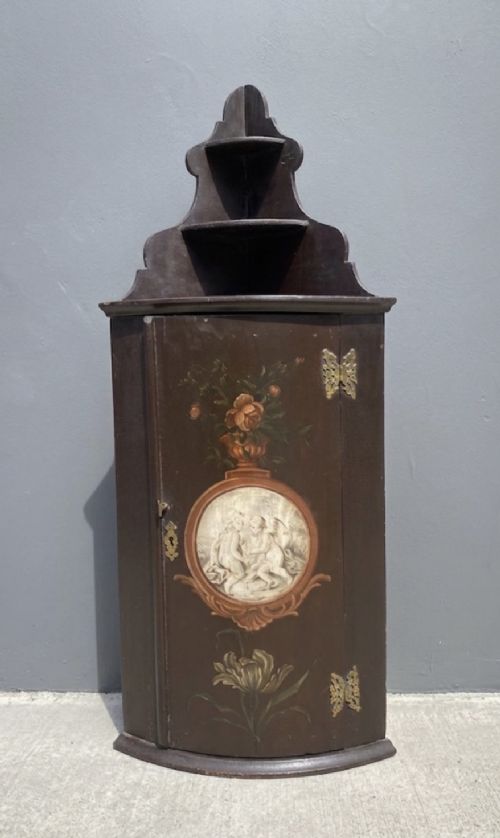
Makers utilised a variety of regional woods, ranging from sturdy early oak to figured mahogany, satinwood and walnut, sometimes enhanced with paint or brass fittings. Their structural configurations vary from simple tiered boards to complex tambour-fronted corner cupboards and graduating waterfall designs.
How they were made
Cabinet makers constructed these wall units using solid hardwoods such as mahogany and oak, often combining secondary timbers for backing boards and internal dividers. Joints were typically pegged, dovetailed or rebated to ensure the framework could support the weight of heavy ceramics and leather-bound volumes.
Surface treatments included wax polishing for mahogany and walnut, simple painted finishes on earlier cupboards, and occasional brass fixtures for hanging or corner reinforcement. Fine stringing in satinwood appeared on more decorative Sheraton-influenced pieces, while everyday kitchen racks relied on robust plank construction.
Georgian Hanging Shelf Retail Price Guide 2026
Typical asking prices for georgian hanging shelf among the pieces listed under this phrase on Sellingantiques today, from the lower quarter to the upper quarter. They describe what is for sale here now, not the wider market.
Listings feature oak, mahogany, satinwood, walnut and iron materials across the eighteenth, nineteenth and twentieth centuries.
What varies in quality
The distinction between standard domestic utility pieces and finer examples lies in the selection of timber, such as highly figured mahogany or contrasting satinwood veneers. Superior craftsmanship is evident in the crispness of mouldings, the delicacy of fretwork sides, and the integrity of original hanging loops or brass supports.
Proportion and scale also dictate quality, with well-balanced tiered shelves commanding more attention than heavy or disproportionate assemblies. Preservation of original surfaces, rather than stripped or over-restored timber, maintains the historical integrity of the piece.
The Georgian Hanging Shelf Glossary
- Delft rack
- A wooden wall-mounted rack specifically designed with plate grooves and retaining rails to display tin-glazed earthenware dishes.
- Tambour
- A flexible sliding shutter formed of thin vertical strips of wood glued to canvas, often found on enclosed corner cupboards.
- Waterfall shelves
- A set of graduated open shelves where each tier steps back from the one below, popular in mahogany and satinwood.
- Bow front
- A convex curved cabinet or shelf front that projects outward, frequently seen in Regency corner pieces.
- Corner cupboard
- A triangular wall unit built to fit directly into the intersection of two room walls to maximise space utilisation.
Georgian Hanging Shelf: Frequently Asked Questions
Where were hanging shelves placed in a house?
These units were mounted directly onto walls in rooms where floor space was at a premium, such as kitchens, small parlours and private studies.
Kitchens held oak plate racks for everyday crockery, while libraries and living spaces utilised mahogany or walnut variants for books and ornaments.
How do I secure a heavy wooden shelf to the wall?
Original hanging shelves usually feature integrated mounting brackets, strong backboards, or robust brass fixings designed to bear significant downward loads.
Due to the weight of aged hardwoods and contents like books or ceramics, modern wall anchors must be securely anchored into structural studs or masonry.
How do I tell an 18th-century rack from a later copy?
Eighteenth-century examples typically display period construction methods such as hand-cut dovetails, handmade fixings, and natural timber oxidation under old wax.
Later revival pieces often show machine tooling marks, uniform modern screws, or secondary woods that differ from the primary period characteristics.