



Georgian Glass Pot
These georgian glass pot examples bring tactile Georgian and Regency utility to the table, offering heavy lead crystal and bright cut facets for the serious collector.
Georgian Glass Pot
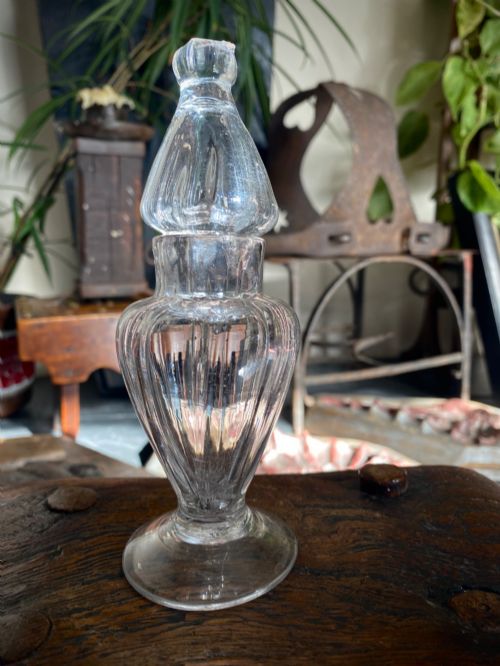
A georgian glass pot encompasses small domestic vessels intended for the table and dressing table, spanning salt cellars, condiment jars, mustard pots, preserve jars, butter dishes, and dressing table sets. These pieces serve as functional storage for dining and vanity use, shaped by the culinary and social habits of the eighteenth and nineteenth centuries.
The versions most commonly met on this page range across the eighteenth century, the Regency period, and later revivals, utilising lead glass and cut glass forms. Alongside period originals, items from later periods such as Victorian, Edwardian, and the early twentieth century appear, sometimes paired with sterling silver fittings.
Makers and designers working within these styles produced varied tableware and jars & vessels, often accompanied by silver mounts or wirework. Collectors encounter individual condiment pots as well as matched sets intended for dining room cruets and dressing table arrangements.
Materials and construction
Construction relies heavily on hand-blown glass and heavy lead crystal, shaped to form robust jars and lidded vessels. The material provides the characteristic weight and clarity associated with the period.
Surface treatment frequently involves deep cutting, creating faceted patterns that catch the light across the body of the pot. Metal elements such as sterling silver mounts and wirework frames are integrated to hold or cap the glass components.
Georgian Glass Pot Retail Price Guide 2026
Typical asking prices for georgian glass pot among the pieces listed under this phrase on Sellingantiques today, from the lower quarter to the upper quarter. They describe what is for sale here now, not the wider market.
Listings feature lead crystal and hand-blown glass across eighteenth-century, Regency, and Victorian periods.
Assessing quality and execution
Quality reveals itself in the purity and heft of the lead glass, where superior pieces display crisp wheel-cut facets and minimal optical distortion in the hand-blown material. The depth of the cutting and the brilliance of the crystal set finer examples apart from simpler moulded wares.
The standard of associated metalwork plays a significant role, with finely wrought sterling silver mounts, maker marks, and delicate wirework indicating higher workshop production. Harmonious proportion between the glass vessel and its silver lid or frame distinguishes superior craftsmanship.
Asprey & Co.·Jonathan Douglas·Charles Stuart Harris
The Georgian Glass Pot Glossary
- Lead crystal
- Glass containing a high proportion of lead oxide, prized for its weight, refractive index, and ringing tone when struck. This material allowed eighteenth-century glassmakers to achieve deep, sharp facet cutting.
- Hand-blown glass
- Glass shaped through the manipulation of molten metal on a blowpipe by a skilled artisan. This technique introduces subtle variations and occasional air bubbles characteristic of period production.
- Mustard pot
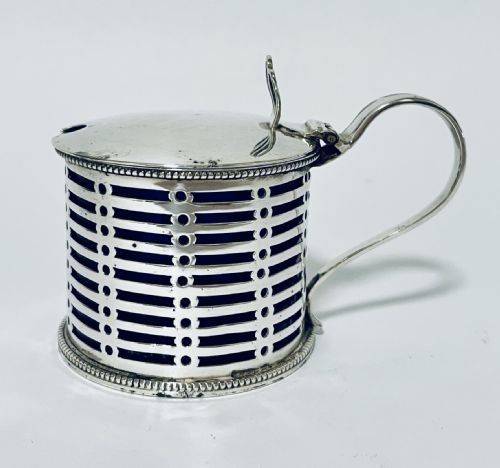
- A small lidded jar designed to hold prepared mustard on the dining table, frequently lined with blue glass or fitted with a silver spoon. These vessels form part of larger condiment sets.
- Wirework
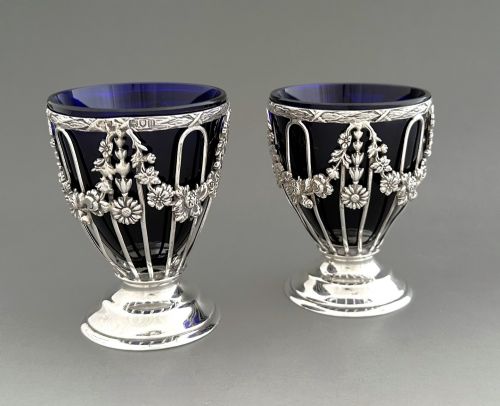
- Openwork metal construction formed from soldered silver wires, seen in frames and mounts of the period. This technique creates a light, decorative cage around glass jars.
- Regency
- An English design period spanning the early nineteenth century, known for strong classical influences and bold geometric forms in tableware. Pieces from this era often feature heavy cut crystal and substantial silver mounts.
Georgian Glass Pot: Frequently Asked Questions
What is a georgian glass pot used for?
These vessels were primarily created to serve condiments, mustard, preserves, and butter at the dining table, or to hold cosmetics and pins on a dressing table. Their sturdy construction made them practical for daily household service.
Over time, many of these pots transitioned from functional dining implements into decorative display items and collectable tableware. Their varied sizes reflect the specific foods and preparations they were originally designed to hold.
How do I distinguish eighteenth-century glass from later revivals?
Examination of the pontil mark on the base, the weight of the lead glass, and the style of the cut facets helps indicate the period of manufacture. Earlier pieces often display a polished or snapped pontil and hand-finished irregularities.
Later Georgian Style or revival pieces from the twentieth century typically exhibit more uniform machine precision and standardised sizing. Comparing the wear patterns and the specifics of any silver mounts provides further context for dating.
Are silver mounts common on these pots?
Many examples feature sterling silver lids, rims, or wirework frames added to protect the glass edges and provide a secure closure. These metal elements were frequently hallmarked, offering clues to the year and city of manufacture.
Some vessels were produced as standalone glass items, while others formed part of integrated cruet sets or dressing table collections housed in fitted boxes.
How should I care for antique glass pots?
Gentle hand washing in lukewarm water with mild detergent preserves the integrity of both the lead glass and any historic silver mounts. Abrasive cleaners and immersion in hot water should be avoided to prevent thermal shock and damage to the surface.
Storing pots away from direct sunlight and extreme temperature fluctuations protects the material from stress. If silver mounts are present, specialised polish applied carefully prevents tarnishing without contacting the glass.