
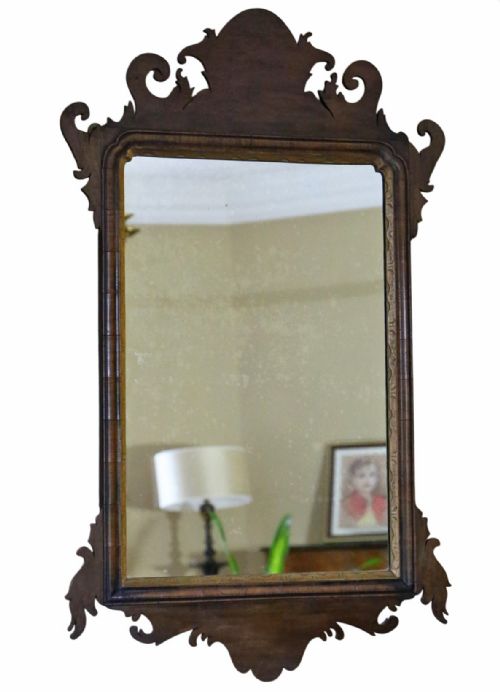


Georgian Fretwork Frame
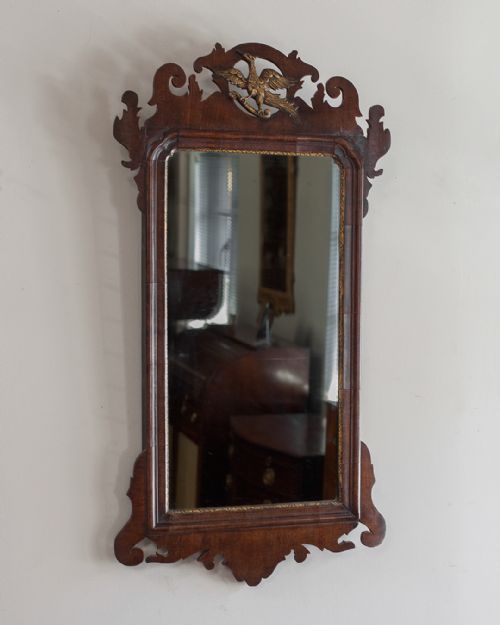
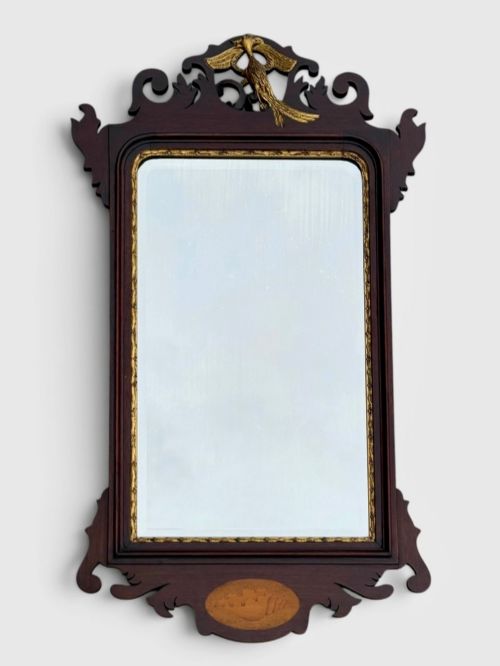
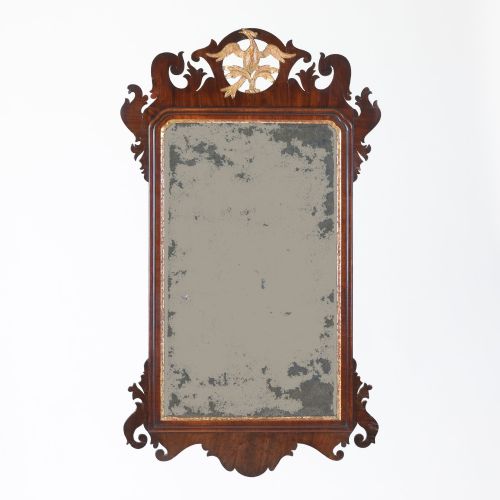
These georgian fretwork frame mirrors are pierced wooden hanging looking glasses designed to catch the light in panelled rooms.
Georgian Fretwork Frame
A georgian fretwork frame is a wall-hanging mirror constructed with pierced, scroll-cut wooden borders that define the classic eighteenth-century silhouette. The pieces on this page span genuine eighteenth-century examples to later revivals from the Victorian, Edwardian and early twentieth-century periods.
Most entries follow traditional forms such as wall mirrors and pier mirrors, alongside occasional revival interpretations influenced by Chippendale designs. These frames bring vertical proportion and carved detailing to hallways, drawing rooms and reception spaces.
Materials and construction
Makers shaped these frames primarily from mahogany and walnut timber, sometimes utilising burr veneers for figuring on the flat plates. Fret-cutting saws pierced the thin boards into intricate scroll and leaf patterns, often finished with parcel gilding or applied gold leaf.
Many examples incorporate gilded gesso ornaments, most notably the characteristic Ho Ho bird carved at the crest or base. Vauxhall mirror plates with bevelled edges appear in the period pieces, held within rebated wooden slips behind the fretted border.
Gilt birds peer down from carved crests, watching over centuries of hallways.
Measures of quality
Quality rests upon the crispness of the fret-cut scrollwork and the depth of the timber carving, where sharp edges outclass soft, rounded profiles. Finer examples display carefully matched wood veneers and original mercury or bevelled glass plates rather than later replacements.
The integrity of the structural joints where the fret ears join the main frame distinguishes superior workshops from standard production. Intact original gilding and carved crestings command greater regard than pieces with restored or missing wooden elements.
The Georgian Fretwork Frame Glossary
- Fretwork
- Pierced decorative woodwork cut with a fine scroll saw to create geometric or floral patterns. This technique forms the distinctive silhouette of the entire frame.
- Vauxhall mirror
- A plate glass mirror characterised by a bevelled edge, historically associated with the famous London glasshouse. These plates sit deeply rebated within the wooden moulding.
- Parcel gilt
- A finishing method where specific carved highlights or edges receive a thin application of gold leaf while the surrounding wood remains exposed. It accentuates the depth of the carving.
- Ho Ho bird
- A stylized Chinese phoenix motif frequently carved onto the crests of mid-eighteenth-century mirrors. This decorative element reflects the prevailing Chinoiserie taste of the period.
- Pier mirror
- A tall, narrow looking glass designed specifically to hang on the wall space between windows. These pieces often feature extended fretwork borders to maximise reflected daylight.
Georgian Fretwork Frame: Frequently Asked Questions
How do I hang a heavy fretwork mirror?
These frames require sturdy brass fixings screwed directly into structural wall studs or masonry using appropriate wall anchors. The weight must rest entirely on secure brackets rather than depending solely on the upper wooden fret scroll.
Check that the hanging wire or integrated wooden battens at the back remain firm before mounting the piece at eye level. Avoid damp walls that might warp the thin mahogany or walnut veneers over time.
Are all these mirrors from the eighteenth century?
The selection includes both genuine eighteenth-century pieces and later revival versions made during the Victorian, Edwardian and early twentieth centuries. Makers across different eras closely copied traditional Chippendale patterns.
Examining the timber backing boards, fixings and glass bevelling helps determine whether a mirror dates to the Georgian period or a later revival.
What is a Ho Ho bird?
The Ho Ho bird is a mythical Chinese phoenix figure commonly carved into the gilded crests and aprons of eighteenth-century frames. It became a popular motif during the height of the Chinoiserie design movement.
Finding this carved bird at the top of the frame often indicates a connection to Chippendale style aesthetics.