





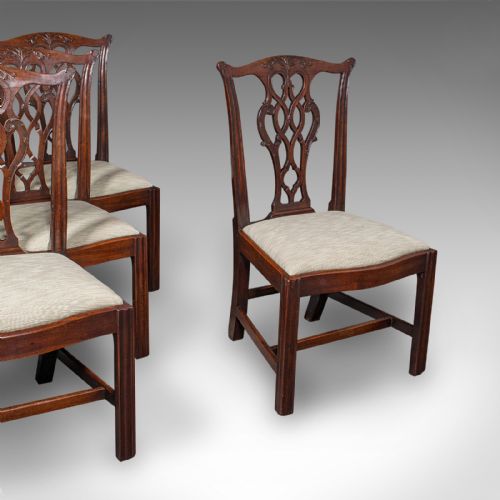
Georgian Fretwork Chairs
Georgian fretwork chairs are quintessential seating pieces defined by open-work splats, built to command attention in any traditional interior.
Georgian Fretwork Chairs
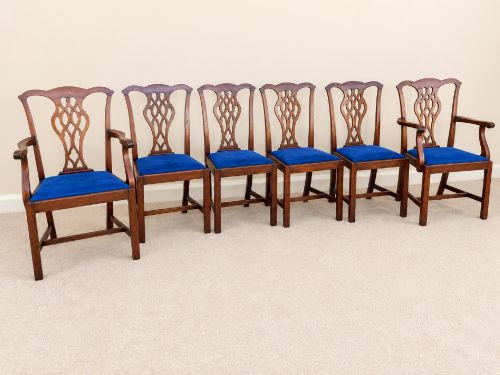
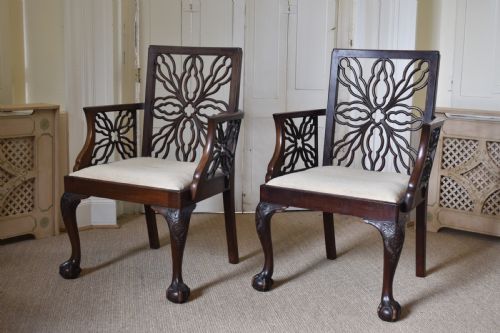
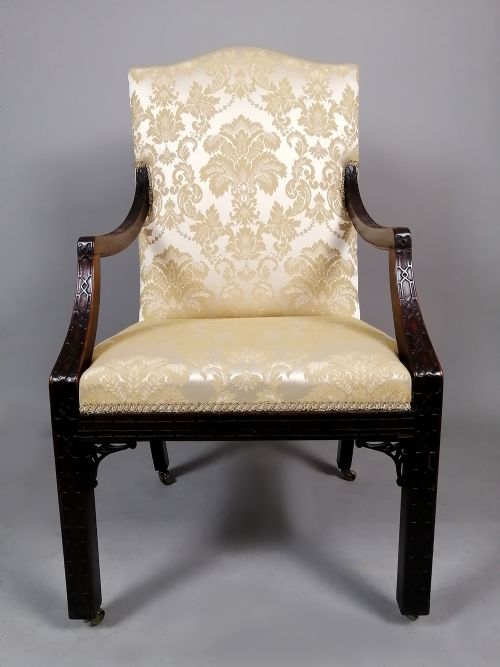
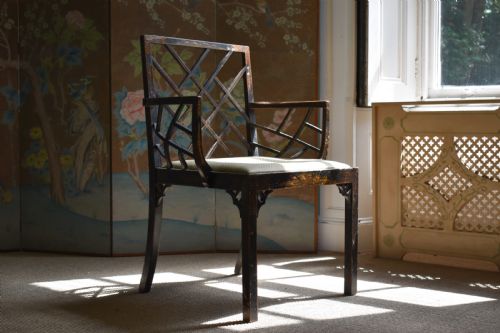
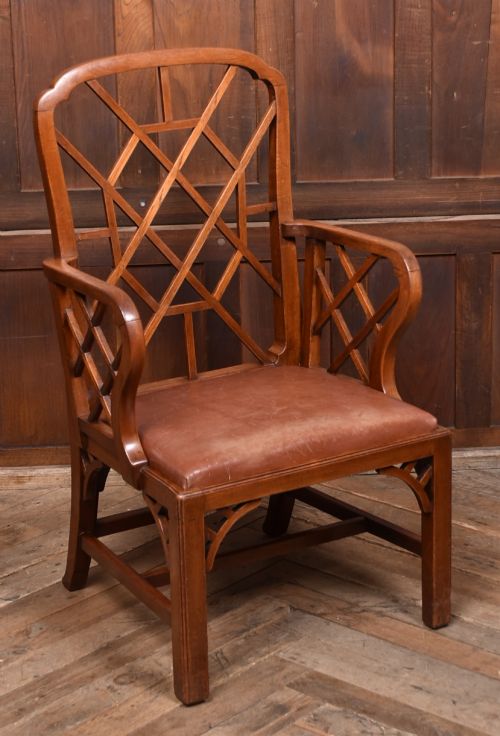
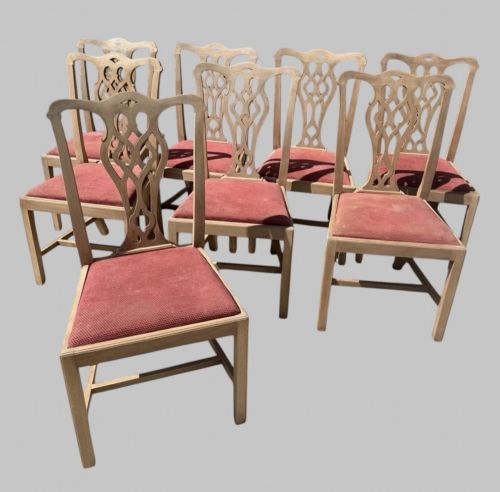
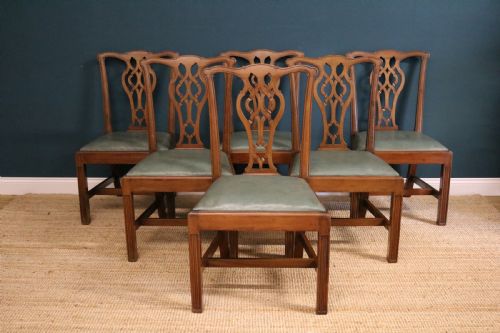
Georgian fretwork chairs encompass dining chairs, armchairs, and library chairs constructed in mahogany, often following Chinese Chippendale or George III styles. The inventory shows varied forms ranging from sets of dining chairs to single elbow chairs and unusual porters or masonic chairs.
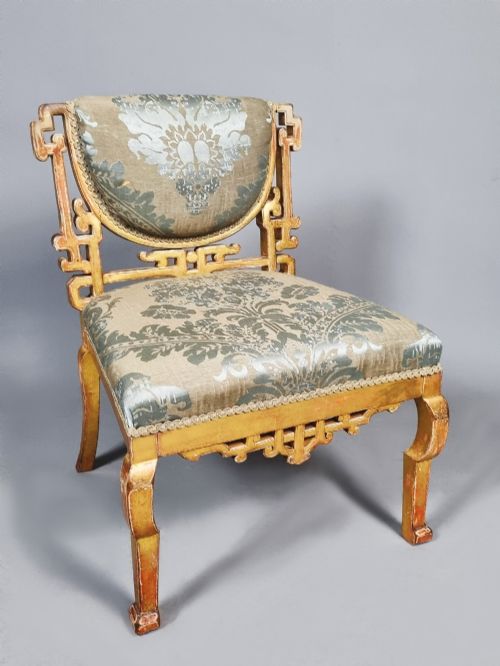
Buyers will encounter genuine 18th-century examples alongside 19th-century interpretations and 20th-century revivals. Styles span from strict Georgian designs to ornate Chinoiserie and Cockpen variations.
How they were made
Makers utilised solid mahogany, carving intricate geometric and pierced patterns directly into the timber splats. Selected pieces incorporate brass details, or feature upholstery in fabric, leather, damask, and velvet.
Construction techniques rely on traditional joinery to support the elaborate pierced backrests. Bleached mahogany and giltwood surfaces also appear among the listed items.
Georgian Fretwork Chairs Retail Price Guide 2026
Typical asking prices for georgian fretwork chairs among the pieces listed under this phrase on Sellingantiques today, from the lower quarter to the upper quarter. They describe what is for sale here now, not the wider market.
The inventory spans the 18th, 19th, and early 20th centuries, covering original Georgian output and later revival periods.
What varies in quality
Quality rests in the crispness and depth of the hand-carving within the fretwork splats. Finer pieces demonstrate superior joinery and balanced proportions across entire dining sets.
The choice of primary timber and the sophistication of period styling elevate certain armchairs and dining chairs above standard revival alternatives.
Waugh & Son·Thomas Chippendale·Robert Manwaring
The Georgian Fretwork Chairs Glossary
- Fretwork
- Open-work ornamentation carved or pierced from a flat panel of wood. This technique creates the distinctive geometric patterns seen on chair backs.
- Cockpen
- A specific type of Chinese-inspired lattice chair back design featuring intersecting straight bars. These chairs originated in the 18th century and returned in Edwardian revivals.
- Chinoiserie
- European interpretations of Chinese artistic motifs and techniques. This style strongly influences the pagoda and fretwork patterns found on Georgian seating.
- Klismos
- An ancient Greek chair form characterised by curved legs and a concave backrest. 19th-century makers occasionally revived this classical shape alongside Chippendale designs.
Georgian Fretwork Chairs: Frequently Asked Questions
Are these chairs suitable for daily dining use?
Most antique dining chairs and sets remain structurally capable of regular seating when properly maintained.
Buyers should consider the seat height and upholstery comfort for modern dining tables.
How do I distinguish 18th-century pieces from later revivals?
Examination of timber ageing, hand-cut joinery, and tool marks helps separate Georgian originals from 19th and 20th-century revival pieces.
Stylistic cues and construction methods align closely with the recorded production period of each chair.
What maintenance do mahogany fretwork chairs need?
Regular dusting with a dry cloth keeps the carved fretwork clean without damaging the timber finish.
Keeping chairs away from direct heat sources prevents the mahogany and applied upholstery from drying out.
Can I mix different styles of Georgian chairs?
Mixing armchairs with side chairs or pairing contrasting George II and George III styles creates a traditional collected look.
Matching timber tones and similar fretwork motifs help unify varied seating arrangements.