





Georgian Fitted Dressing Table
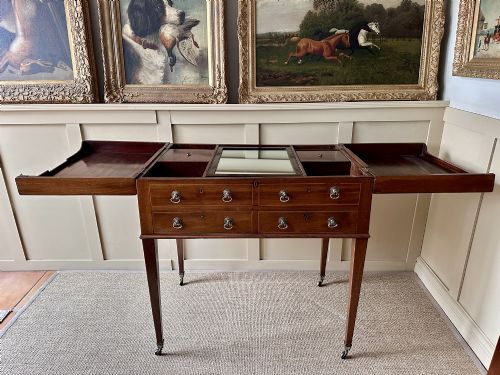
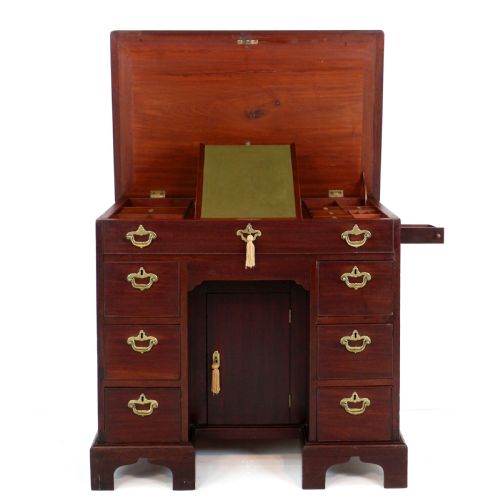
These georgian fitted dressing table pieces are clever domestic items designed for morning routines, offering hidden compartments and mirrors.
Georgian Fitted Dressing Table
A georgian fitted dressing table represents a practical form of antique furniture designed for personal grooming and storage. Buyers searching for this phrase encounter pieces spanning the eighteenth and nineteenth centuries, including items from the Georgian, George II, George III, and Regency periods. The forms range from traditional dressing tables and vanity cases to kneehole desks and side tables with fitted drawers.
Materials and construction
Timbers dominate the construction of these pieces, with mahogany serving as the primary wood across numerous examples. Cabinetmakers also utilised oak, walnut, and red walnut, alongside decorative elements in brass, glass, and leather. Interior fittings often incorporate textile linings such as blue velvet.
The construction focuses on utility and portability in specific instances, such as travelling chests and campaign boxes. Fitted drawers and internal compartments require precise joinery to house scent bottles and vanity accessories securely within the timber frame.
Georgian Fitted Dressing Table Retail Price Guide 2026
Typical asking prices for georgian fitted dressing table among the pieces listed under this phrase on Sellingantiques today, from the lower quarter to the upper quarter. They describe what is for sale here now, not the wider market.
Several pieces include tiny glass scent bottles that survived centuries of travel.
Judging quality
Quality in a georgian fitted dressing table reveals itself in the selection of timber and the precision of the interior layout. Finer examples display superior grain matching in the mahogany or walnut, alongside neatly executed internal compartments that maintain structural integrity through decades of use.
The sophistication of the hardware and the retention of original fittings distinguish better pieces. Elements like brass campaign mounts, original glass scent bottles, and intact leather surfaces indicate a higher standard of manufacture compared to altered or later adapted items.
The Georgian Fitted Dressing Table Glossary
- Georgian
- The period spanning the reigns of the first four Georges, associated with classical proportions and refined cabinetmaking. This era produced many of the enduring furniture forms seen today.
- Kneehole desk
- A desk or dressing table featuring a recessed central space for the sitter's legs, flanked by pedestals of drawers. It provides a compact workspace with concealed storage.
- Campaign chest
- A piece of furniture built in sections with brass corners and inset handles, designed for easy transport by military officers. These items combine sturdy construction with modular practicality.
- Silver-gilt
- Silver that has been coated with a thin layer of gold, often found on decorative accessories and scent bottles housed within dressing cases. This finish adds a warm metallic lustre to small items.
Georgian Fitted Dressing Table: Frequently Asked Questions
What is a fitted dressing table?
A fitted dressing table is a specialised piece of antique furniture containing internal compartments, mirrors, and storage designed for grooming accessories.
These pieces often feature clever mechanisms and small drawers to organise personal items neatly out of sight.
How do I spot a Regency period piece?
Regency items date from the early nineteenth century and typically display distinct classical revival influences and refined proportions.
Look for specific hardware details and construction methods typical of the decades surrounding eighteen hundred.
Were these tables used for travel?
Certain examples, such as travelling dressing chests and campaign boxes, were specifically constructed for portability during journeys.
These compact variants feature robust timber frames and secure fittings to protect contents while on the move.
What woods were used for these tables?
Cabinetmakers primarily employed mahogany, oak, and walnut for the main structure of these dressing pieces.
Selected examples incorporate rarer timbers like red walnut and rosewood to enhance the visual appeal of the exterior.