



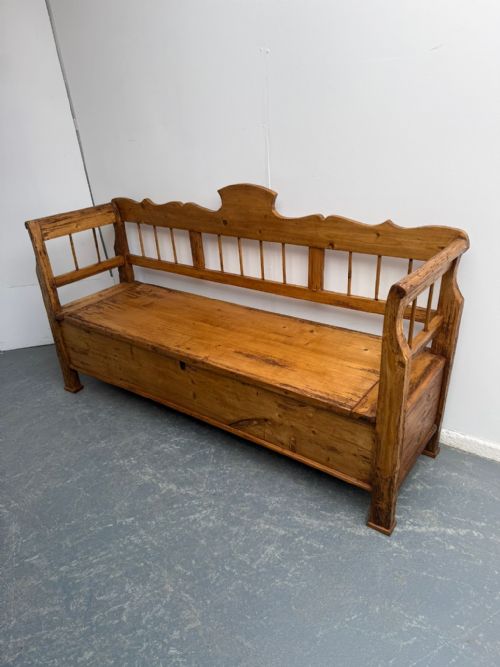


Georgian Entryway Bench
These georgian entryway bench examples offer solid period utility in oak, pine, and mahogany, giving hallways a grounded and historic anchor.
Georgian Entryway Bench
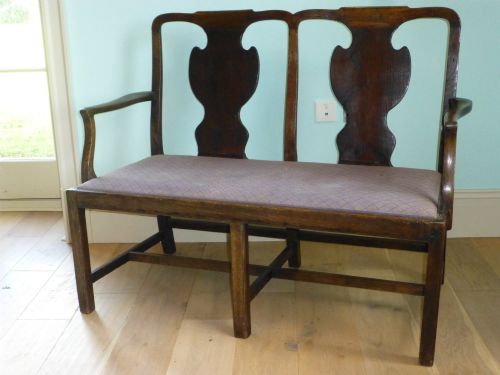
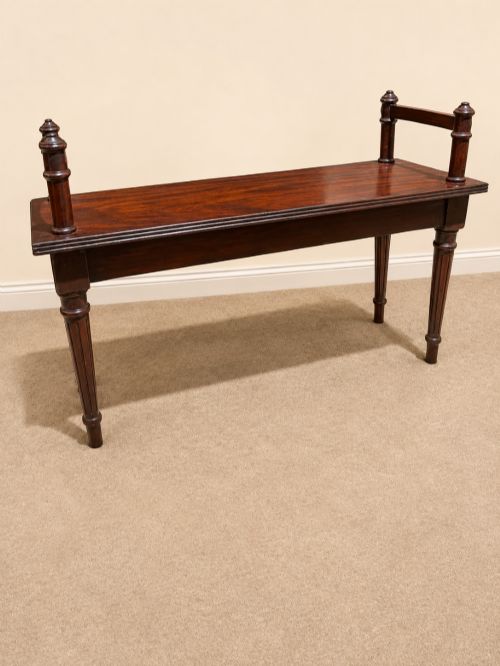
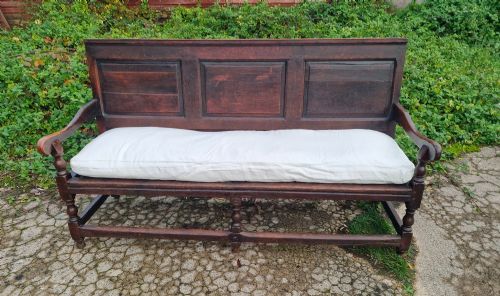
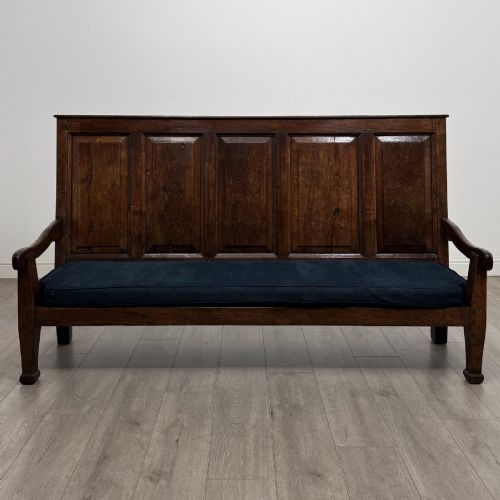
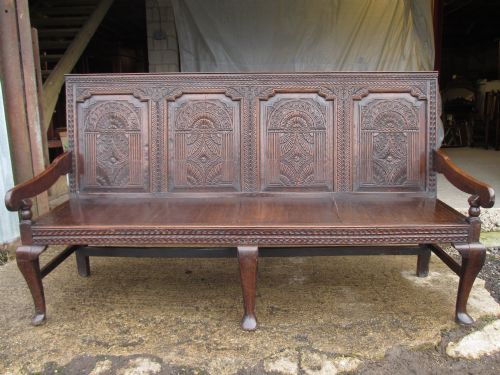
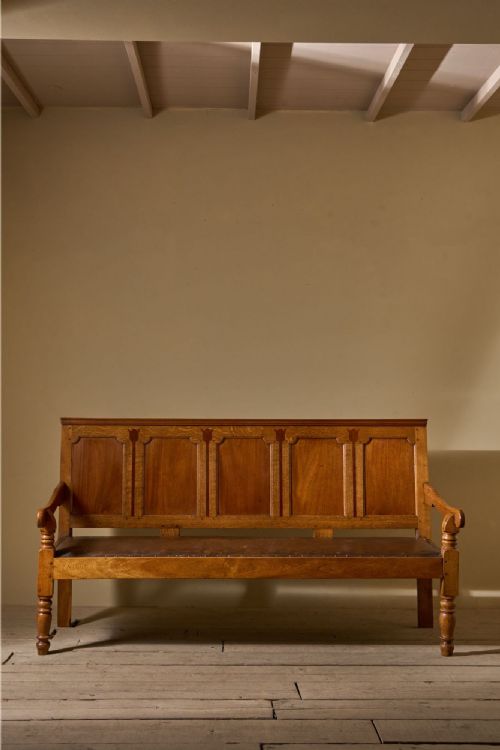
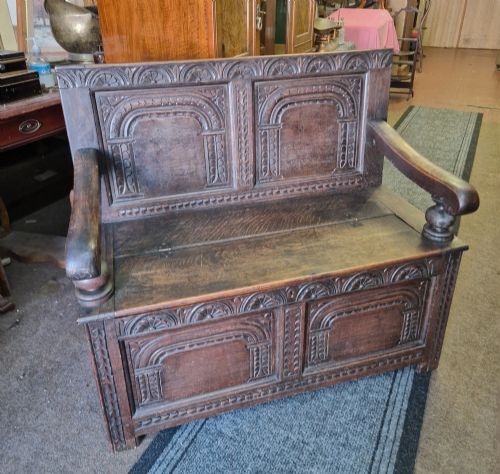
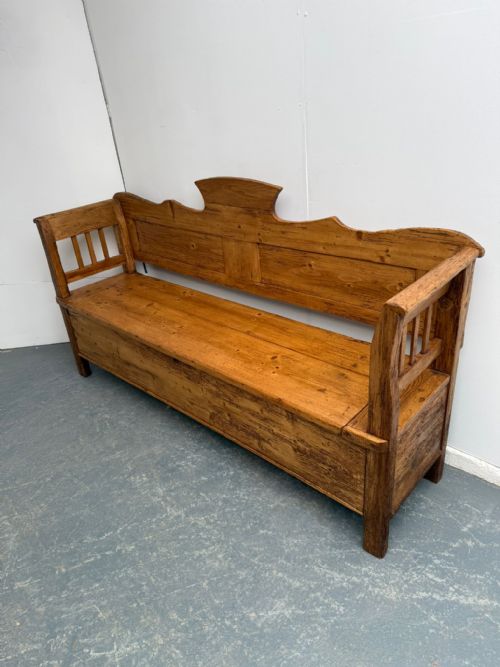
When you search for a georgian entryway bench, you are looking at substantial seating forms designed for historic halls, corridors, and landings. These pieces primarily encompass oak, pine, and mahogany settles, hall benches, and window seats originating from the Georgian era through the nineteenth century.
You are most likely to meet oak and pine settles alongside slender hall benches on this page. Many examples derive from English and Hungarian country traditions, often featuring high panelled backs, box seats, or simple straight backs suited for narrow spaces.
The selection ranges from robust rustic farmhouse and country primitive pieces to refined regency mahogany designs. Makers and makers' workshops produced these to withstand heavy daily use near the front door while providing practical storage or seating.
How they were made
Makers constructed these benches predominantly using solid oak, pine, and mahogany timbers. Carpenters joined panels and frames with traditional joinery, creating sturdy structures intended to endure heavy domestic traffic.
Surface treatments vary significantly across the pieces, recorded as wax finishes, original paint, or scumble paint. Carved details, tulip decorations, and wood inlay appear on select examples to accent the structural woodwork.
Georgian Entryway Bench Retail Price Guide 2026
Typical asking prices for georgian entryway bench among the pieces listed under this phrase on Sellingantiques today, from the lower quarter to the upper quarter. They describe what is for sale here now, not the wider market.
The object types recorded span benches, hall benches, settles, and window seats in various regional country styles.
What varies in quality
The distinction between ordinary and superior pieces rests on the integrity of the timber and the retention of original surfaces. Pieces retaining early wax finishes or original paint demonstrate higher historical preservation than heavily restored variants.
Proportion and decorative restraint set finer urban pieces apart from rustic country items. Well-executed carving, panelled construction, and neat proportions elevate specific settles and window seats above standard utilitarian forms.
Gillows
The Georgian Entryway Bench Glossary
- Settle
- A wooden bench with a high back, solid arms, and often a box seat for storage. This form kept draughts away from people sitting near the entrance.
- Hall Bench
- A narrow bench designed for hallways and entryways, providing compact seating. These often feature straight backs and open or panelled construction.
- Window Seat
- A low upholstered or wooden bench sized to fit within a window recess. They emerged in refined woods like mahogany during the regency period.
- Scumble Paint
- A decorative paint technique involving translucent layers dragged over a base coat to simulate grain. It appears on country pine pieces.
- Box Settle
- A settle incorporating a hinged seat lid that opens to reveal storage space underneath. This dual function suited busy domestic entryways.
Georgian Entryway Bench: Frequently Asked Questions
How were these benches used?
Historically, these benches occupied entrance halls and corridors to manage household traffic and block cold draughts. High backs and solid sides helped retain warmth near the entrance.
Box variants provided concealed storage for heavy blankets, boots, or accessories. Window seats offered comfortable spots near natural light in larger rooms.
How do I style a hall bench?
Place a hall bench against a main hallway wall to establish an immediate focal point and functional seating area. Keep the surrounding space uncluttered to highlight the period woodwork and panel details.
Pair wooden settles with simple textiles or leave them bare to showcase the grain and original paint finishes. Ensure the proportions match the width and scale of your corridor.
How do I identify oak and pine pieces?
Oak pieces display a dense grain pattern with distinct medullary rays and generally heavier structural weight. Pine examples exhibit a softer texture and lighter colour, frequently enhanced by wax or historical paint.
Country pine items often reflect rustic vernacular traditions, whereas oak examples lean toward formal panelled construction or regional farmhouse styles.