



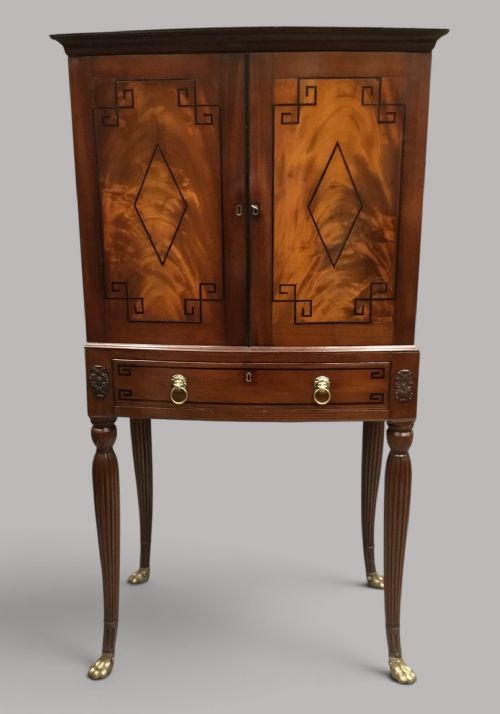

Georgian Drinks Cupboard
A georgian drinks cupboard brings serious timber and proportion to a room, offering a proper place to keep bottles and glasses.
Georgian Drinks Cupboard
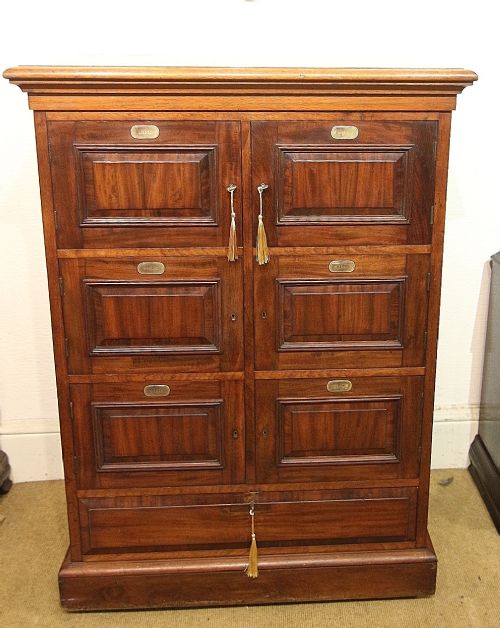
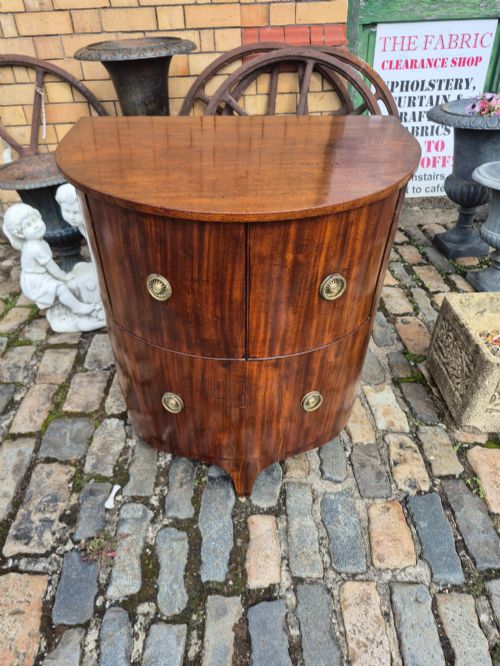
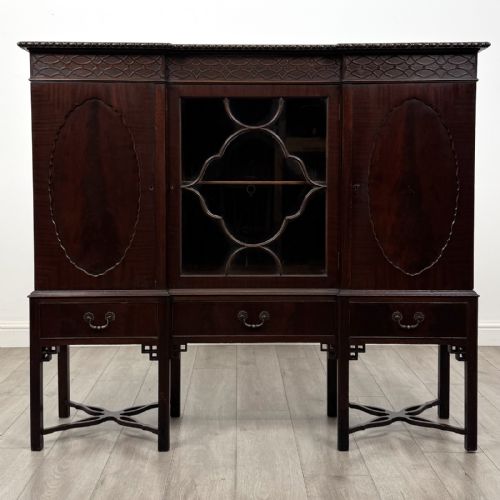
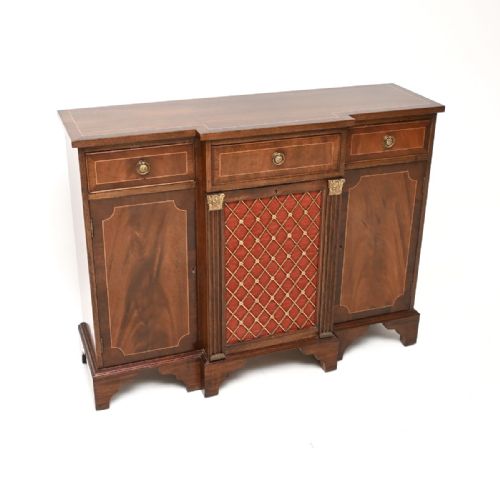
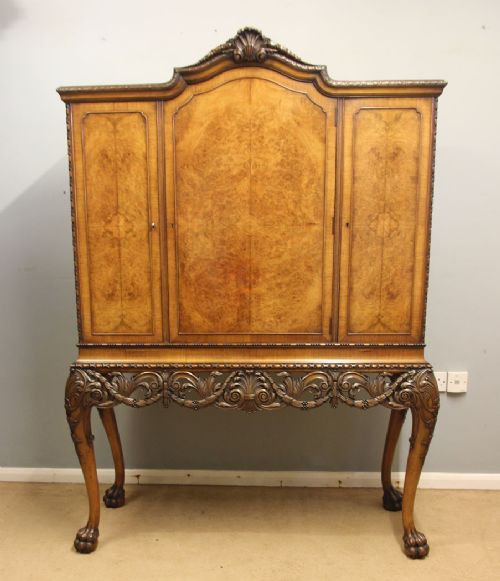
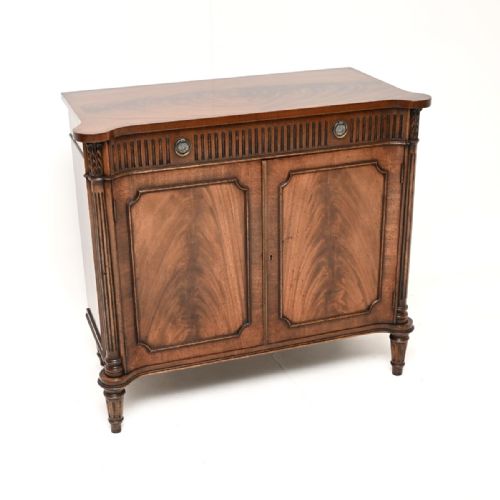
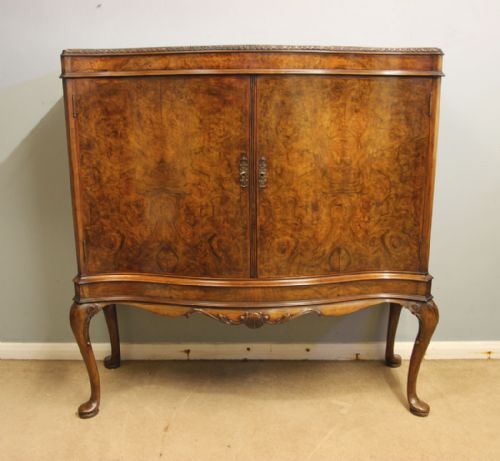
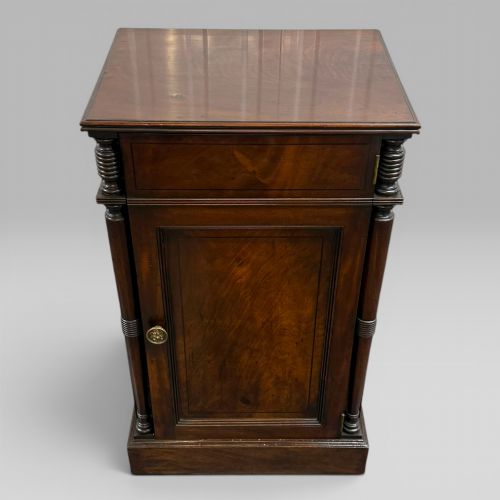
When you look for a georgian drinks cupboard, you encounter a range of timber furniture designed to hold glassware and bottles. The selection spans distinct forms, including corner cabinets, side cabinets, chiffoniers, and cabinets on stands.
Most examples originate from the Georgian and Regency periods, utilising rich timbers like mahogany and walnut. These pieces vary from wall-hanging corner units to substantial three-door side cabinets and pedestals.
Makers adapted these storage forms to suit changing domestic habits, incorporating locking doors and internal drawers. Buyers find both tall architectural corner cupboards and low compact chiffoniers on this page.
How they were made
Cabinetmakers constructed these pieces primarily using solid mahogany, flame mahogany veneer, and burr walnut veneer over sturdy secondary timbers. They applied fine brass for key escutcheons, handles, and occasional decorative mounts.
Surfaces often received hand-rubbed polishes that enhanced the natural grain patterns of the timber. Specialised forms incorporated fabric linings, turned baluster legs, and giltwood highlights to suit formal interiors.
Georgian Drinks Cupboard Retail Price Guide 2026
Typical asking prices for georgian drinks cupboard among the pieces listed under this phrase on Sellingantiques today, from the lower quarter to the upper quarter. They describe what is for sale here now, not the wider market.
Listings feature mahogany, walnut, and giltwood across Georgian and Regency periods.
What varies in quality
The standard of timber selection sets individual pieces apart, particularly the depth of figure in flame mahogany and burr walnut veneers. Superior items display careful grain matching across doors and drawer fronts rather than random application.
Construction methods also define the tier of a piece, evident in the choice of secondary woods and the crispness of turned or carved details. Original brass hardware and working locks with keys distinguish better-preserved examples.
Gillows
The Georgian Drinks Cupboard Glossary
- Chiffonier
- A low sideboard or cabinet featuring shelves or enclosed cupboards below, popular during the Regency period. They provide convenient surface space and low-level storage.
- Cellarette
- A lockable container or cabinet designed specifically to hold wine bottles securely. These pieces often sit beneath sideboards or stand on dedicated pedestals.
- Demi Lune
- A half-moon shape used for table and cabinet tops designed to sit flush against a wall. This profile allows for compact placement in tighter spaces.
- Veneer
- A thin layer of highly figured wood applied over a stable secondary timber carcass. Flame mahogany and burr walnut represent typical choices for decorative surfaces.
Georgian Drinks Cupboard: Frequently Asked Questions
How were these cupboards used historically?
These cabinets served to store fine wines, spirits, and drinking vessels securely in dining rooms and drawing rooms. Owners kept the doors locked to control access to expensive imported bottles.
Interior compartments often included specialised racks or drawers sized specifically for decanters and glasses. Taller corner units kept provisions close at hand while utilising otherwise neglected room angles.
Where should I place one in a modern home?
A compact side cabinet or chiffonier fits well in a living room or dining space as a functional serving surface. Corner cupboards make efficient use of empty wall junctions while displaying glassware behind glazed doors.
Consider the height and depth of the piece relative to your other furniture to maintain clear pathways. Low cabinets also function effectively as media units or hallway storage.
How do I distinguish Regency pieces from Georgian ones?
Georgian furniture generally reflects earlier architectural influences with heavier cornices, panelled doors, and bracket feet. Mahogany remains the dominant timber through much of the eighteenth century.
Regency pieces often incorporate classical revival motifs, brass inlay, simulated rosewood, and lighter turned supports. Proportions tend to be more compact, reflecting changing interior styles of the early nineteenth century.
What is the difference between a side cabinet and a chiffonier?
A side cabinet provides general enclosed storage behind two or three doors without necessarily including superstructure shelving. These pieces focus on flat top surfaces and substantial internal capacity.
A chiffonier specifically refers to a lower piece, common in the Regency era, which frequently incorporates a raised shelf back or tier above the main surface. They offer a lighter visual profile suited to smaller entertaining spaces.