



Georgian Diamond Cluster
A georgian diamond cluster brings together hand-cut stones and rich metalwork, offering the distinct intimacy of early jewellery design.
Georgian Diamond Cluster
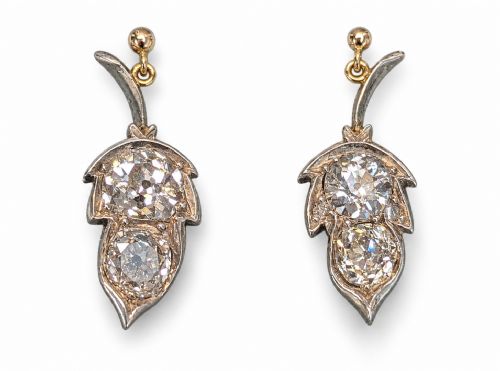
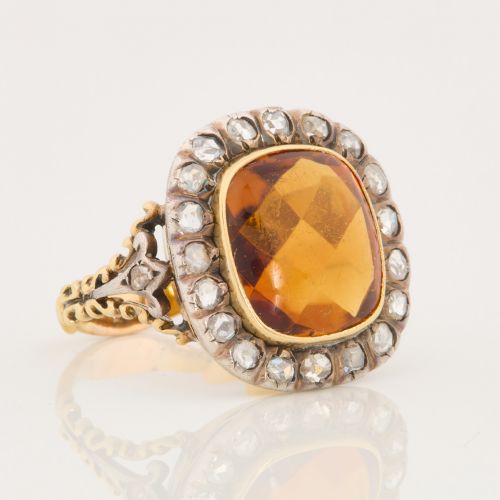
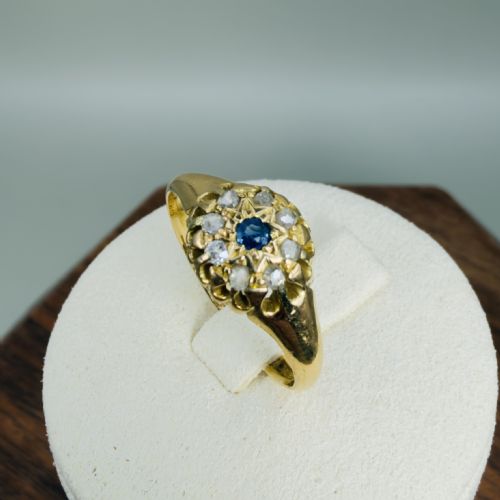
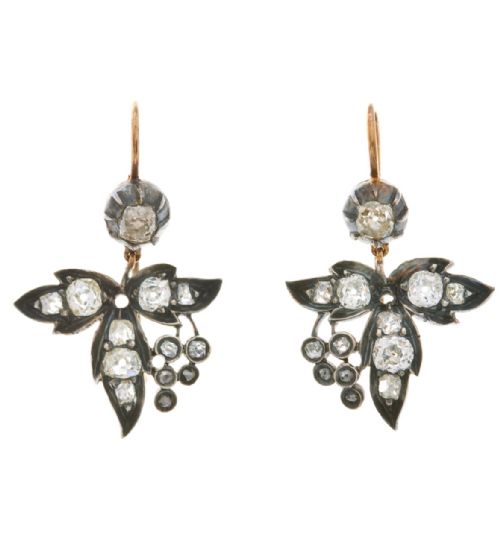
When you search for a georgian diamond cluster, you are looking at multi-stone arrangements that group smaller diamonds around a central focal point, often using a contrasting coloured gemstone like emerald, sapphire, turquoise, or ruby. These pieces appear across rings, earrings, pendants, and brooches, spanning periods from the eighteenth century into the Victorian era.
The versions you are most likely to meet on this page lean heavily towards Victorian interpretations alongside genuine Georgian and early nineteenth-century examples. They frequently combine silver settings mounted on gold shanks or backs, reflecting the specific metallurgical practices of the period before platinum became common.
Materials and construction
The construction of these pieces relies heavily on the pairing of silver and gold, where silver forms the upper collets holding the stones to display their brilliance against a dark background, while gold provides structural strength to the shank or backing. This dual-metal approach is characteristic of the eighteenth and nineteenth centuries.
Stones are typically shaped as rose cut or old mine cut diamonds, set by hand into closed or open-backed foils that enhance their light capture under candlelight. Workshops utilised natural pearls, turquoise, emeralds, and rubies alongside these diamonds to build rich, textured colour combinations within the cluster format.
Georgian Diamond Cluster Retail Price Guide 2026
Typical asking prices for georgian diamond cluster among the pieces listed under this phrase on Sellingantiques today, from the lower quarter to the upper quarter. They describe what is for sale here now, not the wider market.
Some rings include secret blue glass beneath the stones, capturing the whimsical sentiment of nineteenth-century jewelers who hid tokens of the heavens inside.
Judging quality and integrity
Quality in a georgian diamond cluster rests upon the integrity of the original metalwork and the condition of the stones within their hand-cut facets. Pieces that retain their original foil backs without moisture damage and show minimal alteration to the shank or settings stand higher in the range.
The harmony of the cluster arrangement and the proportion of the central stone relative to the surrounding border dictate the visual balance. Finer examples display precise hand-beaded collets and secure, unblemished gemstone pairings that have survived centuries of wear intact.
The Georgian Diamond Cluster Glossary
- Rose cut
- A diamond cut featuring a flat base and a domed crown with triangular facets arranged in a symmetrical pattern. This cut produces a soft, shimmering reflection rather than the deep brilliance of modern stones.
- Old mine cut
- An early form of diamond cut with a roughly square or cushion shape, high crown, and small table facet. These stones were cut by hand to retain weight and catch the dim light of gas or candlelight.
- Collet
- A metal band or collar that holds a gemstone in place within a piece of jewellery. Hand-formed collets are typical of older pieces.
- Navette
- A boat-shaped or marquise design profile that tapers to points at either end. This elongated form is frequently seen in eighteenth and nineteenth-century cluster rings.
Georgian Diamond Cluster: Frequently Asked Questions
How do I care for a georgian diamond cluster?
These historical pieces require gentle handling due to their delicate foil backs and closed settings. Avoid submerging them in water or using ultrasonic cleaners, as moisture trapped behind the stones can cause permanent discolouration.
Instead, wipe the metal and stones gently with a soft, dry cloth after wearing. Store each piece separately in a lined box to prevent the metal from scratching softer gems like turquoise or pearls.
Can I wear these rings every day?
While these items were made to be worn, their age and delicate construction mean daily wear requires extra caution. Rings featuring closed-back settings or softer accent stones such as turquoise and pearl are particularly vulnerable to knocks and moisture.
Reserve them for special occasions or low-impact wear to preserve the integrity of the original silver and gold settings. Removing them before washing hands or household chores is essential.
How do I tell Georgian from Victorian pieces?
Georgian pieces often display closed-backed settings where foil was placed behind the diamond to enhance its colour and reflection. The gold and silver work tends to be intensely hand-wrought, reflecting eighteenth-century craftsmanship.
Victorian pieces frequently adopt similar cluster motifs but may show slightly more standardised manufacturing techniques and different gold purities like eighteen carat or fifteen carat. Examining the back of the piece often reveals the shift in construction methods between the two eras.
Why are silver and gold used together?
Jewellers used silver on the face of the jewellery because its bright white surface contrasted effectively with the diamonds and made them stand out. Platinum was not yet in use for jewellery manufacturing during the earliest periods.
Gold was utilised for the reverse and the band to provide durability and prevent the silver from marking the wearer's skin or clothing. This combination is a reliable indicator of antique construction.