



Georgian Dessert Flatware
Georgian dessert flatware brings silver spoons, forks and knives to the table, fashioned for the final course of a grand meal.
Georgian Dessert Flatware
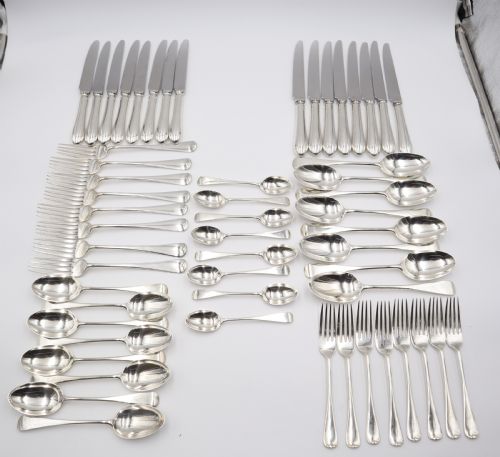
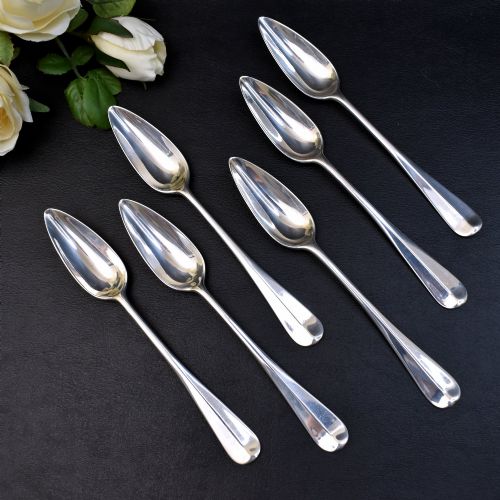
When you search for georgian dessert flatware, you encounter specialised implements designed for sweet dishes, fruit and berries at the end of a feast. The forms span individual dessert spoons, forks, grapefruit spoons and serving spoons, alongside complete cased canteens.
The pieces you meet on this page bridge multiple eras, stretching from eighteenth-century George II items through the reign of George III, Victorian updates and later twentieth-century revivals. Origin marks direct attention to silversmiths working in London, Dublin, Edinburgh and Birmingham.
The defining characteristic of these objects is their specific scale and purpose, smaller than dinner service cutlery and often enriched with bright-cut engraving, crests or parcel-gilt surfaces. They represent the refined domestic rituals of their period.
How they were made
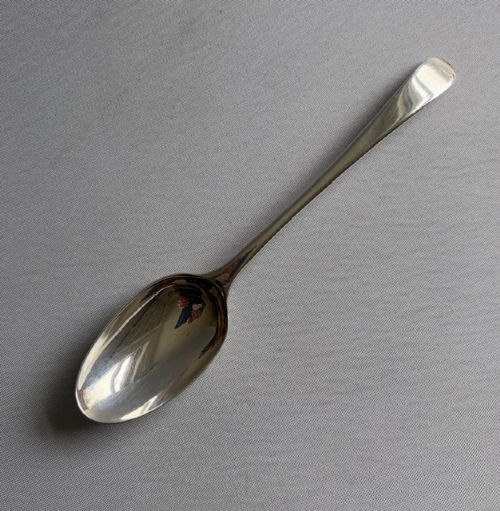
The primary material across the items is sterling silver, frequently enhanced with gold wash, silver-gilt, or steel blades for cutting implements. Metals are shaped into fiddle pattern, coburg pattern, celtic point or palm pattern silhouettes.
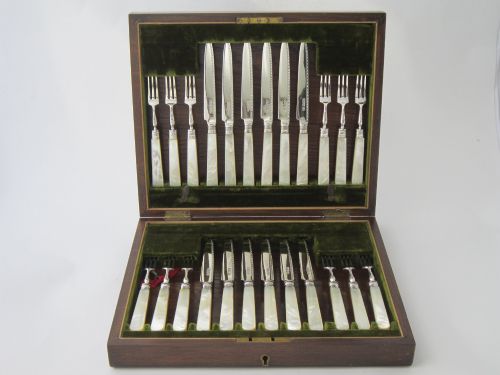
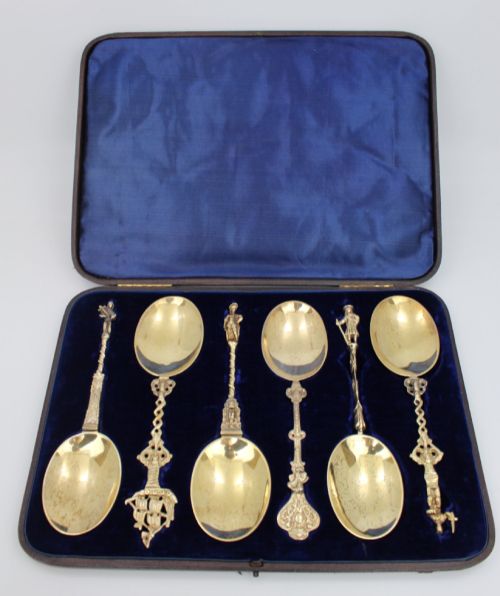
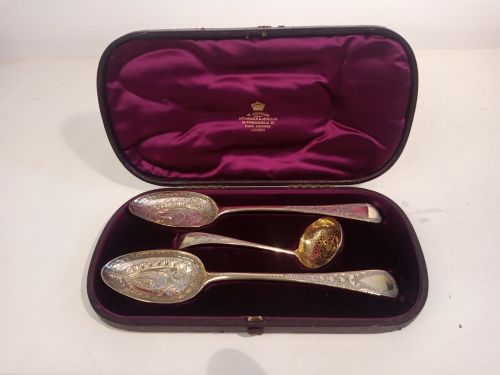
Presentation sets are housed in fitted boxes lined with velvet and silk to protect the polished metalwork. Hallmarks struck directly into the silver record the assay office, date letter and maker's mark.
Georgian Dessert Flatware Retail Price Guide 2026
Typical asking prices for georgian dessert flatware among the pieces listed under this phrase on Sellingantiques today, from the lower quarter to the upper quarter. They describe what is for sale here now, not the wider market.
Some nineteenth-century diners required an entire suite of specialised spoons just to tackle a single bowl of summer berries.
What varies in quality
The distinction between ordinary and exceptional examples rests upon the crispness of the original chasing, engraving and crest work. Crisp floral motifs or deep berry repoussé work indicate a high level of contemporary craftsmanship.
Completeness and original presentation also dictate standing, particularly where cased sets retain their original fitted velvet and silk interiors. Surviving matching sets carry greater cohesion than assembled groupings.
Deakin & Francis·John Pittar·Hamilton & Inches·E Coker·William Chawner II
The Georgian Dessert Flatware Glossary
- Sterling silver
- A silver alloy containing 92.5 percent pure silver and 7.5 percent other metals, typically copper, standard for British hallmarked items.
- Silver-gilt
- Sterling silver that has been coated with a thin layer of gold, sometimes called vermeil, providing a rich yellow lustre.
- Fiddle pattern
- A nineteenth-century flatware handle shape featuring a narrow stem that broadens near the end into a shoulder resembling a violin.
- Berry spoon
- A spoon, often Georgian in origin, later embossed and chased with fruit and foliage, typically utilised for serving berries.
- Hallmark
- A series of official marks stamped on precious metals in the United Kingdom, certifying the purity, maker and year of production.
Georgian Dessert Flatware: Frequently Asked Questions
What is georgian dessert flatware used for?
These implements were created for the dessert course, which traditionally featured fruit, sweetmeats, jellies and puddings. They allowed diners to handle delicate foods with specialised utensils rather than standard dinner cutlery.
Over time, many of these pieces transitioned into serving roles at the table, particularly larger berry spoons and sifters used during family dining.
How do I identify the date of a piece?
Dating relies heavily on the official hallmarks stamped into the metal by British assay offices. These marks include date letters that correspond to specific years of manufacture.
Stylistic indicators, such as fiddle handles, celtic points or palm patterns, also help narrow down the period of production alongside any engraved family crests.
Are cased sets original?
Many sets survive in fitted boxes lined with velvet and silk, which were designed to protect the silver between uses. Some presentation boxes are contemporary to the flatware, while others represent later pairings.
Inspecting the interior fit and the wear on the lining helps determine whether the case has housed the specific cutlery since its creation.
How should I care for antique silver?
Silver requires gentle cleaning using non-abrasive cloths and dedicated silver polishes to maintain its surface without wearing away thin gilding or engraved details. Regular handling naturally prevents heavy tarnish from settling in deep crevices.
Storing pieces in dry environments, particularly within anti-tarnish rolls or lined boxes, protects the metal when not in active use on the table.