







Georgian Cut Stemware
Georgian cut stemware brings heavy lead glass drinking vessels with faceted stems and engraved bowls straight to the table.
Georgian Cut Stemware
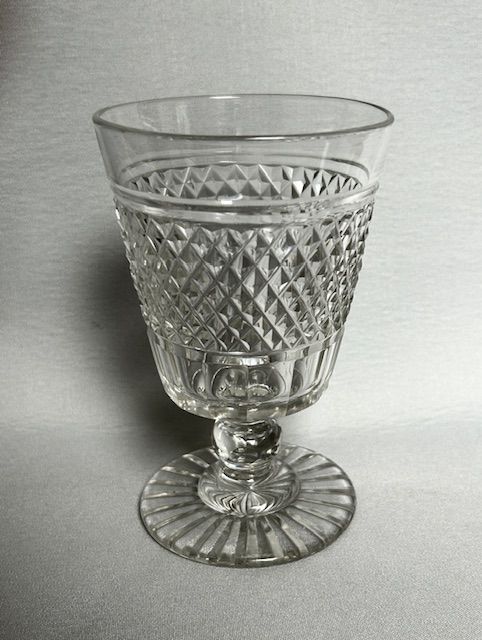
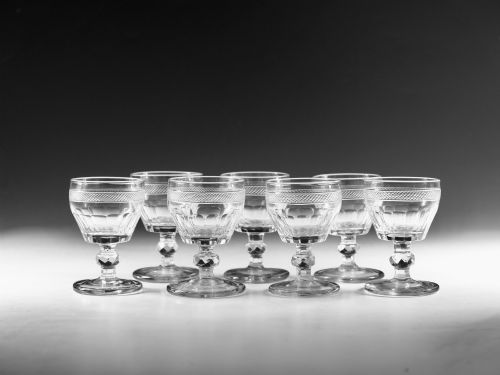
When you search for georgian cut stemware, you enter a field of drinking vessels spanning the eighteenth century, the Regency era, and the early nineteenth century. These pieces include rummers, wine glasses, port glasses, sherry glasses, cordials, ale flutes, goblets, and jelly glasses.
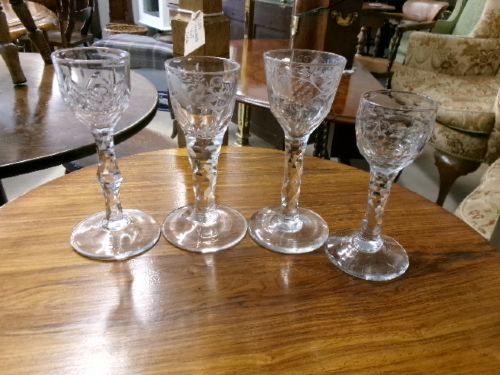
Most examples found here date from the seventeen-seventies through to the eighteen-twenties, showing the distinct heavy forms and brilliant refraction typical of the period. The range covers both plain bowls and those detailed with facet cutting, hop and barley motifs, and Jacobite engravings.
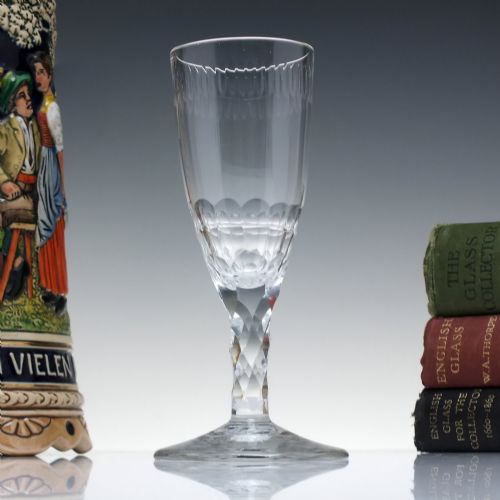
The assortment varies from modest cordial glasses to substantial table rummers and large Regency champagne glasses. Collectors encounter everything from individual drinking glasses to assembled sets, often featuring wide foot bases and decorated bowls.
Materials and manufacture
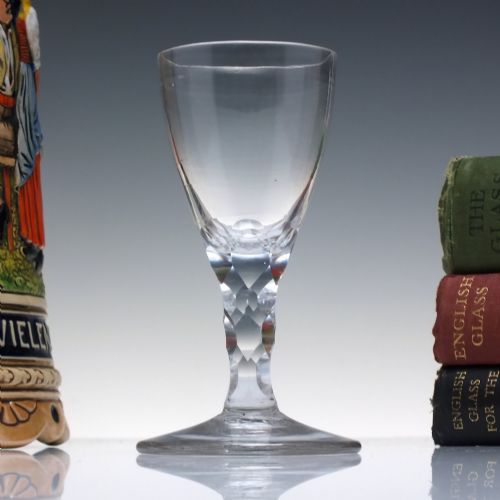
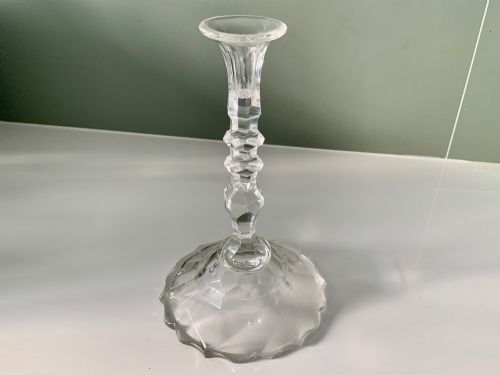
Makers shaped these drinking vessels from heavy lead crystal, flint glass, and clear glass, utilising the high refractive index of lead glass to capture light within the faceted stems. Master glassblowers formed the basic shapes before applying intricate wheel-cutting techniques to create facets, hobnail patterns, and pan cuts.
Georgian Cut Stemware Retail Price Guide 2026
Typical asking prices for georgian cut stemware among the pieces listed under this phrase on Sellingantiques today, from the lower quarter to the upper quarter. They describe what is for sale here now, not the wider market.
Listings feature lead crystal and flint glass objects spanning the eighteenth century, the Regency era, and the early nineteenth century.
Distinctions in quality
The standard of a piece rests upon the clarity of the metal and the crispness of the facet cutting along the stem. Heavy lead glass with a bright, resonant ring indicates superior material composition.
Depth and precision in the wheel engraving distinguish finer bowls from simpler productions, particularly when depicting detailed subjects like hop and barley or Jacobite symbols. The balance between the bowl, the faceted stem, and the wide foot base dictates the overall elegance of the vessel.
James Giles
The Georgian Cut Stemware Glossary
- Lead crystal
- A heavy, brilliant glass containing lead oxide that increases weight and light refraction. This material forms the foundation of nearly all quality drinking vessels from the period.
- Facet cut
- A decorative surface treatment featuring multiple flat polished planes meeting at sharp angles. This technique appears predominantly on the stems of drinking glasses to catch the light.
- Rummer
- A large, robust drinking glass suited for beer, wine, or punch during the eighteenth and nineteenth centuries. Substantial variants often feature pan cuts or hobnail patterns.
- Ale flute
- A tall, slender glass designed to serve sparkling ales, frequently decorated with engraved hop and barley motifs. The elongated bowl sits atop a faceted stem.
- Hobnail cut
- A raised, diamond-shaped geometric pattern created by intersecting rows of deep wheel cuts. This style adds tactile grip and intense sparkle to heavy vessels.
- Jacobite glass
- A drinking vessel engraved with clandestine political symbols supporting the exiled Stuart dynasty. These historical pieces remain highly sought after by specialist collectors.
Georgian Cut Stemware: Frequently Asked Questions
What is georgian cut stemware?
These pieces comprise drinking vessels produced in Britain during the eighteenth and early nineteenth centuries, characterised by heavy lead glass and faceted stems.
Craftsmen utilised wheel cutting and engraving to decorate the bowls of wine glasses, rummers, and goblets, creating functional items designed for dining tables.
How do I date georgian cut stemware?
Dating relies upon stylistic markers such as the depth of the lead glass, the shape of the foot base, and the specific style of facet cutting on the stem. Eighteenth-century examples often feature different bowl proportions compared to Regency pieces from around eighteen hundred to eighteen-twenty.
Engraving subjects and manufacturing techniques also shift across decades, helping to place a glass within the Georgian or Regency periods.
How were rummers used?
Rummers served as large, sturdy drinking vessels for ale, wine, or punch during communal dining and tavern gatherings. Their substantial weight and thick walls made them durable for daily use.
People placed them directly on the table for heavy toasts, often passing them around during dinner parties.
How do I care for antique glass?
Wash antique pieces by hand in warm water using mild soap, avoiding sudden temperature changes that can crack old lead glass. Dry them immediately with a soft cloth to prevent water spots.
Store them securely on stable shelving away from the edge where heavy bases might cause tipping.