



Georgian Cut Glass Stopper
A georgian cut glass stopper completes a decanter, bringing historic lead crystal and Regency craftsmanship straight to your dining table.
Georgian Cut Glass Stopper
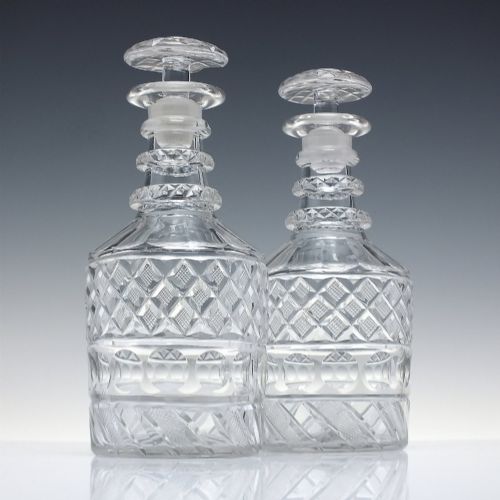
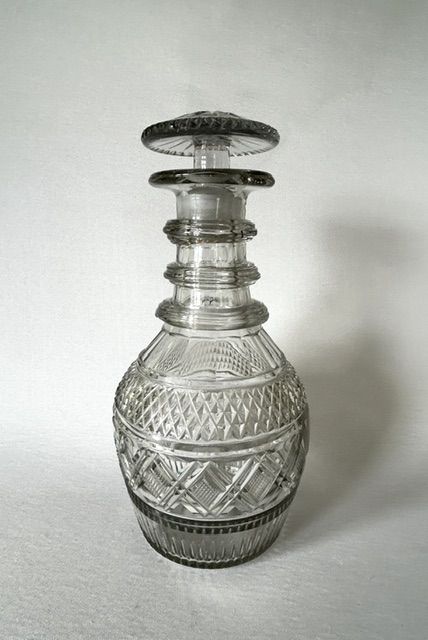
On this page, you will most frequently meet stoppers attached to decanters ranging from George III examples to late Regency pieces. The forms span ship's decanters, Prussian styles with three rings, and matched pairs featuring lead crystal and cut glass.
Makers in the evidence range from unrecorded English workshops to the atelier of James Giles. The materials focus on lead crystal, cut glass, and lead glass, often associated with Irish production and English glasshouses.
Materials and methods
These pieces are made from lead crystal, cut glass, and lead glass, harnessing the weight and refractive index of heavy glass formulations. Skilled artisans shaped the molten material before applying extensive wheel-cutting techniques.
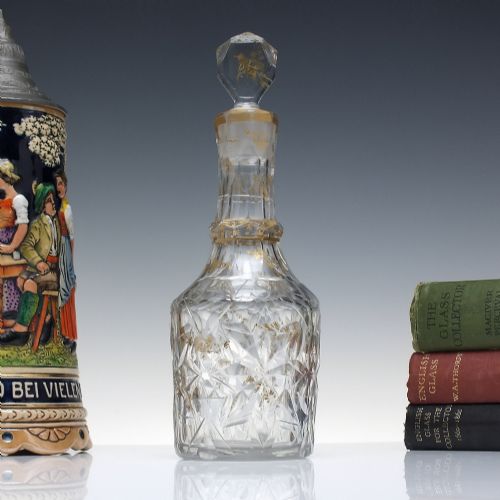
Some examples incorporate gold leaf details, seen in specialised workshops like that of James Giles around 1780. Etching and facet-cutting further defined the profiles, matching the decorative vocabulary of the decanters they topped.
Georgian Cut Glass Stopper Retail Price Guide 2026
Typical asking prices for georgian cut glass stopper among the pieces listed under this phrase on Sellingantiques today, from the lower quarter to the upper quarter. They describe what is for sale here now, not the wider market.
Object types on this page are strictly decanters, encompassing George III, Regency, and nineteenth-century English and Irish forms.
Distinctions in quality
The standard of a cut glass stopper depends on the crispness of its facets and the purity of the lead crystal. Heavier lead glass provides a deeper ring and superior clarity compared to lighter alternatives.
Integration with the decanter neck also defines the upper range. Well-fitted stoppers show harmonious proportions with the body, whether on a ship's decanter or a three-ring Prussian form.
Atelier of James Giles
The Georgian Cut Glass Stopper Glossary
- Lead crystal
- A heavy glass containing lead oxide that increases brilliance and weight. This material allows for deep, sharp wheel-cutting.
- Prussian style
- A decanter shape featuring horizontal rings around the neck, typically paired with a matching cut glass stopper. These were designed for stability at sea and on dining tables.
- Ship's decanter
- A form with a wide base and low centre of gravity to prevent tipping during sea travel. They utilise sturdy stoppers to secure contents safely.
- Atelier
- A designer's or decorator's workshop, such as the one run by James Giles. These studios applied gilding and enamel decoration to blank glass.
Georgian Cut Glass Stopper: Frequently Asked Questions
What is a georgian cut glass stopper?
A georgian cut glass stopper is a hand-cut glass closure designed to seal historic decanters from the eighteenth and nineteenth centuries.
These pieces are made from lead crystal and lead glass, featuring facet-cutting that matches the style of the accompanying decanter.
How do I date a glass stopper?
Dating a stopper involves examining the manufacturing technique, lead content, and cutting style alongside the decanter it accompanies. Georgian and Regency pieces often display deep wheel-cutting and heavy lead crystal.
Later Victorian examples may show different edge profiles or etching styles. Comparing the wear on the ground glass fitment to the neck of the decanter also offers clues to its age.
How were these stoppers used?
These stoppers were used to seal decanters containing wine, spirits, and cordials on dining tables and sideboards. The tight ground-glass fit kept air out and preserved the contents.
They were lifted by hand whenever drinks were poured during formal meals.
Can I use these with antique decanters?
Many collectors pair loose stoppers with period decanters, though finding an exact fit requires attention to the ground-glass neck dimensions. Each stopper was individually ground to fit its specific vessel.
Matching the weight, glass tint, and cut pattern ensures historical consistency.