
Georgian Country Chest
A Georgian country chest offers honest domestic utility in timber, bringing vernacular warmth and practical storage to modern interiors.
Georgian Country Chest
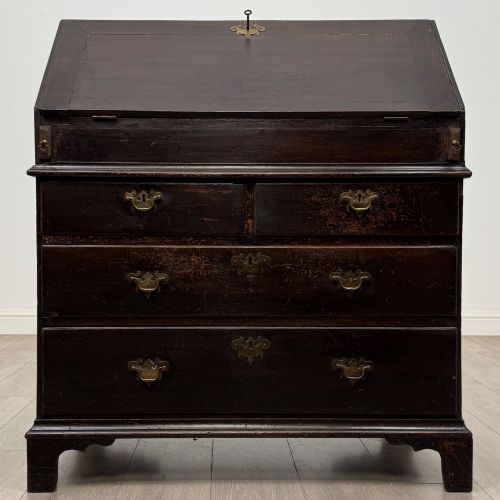
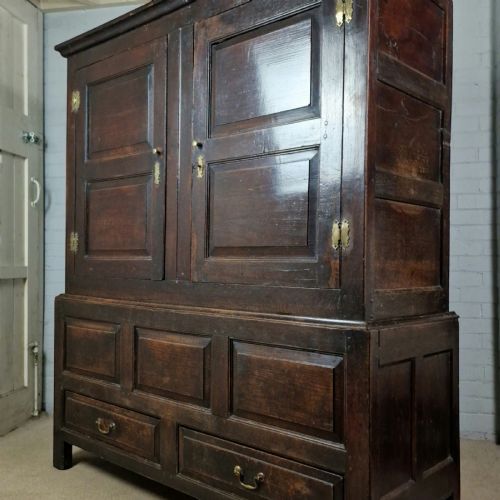
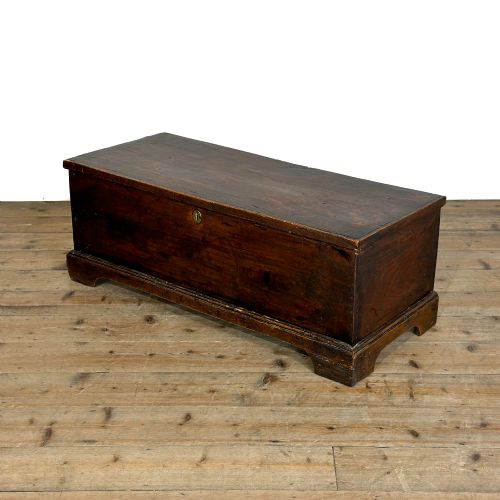
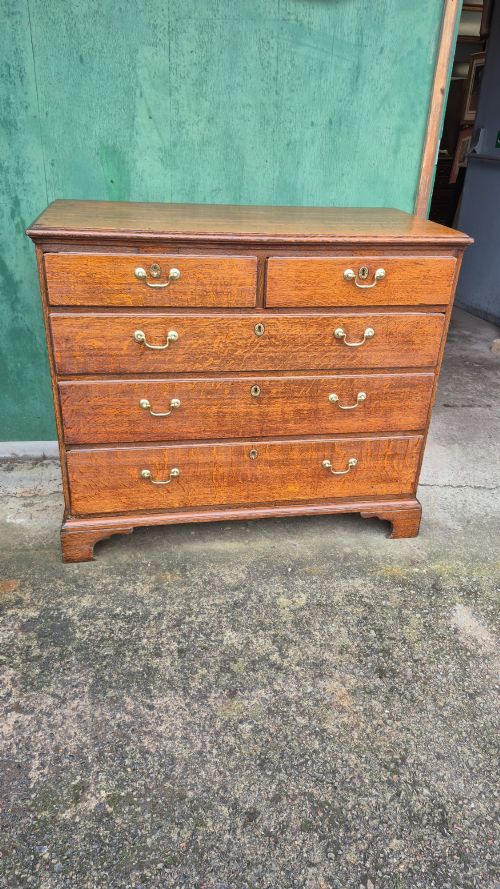
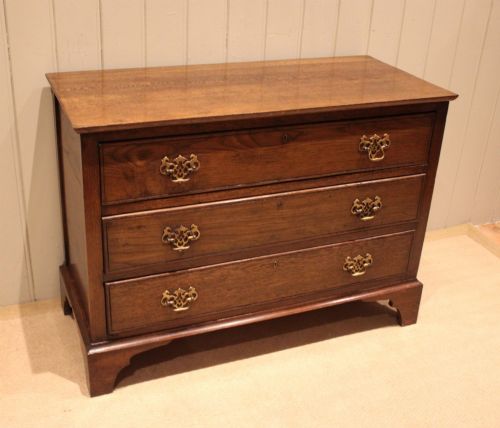
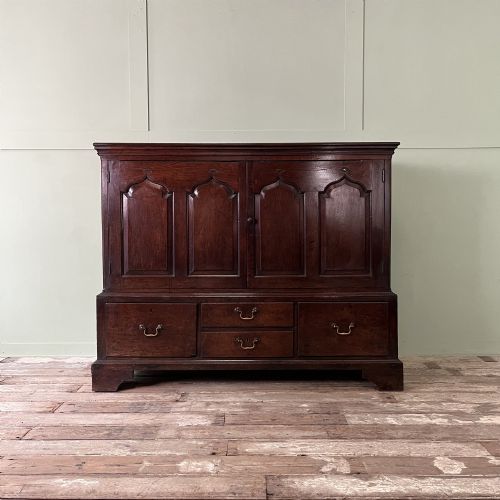
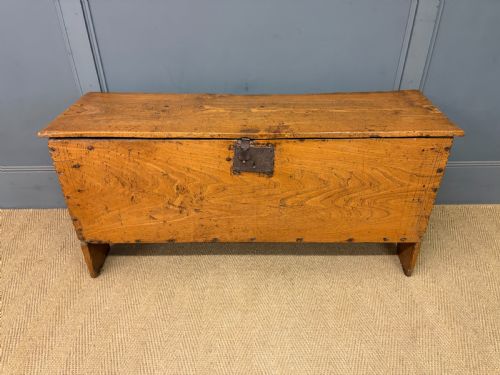
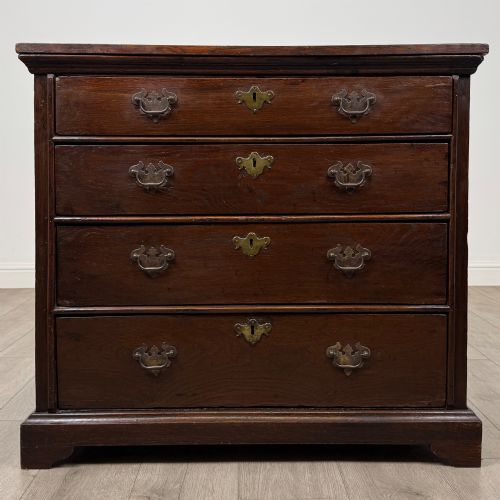
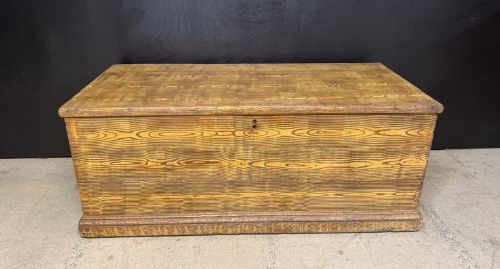
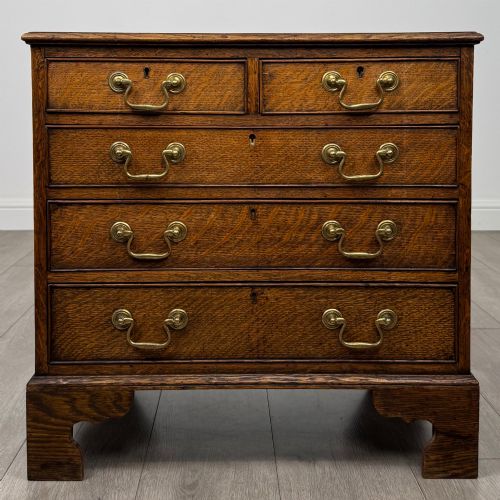
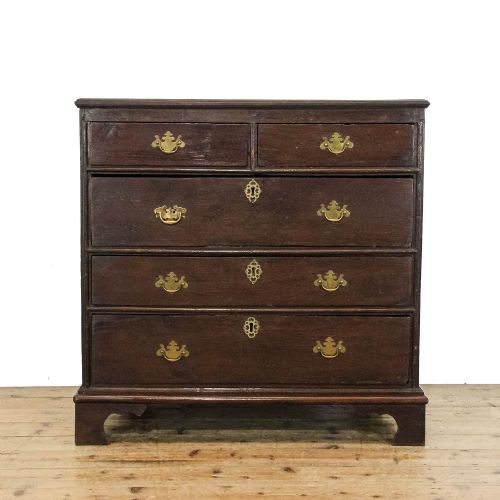
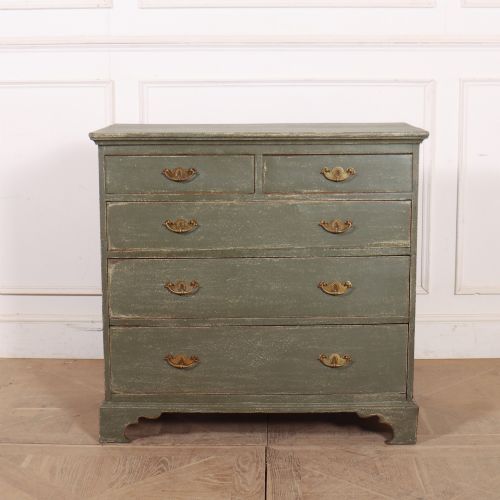
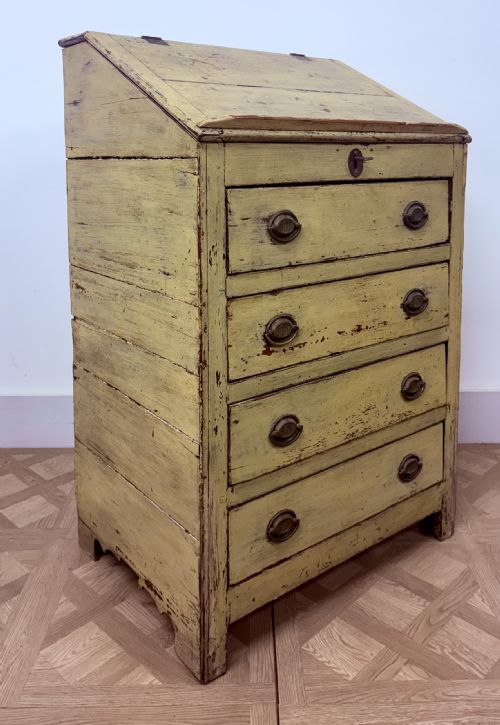
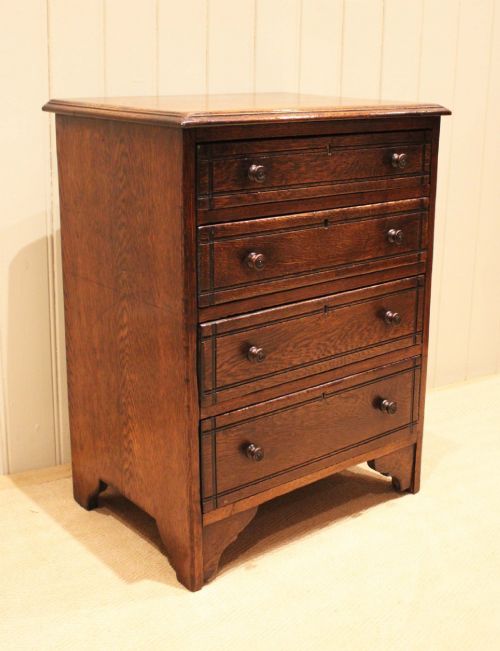
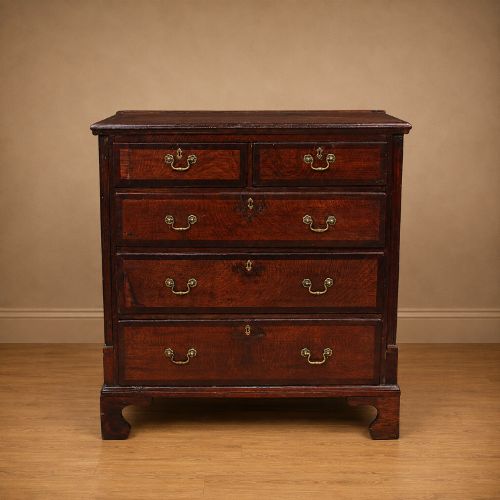
A georgian country chest represents utilitarian domestic furniture made outside major metropolitan workshops, spanning chests of drawers, mule chests, and coffers.
The pieces appearing most frequently combine robust storage forms with regional vernacular styling from English and Welsh makers.
Makers utilised available local timbers such as oak, elm, and pine, frequently resulting in distinctive regional characteristics rather than strict metropolitan standardisation.
Assessing Quality and Character
The highest quality examples display proportioned timber selection, retained original paint or untouched patinated surfaces, and sound structural joinery.
Lesser examples often show unconsidered timber matching, heavy later alterations, or surface stripping that removes historical character.
The archive shows regional variants including Welsh coffer bachs and mule chests with integrated lower drawers.
The Georgian Country Chest Glossary
- Mule chest
- A storage chest featuring one or more drawers built into the base beneath the primary compartment.
- Coffer bach
- A small Welsh box or chest typically raised on short feet, historically used for precious domestic linens.
- Crossbanding
- A decorative border of veneer laid across the grain of the primary wood to frame drawer fronts or panels.
- Linen press
- A tall cupboard featuring upper shelving for textiles above a chest of drawers in the base.
- Vernacular
- Furniture designed for local utility and made by regional cabinet makers rather than following metropolitan fashions.
Georgian Country Chest: Frequently Asked Questions
What is a coffer bach?
A coffer bach is a small Welsh box or chest traditionally used to store household linens and valuables. These miniature pieces demonstrate the fine joinery of regional makers.
They sit neatly on tables or counters, offering accessible storage combined with distinct vernacular character.
How do I care for antique timber?
Keep wooden pieces away from direct heat sources and sudden humidity changes to prevent timber splitting. Regular gentle dusting preserves the natural wax finish.
Avoid modern silicone polishes, as they build up residue and dull the historic patina over time.
Were these made in two parts?
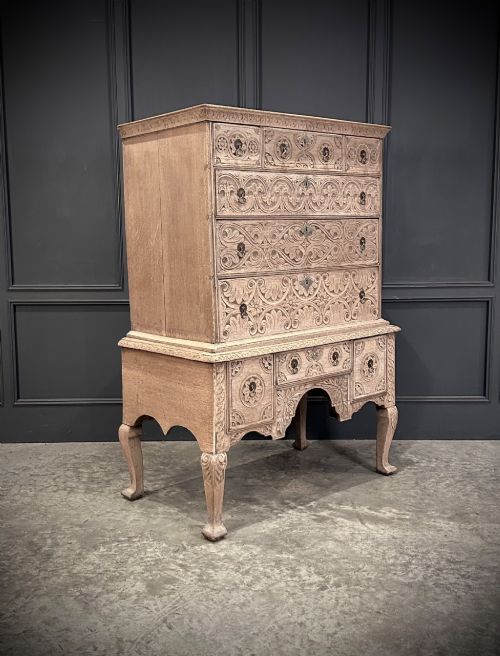
Larger examples, particularly tallboys and certain chests on stands, were constructed in separate upper and lower sections. This made transport through narrow provincial doorways manageable.
The sectional design remains visible through the dividing mouldings and internal joining battens.
What woods were commonly used?
Regional makers relied heavily on native hardwoods and softwoods including oak, elm, and pine. Elm offers a rich, swirling grain pattern while oak provides sturdy durability.
Some pieces incorporate mahogany crossbanding or feature decorative painted finishes.