

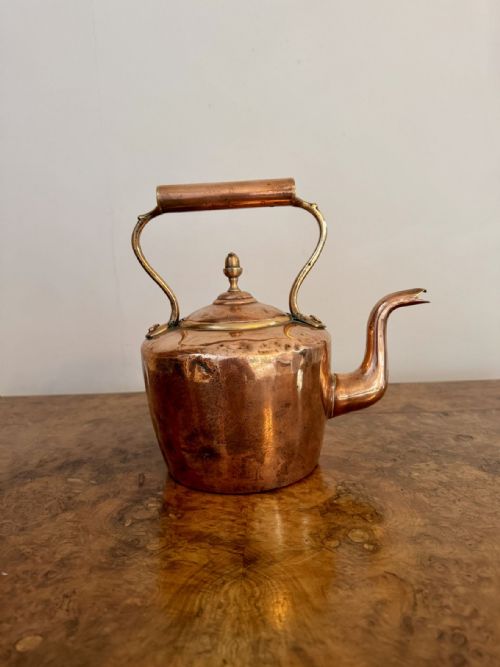


Georgian Copper Tea Pot
A georgian copper tea pot brings substantial weight and warm metallic tone to a hearth, combining utility with historic form.
Georgian Copper Tea Pot
When searching for a georgian copper tea pot, collectors encounter sturdy vessels designed for boiling water, predominantly categorised across listings as kettles and tea kettles. These items span the Georgian period, the George III era, and the nineteenth century, reflecting practical domestic equipment from around eighteen hundred and the years following.
The pieces appearing on this page take various proportions, ranging from small formats to large oval shaped designs. Brass and wood frequently accompany the primary metal, appearing in handles and mounts to provide contrast and insulation against the heat.
Most examples originate from the early nineteenth century and the preceding decades, displaying the characteristic robust construction expected of utility items from this era. Buyers find both polished finishes and aged patinas among the selection.
How they were made
Makers utilised heavy sheet copper to construct these bodies, hammering and joining the metal to withstand regular exposure to heat. Brass elements often reinforced spouts, handles, or hinges, adding structural strength where stress occurred most frequently.
Wood components were turned and fitted to handles, protecting hands from hot metal during use. The combination of copper, brass, and wood defined the standard manufacturing approach for these kitchen and hearth vessels.
Georgian Copper Tea Pot Retail Price Guide 2026
Typical asking prices for georgian copper tea pot among the pieces listed under this phrase on Sellingantiques today, from the lower quarter to the upper quarter. They describe what is for sale here now, not the wider market.
Listings feature items from the Georgian period, George III era, and nineteenth century, constructed from copper, brass, and wood.
What varies in quality
Proportion and scale distinguish the domestic items in this range, with larger oval formats and smaller delicate vessels commanding different visual presences. The crispness of the shaping and the integrity of the joins separate standard utility vessels from more refined examples.
The preservation of original materials, including wooden handle components and contrasting brass mounts, shapes the overall character of each piece. Surface treatment also differs, as some items retain a high polish while others show the deeper tonality of unpolished metal.
The Georgian Copper Tea Pot Glossary
- Georgian
- A descriptive term for items produced during the reigns of the four British monarchs named George, spanning the eighteenth and early nineteenth centuries. This period encompasses the George III era frequently seen in these listings.
- George III
- The period of the reign of King George III, lasting from seventeen sixty to eighteen twenty. Many domestic copper items date from the later decades of this specific era.
- Copper
- A malleable reddish-brown metal used extensively for domestic vessels due to its thermal conductivity. It forms the primary structural material for these kettles.
- Brass
- An alloy of copper and zinc utilised for decorative and structural accents such as handle mounts and spouts. Its brighter metallic tone contrasts with the darker body metal.
- Oval
- A curved geometric form describing the footprint or body shape of specific larger kettles. This layout provided stability and increased capacity on the hearth.
Georgian Copper Tea Pot: Frequently Asked Questions
How were these kettles used?
These vessels were placed directly near hearths or on stoves to heat water for tea and general household purposes. The robust construction allowed them to endure daily exposure to high temperatures.
Wooden handle parts ensured the user could lift the heavy metal body safely without transferring excessive heat to the hand.
How do I date a copper kettle?
Dating relies on stylistic markers, construction techniques, and period attributions linked to the George III era and the early nineteenth century. Formats such as oval bodies often point towards specific manufacturing norms of eighteen hundred.
Comparing the methods of joining metal sheets and the design of brass mounts helps establish the approximate age of each piece.
How do I care for antique copper?
Maintaining antique copper involves deciding whether to preserve the dark aged patina or apply metal polish for a bright finish. Gentle cleaning removes dust without disturbing the historic surface.
Keeping the metal dry prevents corrosion and preserves the integrity of any integrated brass and wood components.