






Georgian Console Cabinet
These georgian console cabinet pieces offer classical proportion and timber craft, forming the foundational storage and serving surfaces of period rooms.
Georgian Console Cabinet
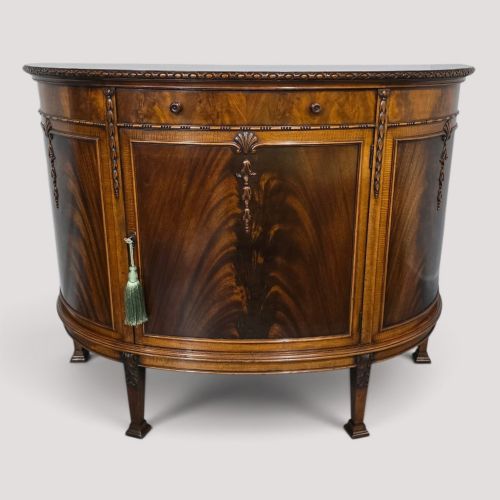
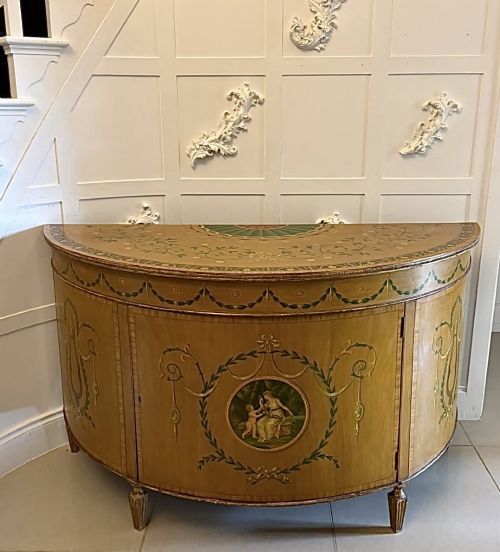
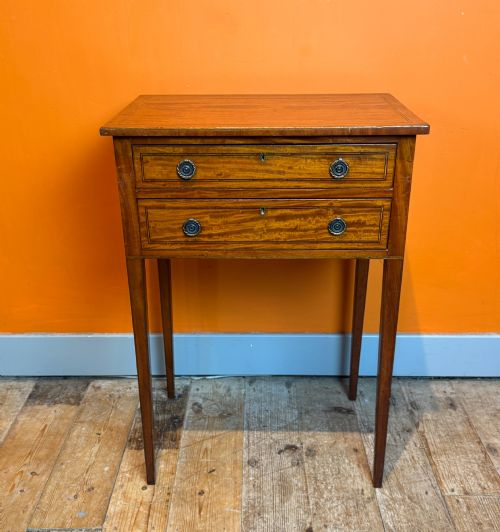
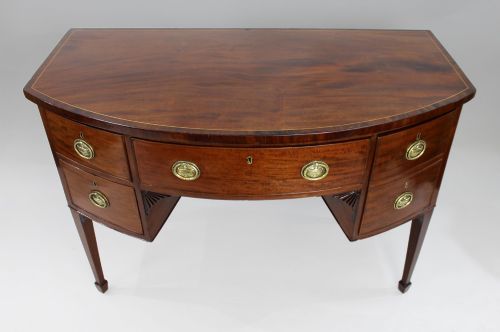
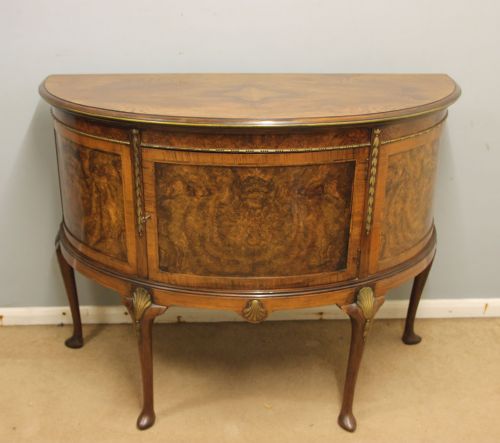
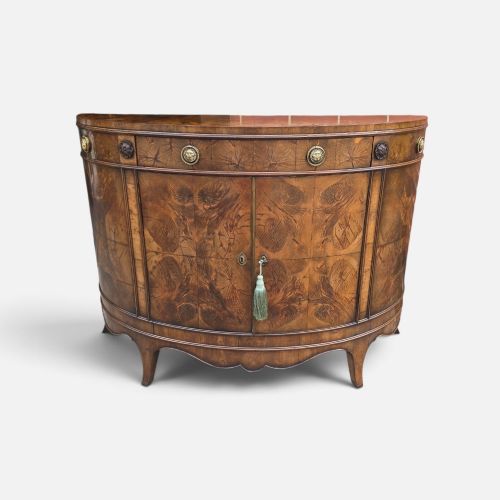
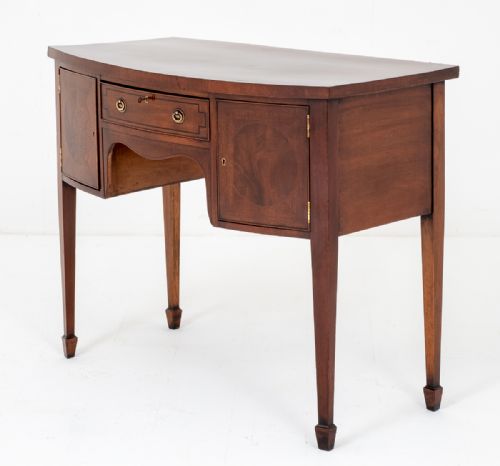
A georgian console cabinet search brings together sideboards, serving tables, lowboys, and demi-lune commodes designed to stand against walls in formal rooms. The listings show a strong presence of demi-lune forms alongside bow-fronted sideboards and lowboys from various centuries.
Most pieces encountered here date from the eighteenth and nineteenth centuries, complemented by later revival interpretations from the Edwardian period. Mahogany and satinwood dominate the selection, often taking curved or serpentine shapes meant for display and service.
How They Were Made
Cabinet makers utilised solid timbers alongside fine veneers, applying mahogany, walnut, oak, and yew wood over sturdy structural frames. Feather banding, classical painted panels, and brass hardware provide the decorative detail found across these forms.
Surfaces range from plain polished timber to intricate satinwood with hand-painted classical motifs, sometimes topped with marble. Construction methods follow traditional joinery principles suited to curved demi-lune shapes and straight-fronted serving tables alike.
Georgian Console Cabinet Retail Price Guide 2026
Typical asking prices for georgian console cabinet among the pieces listed under this phrase on Sellingantiques today, from the lower quarter to the upper quarter. They describe what is for sale here now, not the wider market.
Some demi-lune cabinets hide their curved secrets against the wall, pretending to be whole circles until you walk round them.
What Varies in Quality
The refinement of the timber selection and the execution of surface decoration determine the standing of an individual georgian console cabinet. Pieces featuring detailed satinwood painting, feather banding, or matched veneers represent a higher tier of workmanship than plain painted or utility alternatives.
Proportion and the handling of curved demi-lune or bow-front geometries separate accomplished cabinet work from simpler output. The integration of original brass fittings and the integrity of the underlying timber frame further distinguish the range.
The Georgian Console Cabinet Glossary
- Demi-lune
- A half-moon shape used for console tables and cabinets designed to stand flush against a wall. This profile allows the furniture to project minimally into a hallway or dining room.
- Lowboy
- A small table with drawers, typically raised on four legs, functioning historically as a dressing table or side table. They often feature walnut or oak construction.
- Feather banding
- An inlay technique where small pieces of veneer are arranged in a herringbone pattern around the edges of a drawer front or top. It frames the primary timber surface with subtle grain contrast.
- Bow front
- A convex, curved front on a cabinet or sideboard that projects outward in the centre. This shape softens the room's angles while increasing internal capacity.
- Commode
- A low cabinet or chest of drawers, often highly decorative and standing on legs. In this context, the term frequently describes serpentine or demi-lune display pieces.
Georgian Console Cabinet: Frequently Asked Questions
How were lowboys used?
Lowboys served as small side tables or dressing tables in eighteenth-century interiors. Their compact proportions suited bedrooms and dressing rooms.
Equipped with drawers, they held personal items or small accessories. Today, they operate effectively as side tables in living spaces.
What distinguishes a serving table?
Serving tables provided a stable surface for dishes and silverware during dining before the widespread use of dedicated sideboards. They often stood against dining room walls.
These pieces typically present an unencumbered lower section beneath a long rectangular or bow front. Their design emphasises sturdy timber construction and restrained classical detail.
How do I identify revival pieces?
Revival pieces replicate earlier eighteenth-century styles such as Sheraton, Hepplewhite, or Chippendale during later eras like the Edwardian period. They employ period forms using contemporary workshop methods.
Examination of the interior timber, secondary woods, and hardware helps determine the actual date of manufacture. These items offer eighteenth-century aesthetics built with later nineteenth or twentieth-century joinery.