

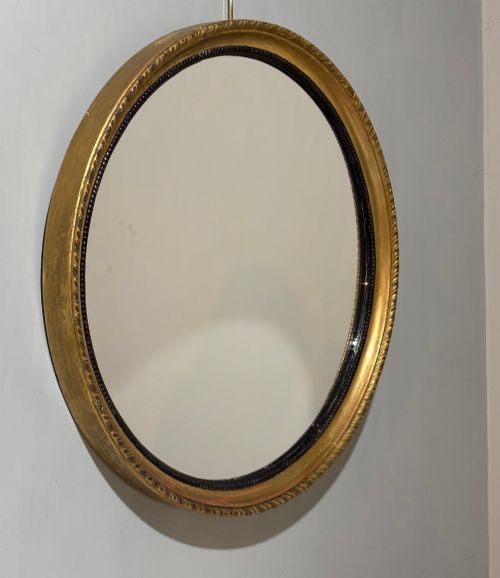
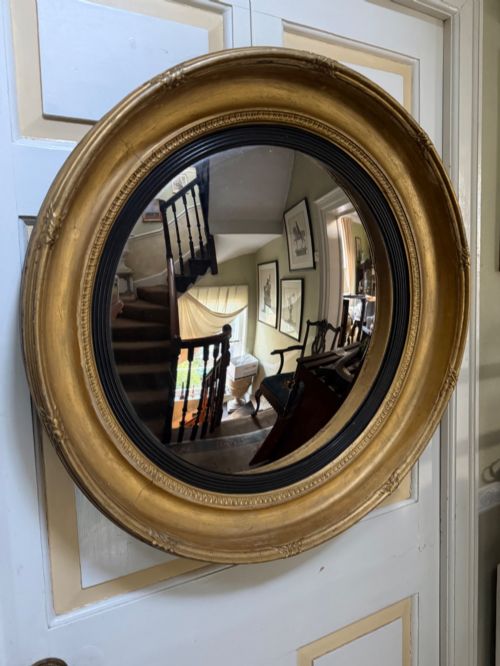
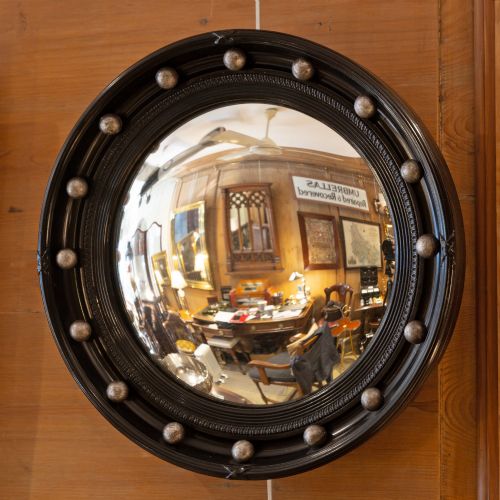
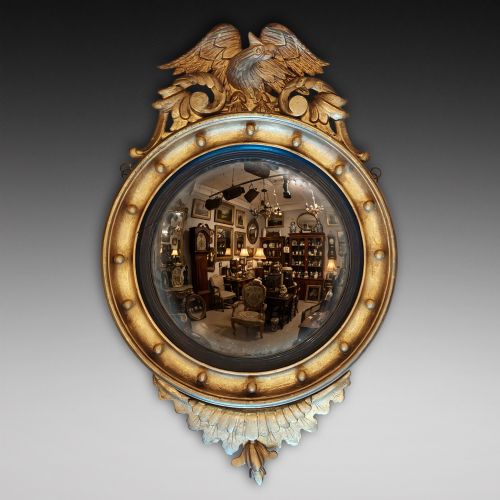




Georgian Circular Mirror
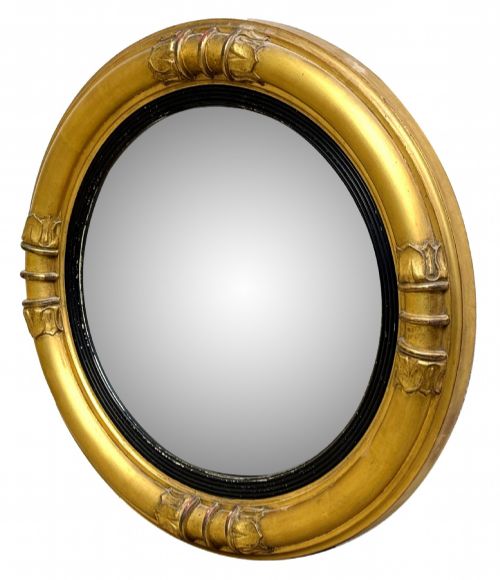
A georgian circular mirror brings dramatic optics and golden warmth into a room, reflecting light across the space from a curved convex glass plate.
Georgian Circular Mirror
When you search for a georgian circular mirror, you encounter round wall-hanging looking glasses designed to catch and scatter light within a room. These pieces span periods from the Regency era through the nineteenth century, reflecting various interpretations of classical circular forms.
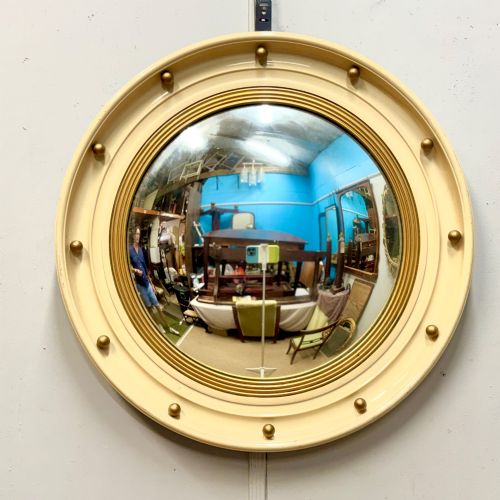
The version you meet most often on this page is the convex wall mirror, frequently framed in giltwood and gesso with a deep round profile. Alongside these wall pieces, you occasionally find hand mirrors, dressing table mirrors, and table plateaux sharing the same circular geometry.
The origins of these mirrors stretch from the strict elegance of the Regency period into later Victorian and revival styles. While many examples date from the early nineteenth century, subsequent decades continued to produce round and convex glasses inspired by these earlier designs.
How they were made
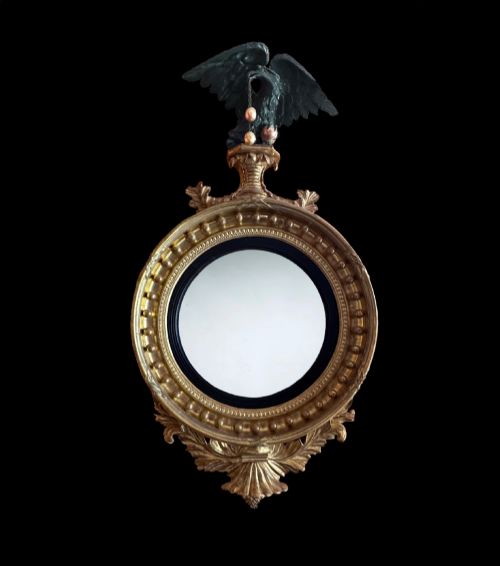
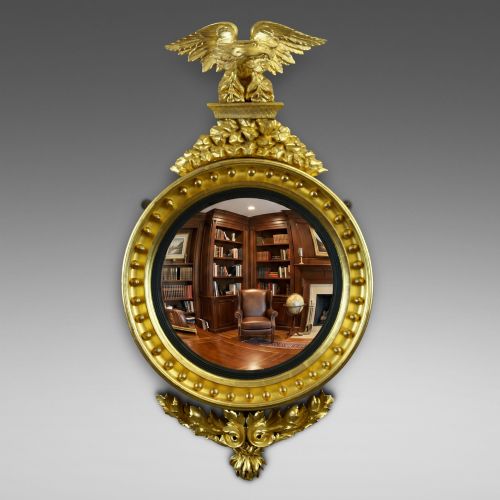
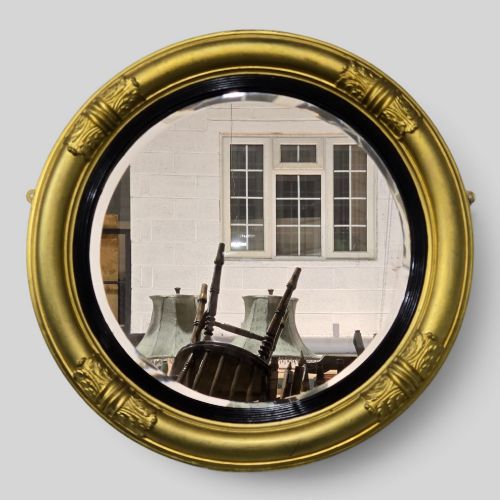
Makers constructed the frames of a georgian circular mirror using carved wood, mahogany, or layered gesso built over a wooden core. Artisans applied thin layers of gold leaf to the gesso surfaces, often combining gilt finishes with ebonised wood details to create sharp visual contrast.
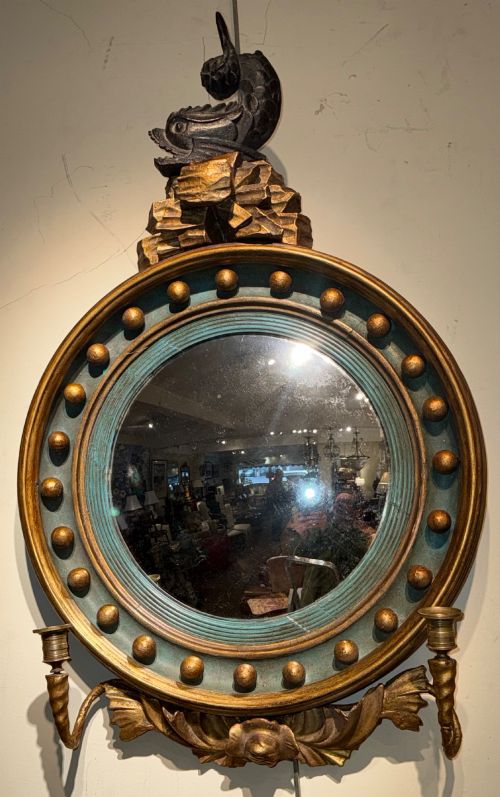
The defining optical component is the curved glass plate, which required specialised blowing and forming techniques to achieve a spherical mirror surface. Frames frequently incorporated decorative elements such as carved foliage, reeded bezels, and occasionally crests like perched eagles.
Georgian Circular Mirror Retail Price Guide 2026
Typical asking prices for georgian circular mirror among the pieces listed under this phrase on Sellingantiques today, from the lower quarter to the upper quarter. They describe what is for sale here now, not the wider market.
Materials recorded across the selection include giltwood, ebonised wood, mahogany, gesso, brass, and painted wood.
What varies in quality
The standard of a georgian circular mirror depends heavily on the crispness of the carved ornamentation and the depth of the gilding. Finer pieces display sharply defined motifs and subtle burnishing on the gesso, whereas simpler examples rely on flatter surface treatments.
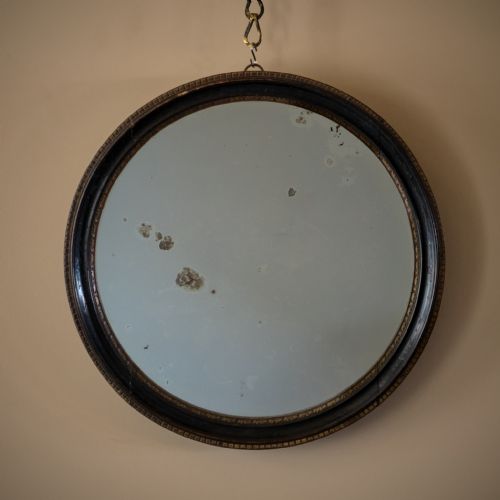
The integrity of the mirror plate itself dictates much of the character, with original convex glass offering distinct visual distortion compared to later replacements. The proportion between the heavy frame and the central glass dictates the visual balance of the piece on the wall.
The Georgian Circular Mirror Glossary
- Convex glass
- A curved mirror plate that bulges outward, creating a wide-angle reflection of the entire room. This spherical form gathers light from multiple angles into a single condensed image.
- Giltwood
- Timber coated with a thin layer of gold leaf over a prepared base of gesso. This finish gives the frame a bright metallic sheen that catches natural daylight.
- Gesso
- A plaster-like mixture applied to wood frames and carved before gilding. It provides a smooth, receptive surface for intricate ornamentation.
- Ebonised wood
- Timber treated to imitate ebony through dark staining or finishing. This technique creates a dense black contrast against bright gilded details.
- Plateaux
- Mirrored table bases designed to hold centrepieces or decorative objects. They extend the reflective quality of wall mirrors onto horizontal surfaces.
Georgian Circular Mirror: Frequently Asked Questions
Where should I hang a circular mirror?
These mirrors suit central focal points such as above a fireplace mantelpiece, in a hallway, or facing a window. Their reflective properties make them particularly effective in narrower spaces that benefit from amplified natural light.
Ensure the hanging fixings secure the substantial weight of the wooden frame safely into structural wall supports.
How do I identify a Regency period piece?
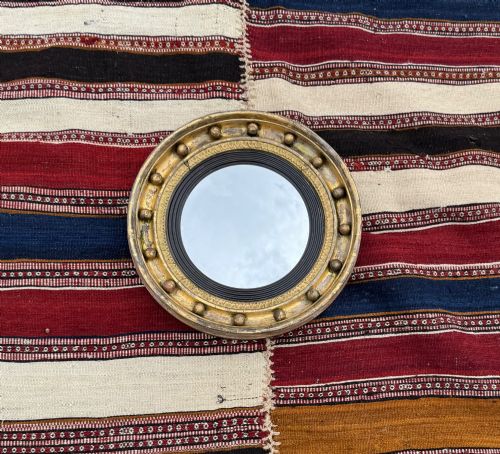
Regency mirrors often display classical motifs like reeded ebonised inner rings, ball-stud decorations, and carved crests such as eagles. The timber and gesso construction reflects the neoclassical tastes prevalent during the early nineteenth century.
Later revival pieces from the late nineteenth and early twentieth centuries frequently emulate these exact proportions and decorative vocabularies.
Are original mirror plates common?
Many surviving examples retain their original glass, which often exhibits characteristic foxing, age spots, and minor surface distortion. These natural signs of ageing distinguish period glass from modern replacements.
The presence of the original plate adds considerable character to the visual depth of the reflection.