



Georgian Christening Mug
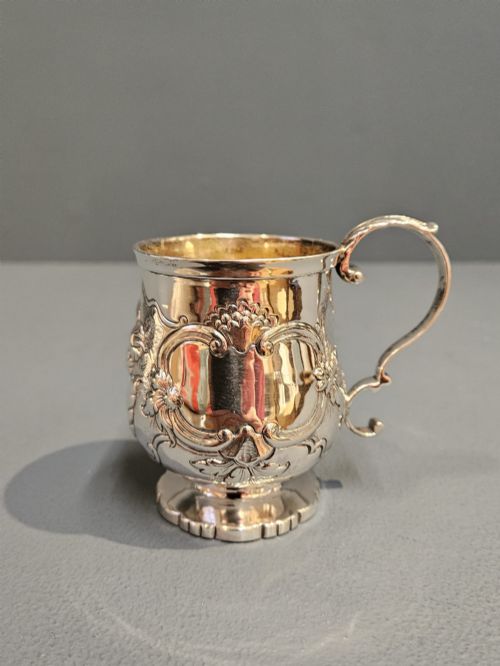
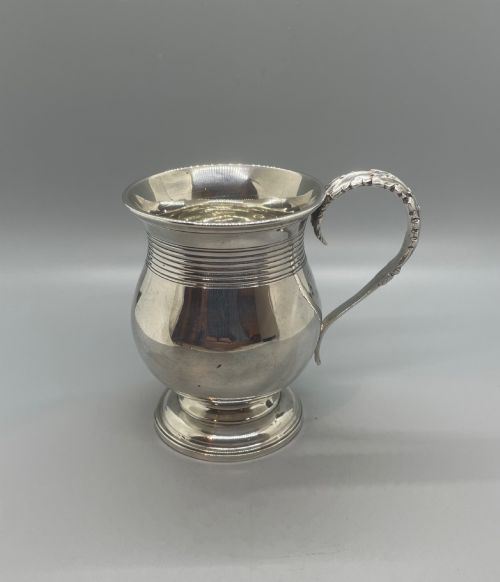
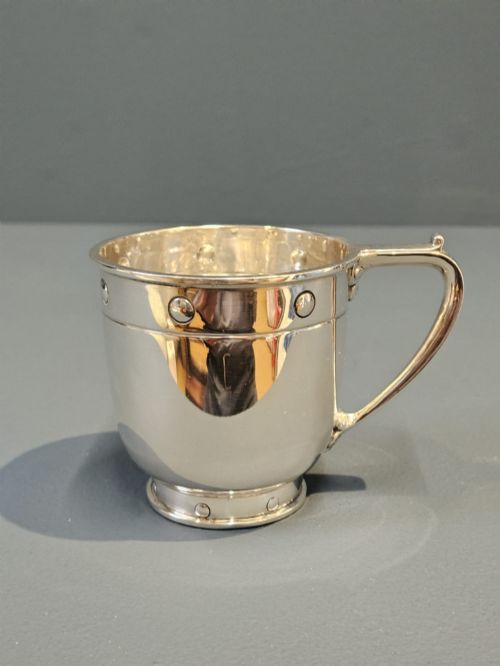
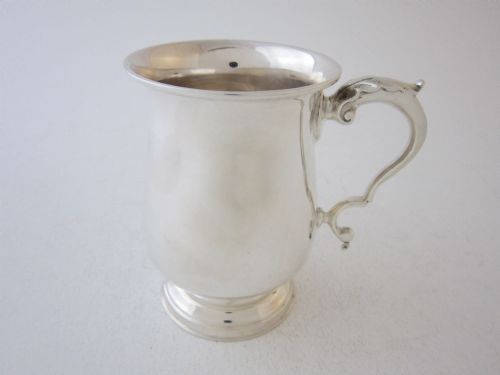
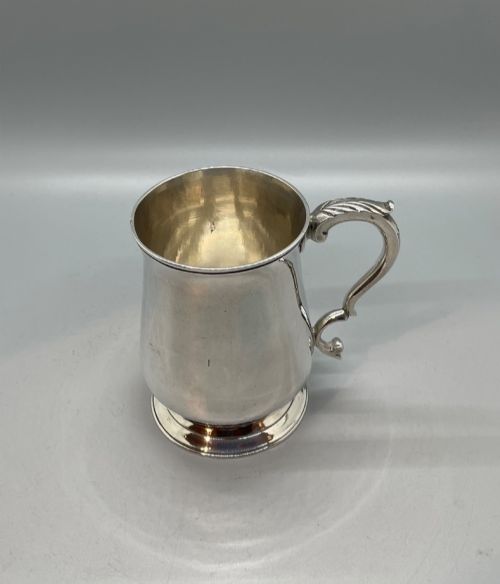
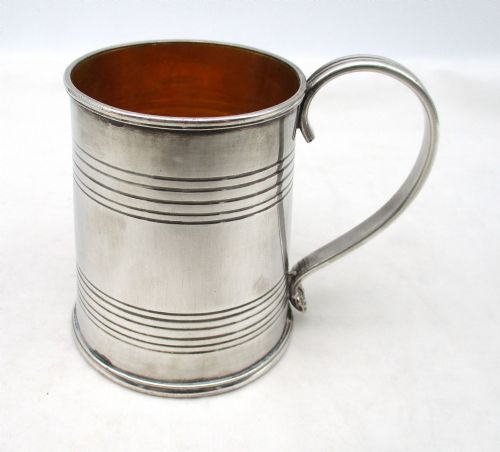
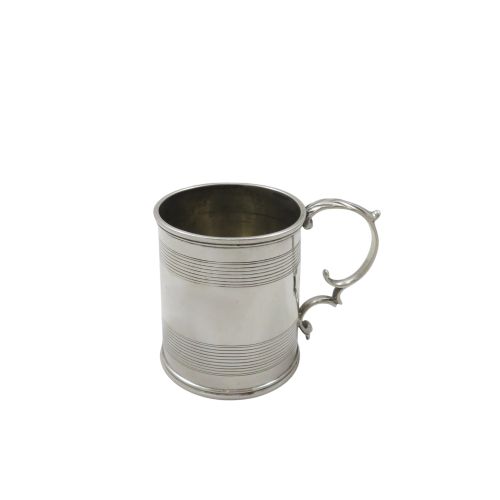
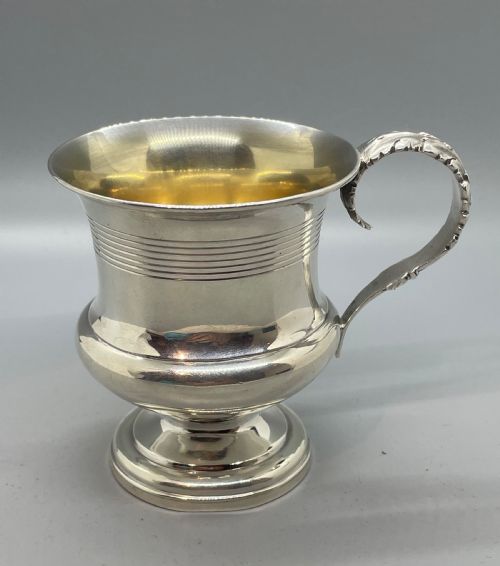
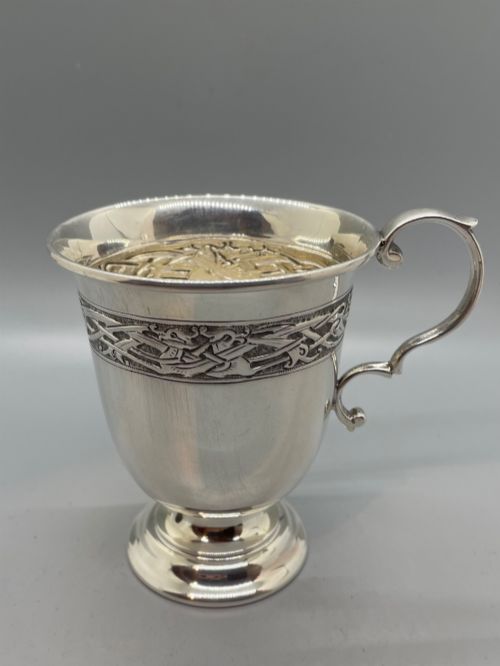
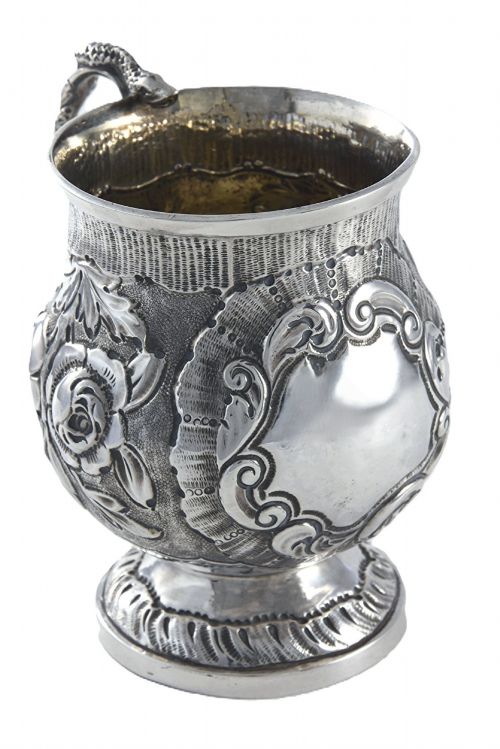
A georgian christening mug is a small, solid vessel meant to mark a child's birth or baptism.
Georgian Christening Mug
The versions met on this page span the Georgian period, Regency era, and later reinterpretations in the George V style. Makers fashioned them from sterling silver and Old Sheffield plate, often giving them straight or gently curved sides.
Many of these tankards date from the late eighteenth century through to the nineteenth century, with occasional twentieth-century examples following earlier patterns. Each object holds a tangible link to domestic family history and past silversmithing traditions.
How they were made
Silversmiths shaped sterling silver into sturdy bodies, frequently adding applied handles and smooth rims. The metal was beaten, rolled, and soldered to achieve the desired cylindrical or tapered tankard form.
Old Sheffield plate pieces relied on fusing a thin layer of silver to a copper base, creating durable vessels with a rich metallic sheen. Craftsmen then polished the surfaces and sometimes added delicate hand engraving to the exterior walls.
Georgian Christening Mug Retail Price Guide 2026
Typical asking prices for georgian christening mug among the pieces listed under this phrase on Sellingantiques today, from the lower quarter to the upper quarter. They describe what is for sale here now, not the wider market.
Listings feature sterling silver and Old Sheffield plate spanning from the Georgian era through to the mid-twentieth century.
What varies in quality
The substance of the metal dictates much of the vessel's character, with heavier sterling silver examples offering a more substantial weight in the hand. Thinner walls or worn plating on Old Sheffield pieces change how the light catches the surface.
Crispness of detail in the engraving and the balance of the handle proportion reveal the maker's hand. Pieces with clear, deep hallmarks show a careful adherence to official standards of the period.
Barker Bros·William Bateman
The Georgian Christening Mug Glossary
- Sterling silver
- An alloy containing a high proportion of pure silver mixed with small amounts of other metals for durability. This standard material forms the bulk of the antique tankards found here.
- Old Sheffield plate
- An early method of fusing silver sheet to a copper core by heat and pressure. It allows makers to produce sturdy vessels with a silver exterior.
- Hallmark
- A series of stamped symbols indicating the metal standard, assay office, and year of production. These marks help verify the exact period of the piece.
- Tankard
- A tall drinking vessel, typically featuring a single handle and a flat or slightly flared base. Many christening mugs adopt this traditional shape on a smaller scale.
Georgian Christening Mug: Frequently Asked Questions
Were these mugs actually used by children?
These small vessels served as functional drinking cups for children during family meals or special occasions. Over time, many transitioned into decorative keepsakes kept on display rather than everyday tableware.
Their robust construction in silver or plated copper meant they could withstand daily handling while retaining their polished appearance.
How do I identify a Georgian piece?
Examining the stamped hallmarks on the base or rim provides the most reliable guide to the date of manufacture. King's heads, date letters, and maker's marks correspond to specific years and assay offices.
Stylistic cues such as straight-sided walls, plain borders, and clean proportions also point towards the Georgian and Regency periods.
What is the difference between sterling and plated versions?
Sterling silver examples consist of solid precious metal throughout the body and handle. Old Sheffield plate items use a copper core fused with a thin layer of silver.
Both materials yield durable vessels, though plated pieces may show hints of the underlying copper where centuries of polishing have worn the surface.
How should I display a christening mug?
These compact mugs fit well on open shelves, inside glass cabinets, or on wooden sideboards alongside other small silver items. Keeping them away from direct heat sources helps preserve the metal finish.
Occasional gentle dusting with a soft cloth keeps the surface bright without requiring constant heavy polishing.