
Georgian Buffet
A georgian buffet serves as both a practical dining room server and a handsome piece of formal furniture.
Georgian Buffet
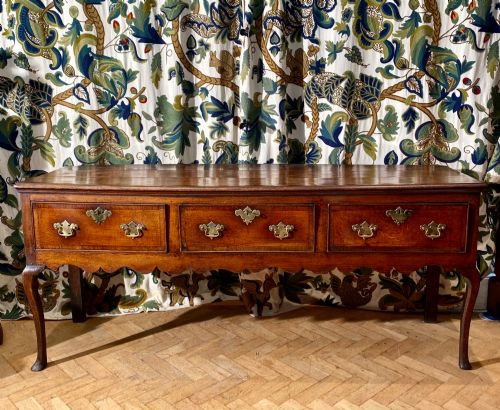
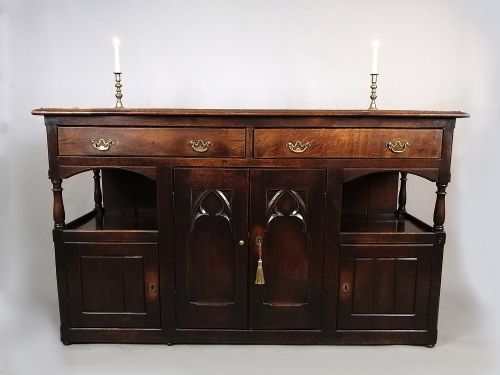
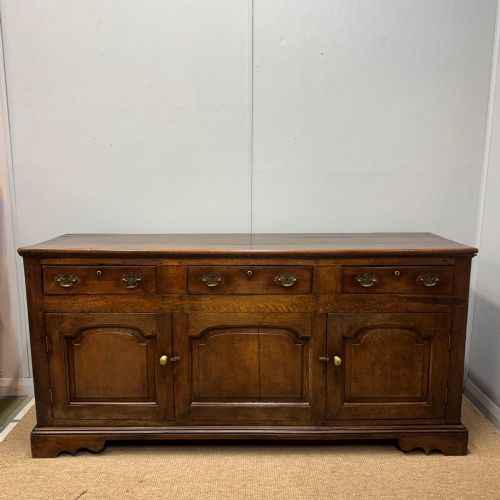
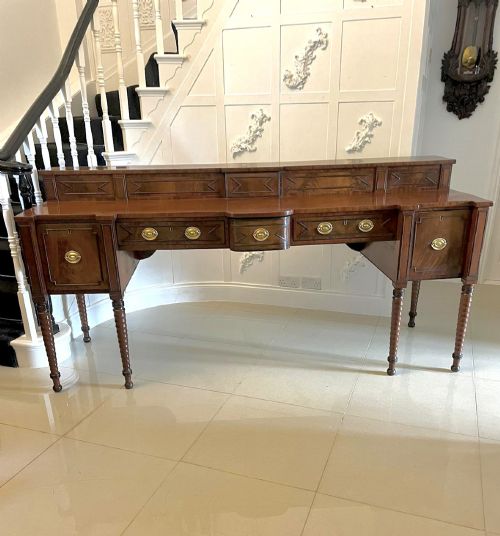
A georgian buffet search uncovers a variety of dining room storage forms, predominantly sideboards, dresser bases, and serving tables. The pieces span the eighteenth and nineteenth centuries, alongside later revivals from the Edwardian era and the early twentieth century.
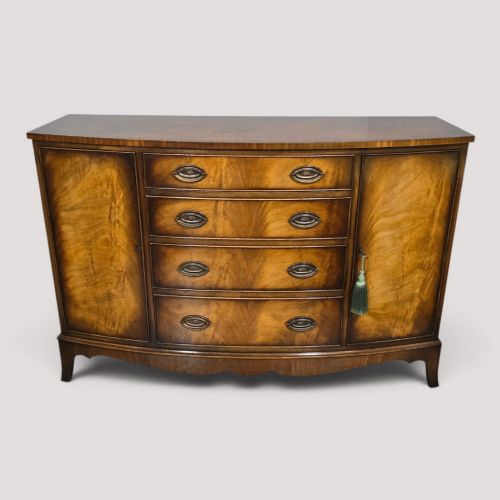
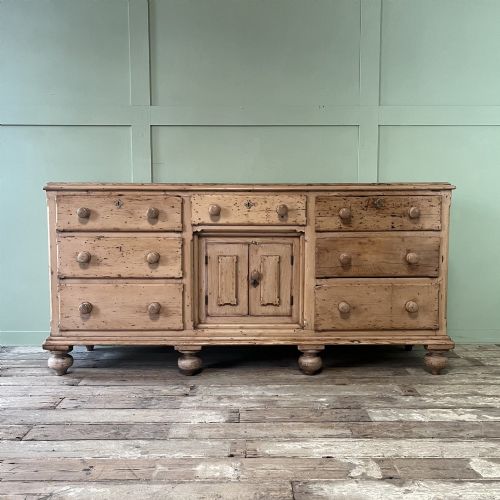
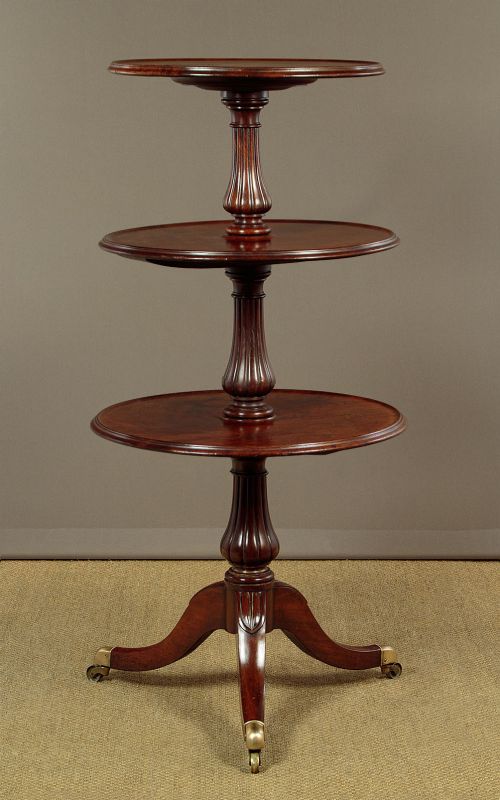
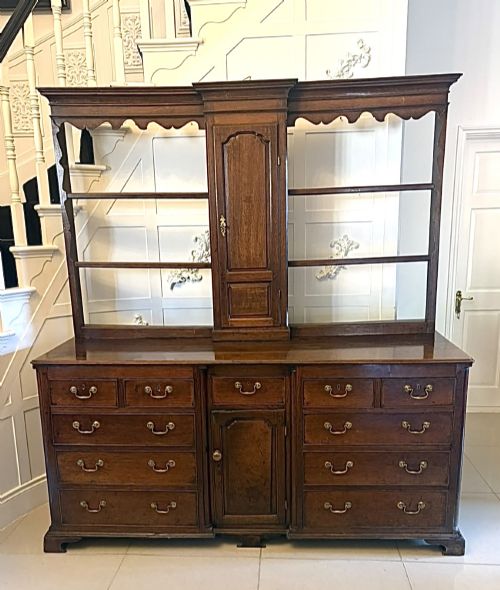
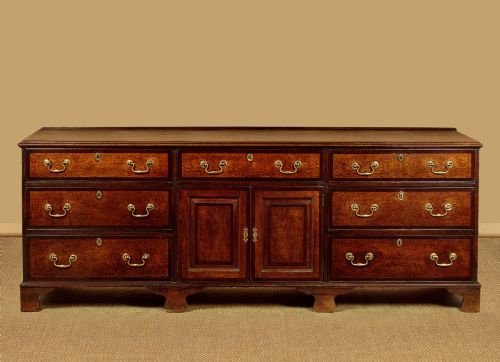
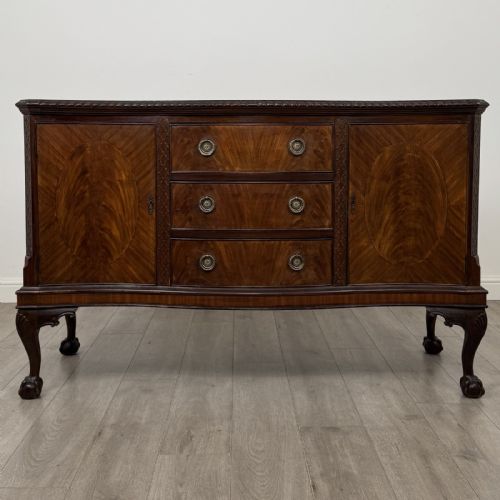
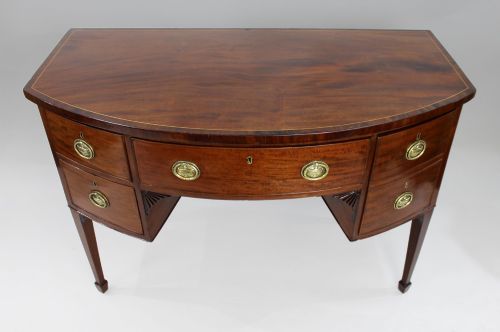
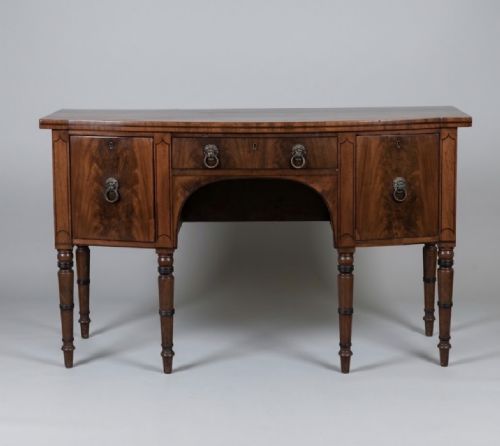
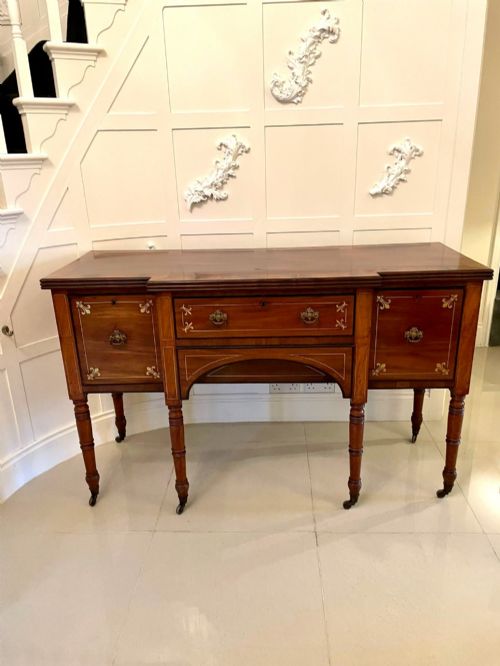
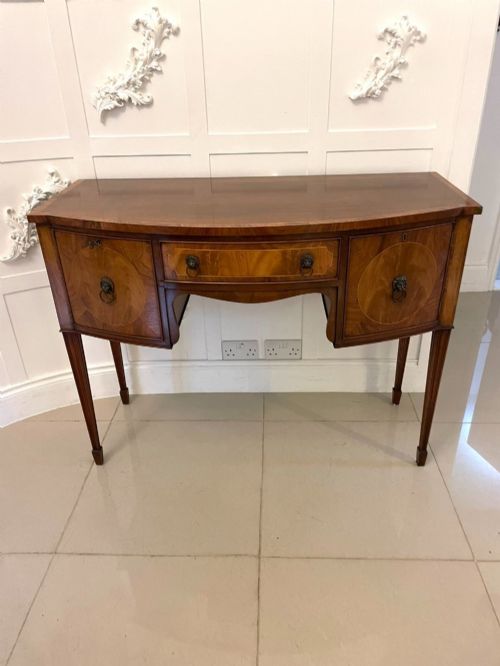
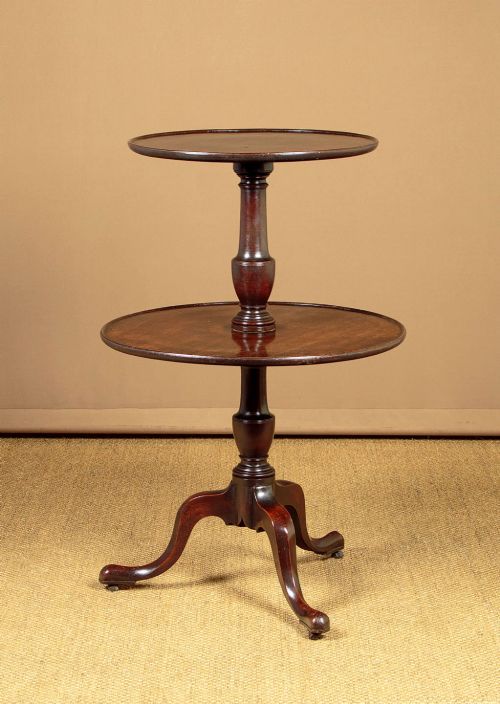
Mahogany and oak form the backbone of these listings, taking shape as bow fronts, breakfronts, and serpentine facades. Buyers encounter formal flame mahogany sideboards alongside rustic oak country dressers and tiered dumb waiters.
The selection ranges from George III and Regency masterworks with brass inlay and boxwood stringing down to simpler regional vernacular pieces. Sideboards and side cabinets dominate the selection, offering deep cellaret drawers and cupboard space designed for the dining room.
Materials and construction
Cabinet makers relied heavily on solid oak for robust eighteenth-century country pieces and figured mahogany for refined formal dining furniture. Flame mahogany veneers provided striking grain patterns on drawer fronts, complemented by contrasting boxwood inlay and delicate stringing.
Secondary timbers like pine appear within internal drawer linings and carcass backs, while brass fittings supply handles and structural mounts on Regency examples. Joinery techniques range from hand-cut dovetails in drawer construction to pegged framing in earlier court cupboards and dresser bases.
Listings feature oak and mahogany pieces spanning the eighteenth century through the Edwardian period, incorporating brass and boxwood details.
Distinctions in grade
Quality rests in the selection of timbers, where mirrored flame mahogany veneers and dense, heavy oak distinguish superior workshops from standard output. The crispness of inlay work, the depth of carved mouldings, and the integration of original brass hardware elevate certain pieces above the rest.
Proportion and architectural balance separate ambitious dining room pieces from smaller provincial furniture. Well-executed secondary woods, intact internal partitions, and stable, unwarped structural timbers mark the upper tiers of the surviving inventory.
The Georgian Buffet Glossary
- Bow front
- A convex curved cabinet front that projects outward in a smooth arc. This shape gained immense popularity during the late eighteenth and early nineteenth centuries.
- Breakfront
- A large cabinet or sideboard whose central section projects forward from the recessed left and right wings. It creates a strong architectural rhythm across the facade.
- Dresser base
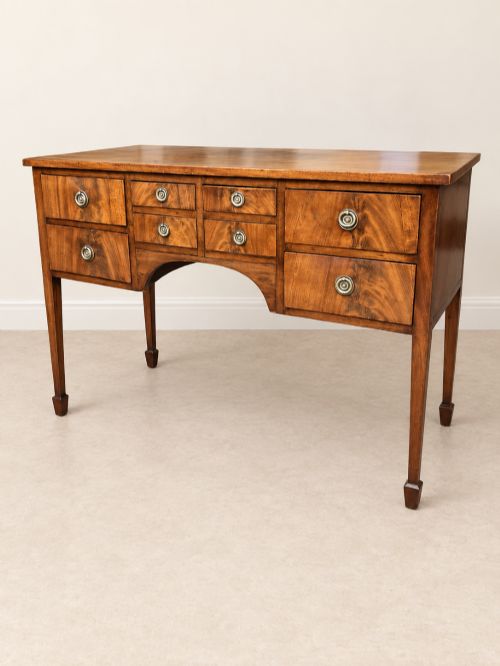
- A low wooden storage unit featuring drawers and cupboards, historically used in kitchens and dining rooms for food preparation and service. These often lack the upper plate rack of a full dresser.
- Serpentine
- A furniture front characterised by a concave central section flanked by two convex ends, or the reverse. The flowing S-curve demands high skill from the cabinet maker.
- Dumb waiter
- A tiered freestanding piece of dining furniture featuring revolving or fixed circular shelves on a central column. It allowed diners to help themselves without servants present.
Georgian Buffet: Frequently Asked Questions
What is a georgian buffet used for?
These dining room items served to hold silverware, linen, and serving dishes during formal meals. They provided a convenient surface for laying out food and pouring wine away from the main dining table.
In modern homes, they function well as sideboards in dining rooms, media consoles in living spaces, or statement storage in hallways.
How do I identify a georgian buffet?
Look for characteristic design traits like bow or serpentine fronts, tapered legs, and classical mahogany or oak construction. Details such as boxwood stringing and brass lion paw feet often point to specific periods.
Examining the construction methods underneath and inside the drawers reveals hand-cut joinery typical of eighteenth and nineteenth-century workshops.
Are these pieces made of solid wood?
Many surfaces utilise solid timber, particularly in earlier oak pieces and structural frames. Fine mahogany examples frequently employ high-quality veneers applied to stable secondary woods to create dramatic grain patterns.
Inspect the drawer linings and interior panels to understand the mix of solid primary woods and supportive secondary timbers.
How do I care for antique mahogany and oak?
Keep wooden furniture away from direct heat sources and strong sunlight to prevent the timber and veneers from drying out. Regular dusting with a soft, dry cloth preserves the finish without building up heavy wax residues.
Maintain a stable indoor humidity level to ensure doors and drawers continue to open smoothly within their frames.