


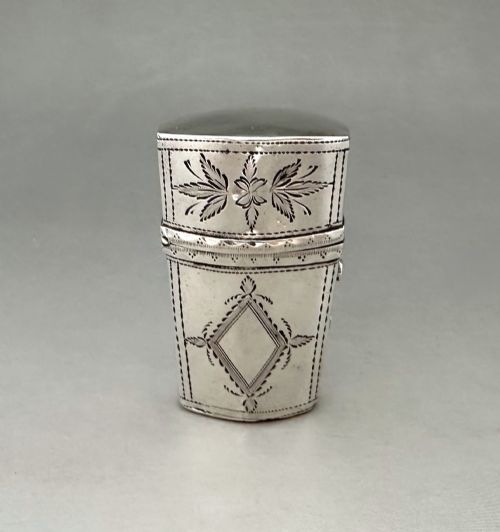


Georgian Bottle Holder
A georgian bottle holder secures your table service with the substance and grace of eighteenth and nineteenth-century dining.
Georgian Bottle Holder
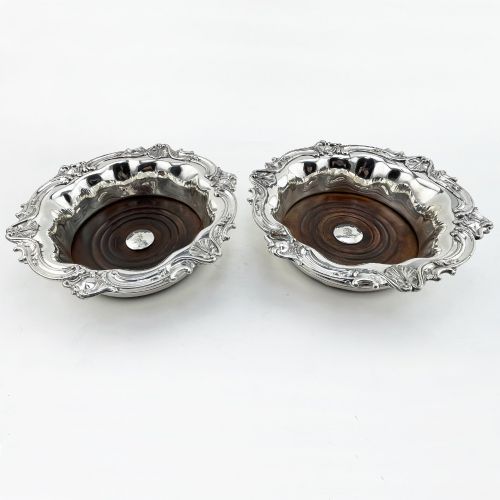
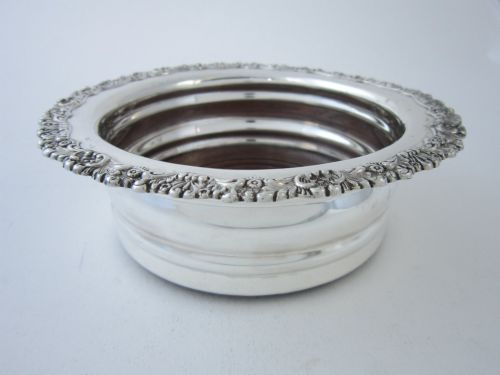
A georgian bottle holder encompasses wine coasters, decanter stands, wine coolers, and bottle carriers designed to manage vessels at the dining table. These pieces span the eighteenth century, Regency period, and nineteenth century, reflecting the evolving rituals of hosting and drinking.
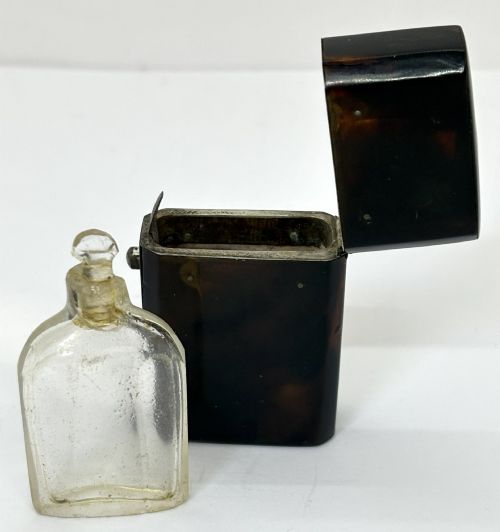
The most frequent examples on this page are silver plated wine coasters from the Old Sheffield tradition alongside mahogany timber frames and stands. Buyers encounter single coasters, pairs, multi-bottle carriers, and specialised scent bottle holders designed for personal fragrance.
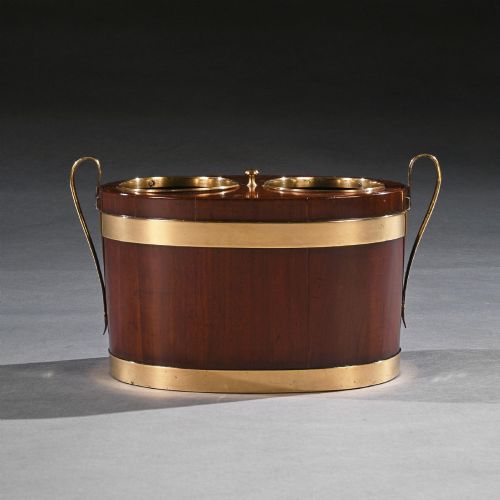
Forms range from simple turned wooden rings and brass-bound mahogany buckets to elaborate silver-gilt vessels and articulated carriers. Each object served a distinct domestic purpose, protecting polished mahogany dining surfaces from condensation and drips during meals.
Materials and construction
Makers utilised dense hardwoods like mahogany alongside ebonised timber, tortoiseshell, and papier-mâché for wooden bodies and frames. Timber pieces frequently incorporate brass bands, mounts, and handles to secure the structure and protect the edges from heavy glass bottles.
Metalwork relies heavily on sterling silver and Old Sheffield Plate, a fused technique of silver on a copper core that characterises the finest Georgian vessels. Silver-plated and solid silver elements appear alongside cast brass components and glass bottles fitted with silver mounts.
Georgian Bottle Holder Retail Price Guide 2026
Typical asking prices for georgian bottle holder among the pieces listed under this phrase on Sellingantiques today, from the lower quarter to the upper quarter. They describe what is for sale here now, not the wider market.
Materials span mahogany, sterling silver, Old Sheffield Plate, copper, brass, tortoiseshell, and papier-mâché.
Judging quality and execution
Quality rests upon the crispness of casting in silver and metalwork, the weight and grain selection of the mahogany, and the integrity of the joins. Superior pieces display hand-beaten mounts, refined turning, and original silver plating that shows even wear without revealing the underlying base metal.
Design complexity and matching sets elevate an example, particularly pairs and multi-bottle carriers that require symmetrical craftsmanship. Finer iterations integrate complementary materials, such as silver-mounted glass inserts or crisp gilded decoration upon papier-mâché, maintaining balance and proportion.
Hester Bateman·Matthew Boulton
The Georgian Bottle Holder Glossary
- Old Sheffield Plate
- An early form of plated metal created by fusing a thin sheet of silver to a thicker copper ingot before rolling and shaping. This technique creates a distinctive edge where the copper core shows slightly through the silver layer.
- Wine Coaster
- A small, shallow tray or ring, often with a turned wooden base and metal rim, designed to hold a wine bottle and slide across the table. They protected polished dining tables from rings left by wet bottles.
- Wine Cooler
- A larger vessel intended to chill bottles in ice or water before service, frequently constructed from brass-bound mahogany or heavy plated metal. Unlike a coaster, a cooler is designed to hold liquid alongside the bottle.
- Cruet Stand
- A frame or stand holding multiple glass bottles or cruets for condiments, oil, vinegar, or sauces. These stands incorporate silver mounts or handles and sit centrally on the dining table.
- Vinaigrette
- A small metal box containing a perforated grill, holding a sponge soaked in aromatic vinegar. These portable personal items were carried in the pocket or handbag during the period.
Georgian Bottle Holder: Frequently Asked Questions
What is a georgian bottle holder used for?
These pieces served to hold, carry, or cool wine bottles, decanters, and scent bottles during and after meals. They kept bottles stable on the table and protected timber surfaces from moisture.
Larger versions accommodated multiple bottles or ice for chilling, while smaller stands managed individual decanters or personal fragrance bottles.
How do I tell an 18th-century piece from a 19th-century one?
Dating relies on stylistic shifts, assembly methods, and hallmarks where silver is present. Eighteenth-century pieces often display heavier mahogany construction and simpler, robust brass bindings.
Nineteenth-century examples from the Regency period onward introduce more eclectic ornamentation, refined turning, and extensive Old Sheffield plating techniques.
Are silver-plated holders durable for daily use?
Old Sheffield Plate and silver-plated items are robustly constructed, but the thin silver layer requires careful handling to preserve the finish. Regular wiping with a soft cloth prevents tarnish buildup without wearing the metal.
Avoiding abrasive cleaners ensures the fused silver surface remains intact over decades of domestic use.
How do I care for mahogany bottle holders?
Mahogany frames benefit from occasional application of quality wax to nourish the grain and maintain a natural sheen. Keeping timber away from direct heat sources prevents the wood from drying out or splitting.
Brass bands and mounts can be polished gently with a dry cloth, taking care not to stain the surrounding wood.