



Georgian Bottle Case
A georgian bottle case is a compact and fitted receptacle designed to secure glass vessels, holding precious liquids and travel necessities safely on the move.
Georgian Bottle Case
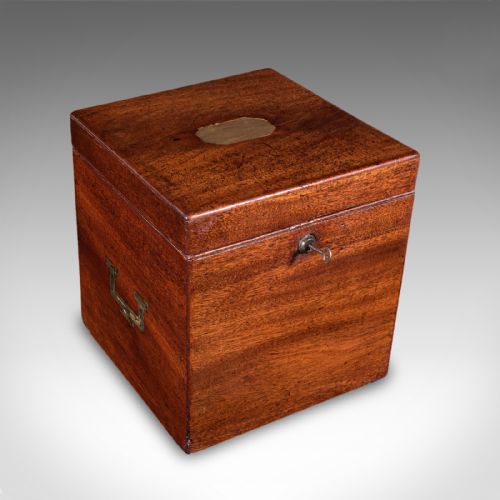
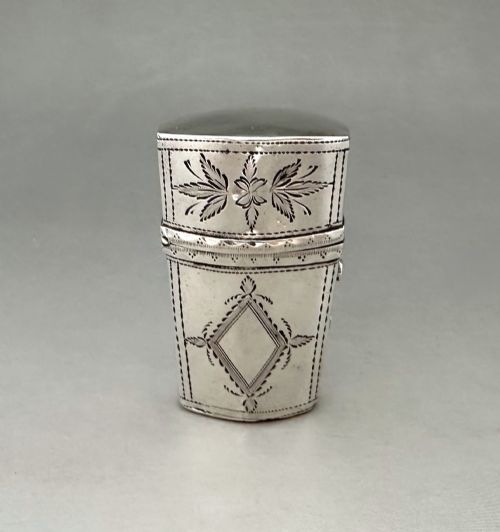
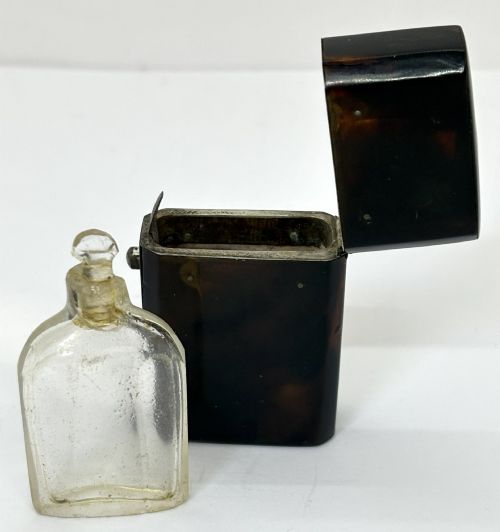
A georgian bottle case brings together several related forms intended for storing bottles and personal provisions securely. These objects range from multi-decanter storage boxes and two bottle carriers to fitted apothecary travelling cases and scent bottle holders.
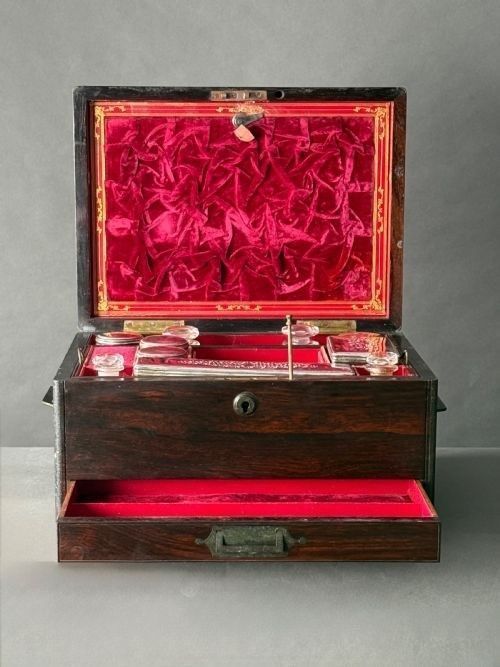
The pieces appearing in this category span the Georgian, Regency, and early nineteenth-century periods, capturing the refined cabinet-making of the era. Buyers most frequently encounter mahogany and rosewood boxes, often fitted with internal compartments, drawers, and glass bottles.
Many examples incorporate secure locking mechanisms such as Bramah locks, reflecting the high value placed on the contents they carried. Alongside larger storage boxes, smaller scent bottle holders and silver-cased items represent the more personal side of the category.
Materials and construction
Cabinet-makers relied heavily on dense hardwoods such as mahogany, rosewood, and kingwood to build the rigid outer shells required for safe transport. These timbers were selected for their durability and rich grain, providing a stable frame for internal compartments and metal hardware.
Interiors were frequently lined with velvet and fitted with bespoke glass bottles, silver-gilt mountings, and steel implements. Brass hinges, escutcheons, and locks reinforced the stress points of each box while adding a clean metallic contrast to the polished timber.
Georgian Bottle Case Retail Price Guide 2026
Typical asking prices for georgian bottle case among the pieces listed under this phrase on Sellingantiques today, from the lower quarter to the upper quarter. They describe what is for sale here now, not the wider market.
Assessing quality in a georgian bottle case
Quality rests upon the precision of the internal fittings and the integrity of the fitted contents. Boxes that retain their original matched glass bottles, working locks, and intact velvet linings demonstrate a higher degree of preservation.
The selection of timber grain and the neatness of the joinery further distinguish standard pieces from superior examples. Finely turned mounts, hallmarked silver components, and integrated secret drawers elevate the craftsmanship of the work.
The Georgian Bottle Case Glossary
- Bramah lock
- A patented high-security lock invented by Joseph Bramah in the late eighteenth century, commonly fitted to quality boxes and cases of the period. It uses a cylindrical key and complex internal slides rather than traditional levers.
- Apothecary case
- A fitted wooden travelling box containing glass medicine bottles, scales, and small drawers for powders and mixtures. These cases allowed doctors and travellers to carry necessary remedies securely.
- Decanter box
- A specialised storage container designed to hold two or more glass decanters upright within a partitioned wooden frame. They often feature reinforced corners and strong carrying handles for travel.
- Silver-gilt
- Silver that has been coated with a thin layer of pure gold on its surface. This technique provides the rich appearance of solid gold while utilising the structural strength of silver beneath.
Georgian Bottle Case: Frequently Asked Questions
What was a georgian bottle case used for?
These cases served as secure transport for fragile glass vessels, including decanters, perfumes, and medicinal supplies. They protected valuable liquids and personal items from damage during travel.
Wealthy travellers and households relied on them to keep essential provisions organised and locked away safely.
How do I date a georgian bottle case?
Dating relies on examining the timber species, construction methods, lock types, and any accompanying hallmarks on silver components. Stylistic shifts between the Georgian and Regency periods offer clear chronological markers.
Documents, paper labels, or stamps left by makers inside the drawers can also help narrow down the decade of production.
Are the glass bottles usually original?
Many surviving pieces retain their matched period glass bottles, though replacements do occur due to breakage over the centuries. Examining the base of the bottles for pontil marks and matching wear patterns helps determine originality.
Cases designed for specific bottles will show snug internal partitions that fit the exact shape of the glass.
How should I care for the wood and lining?
Keep the timber away from direct sunlight and rapid temperature fluctuations to prevent the wood from splitting or warping. Occasional light waxing maintains the finish without building up heavy residues.
Velvet linings respond best to gentle dusting with a soft brush, avoiding moisture that might damage old adhesives.