

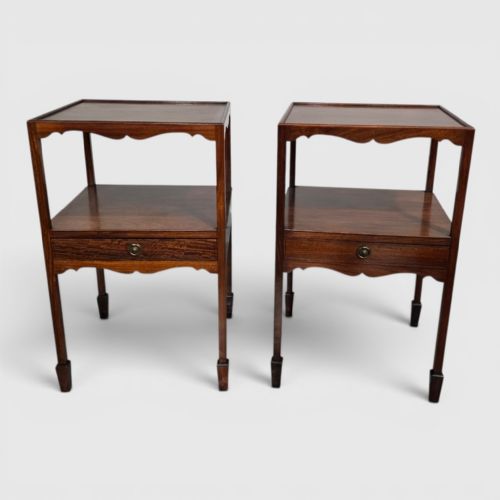

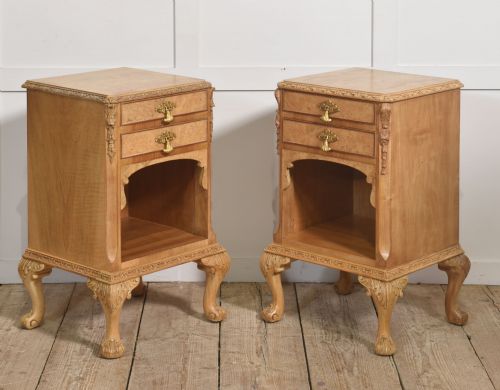


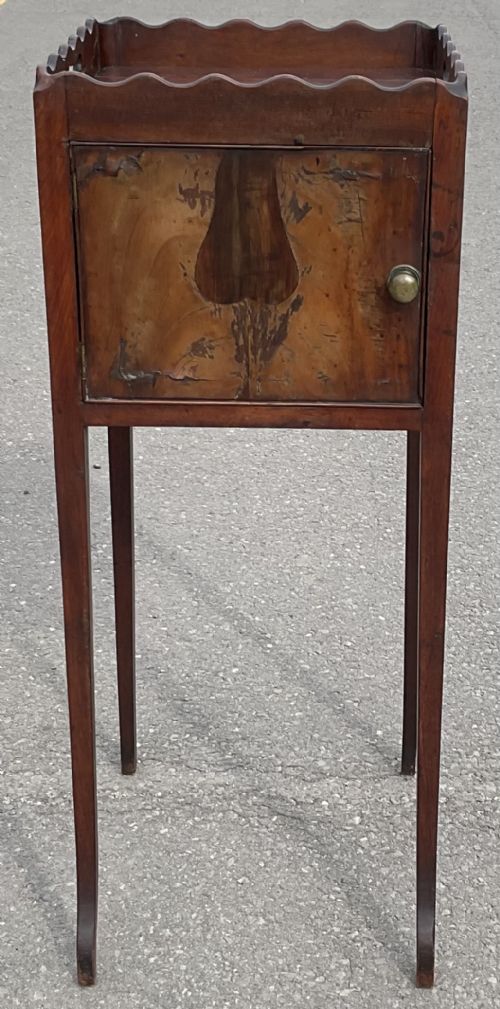

Georgian Bedside Stands
Georgian bedside stands are compact wooden pieces built for the bedroom, offering practical surface space and concealed storage.
Georgian Bedside Stands
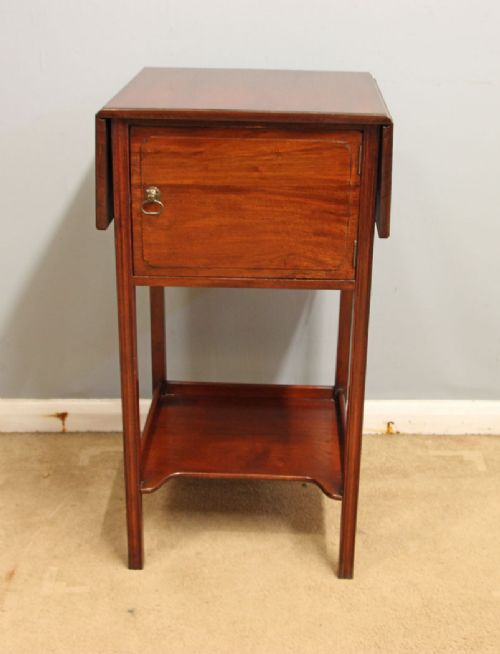
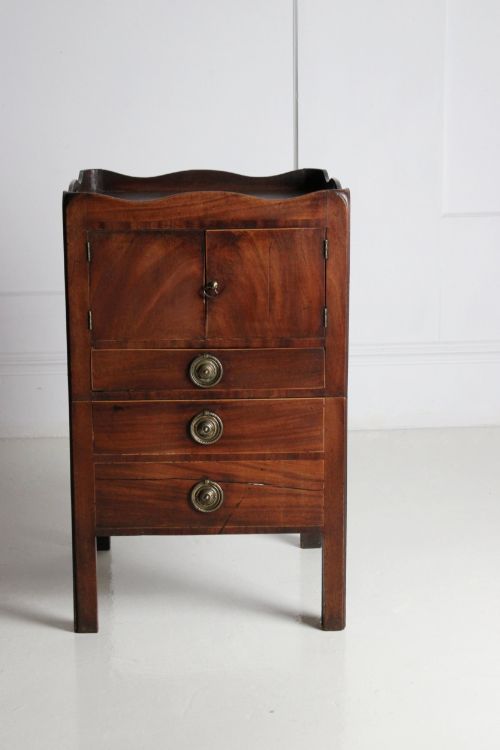
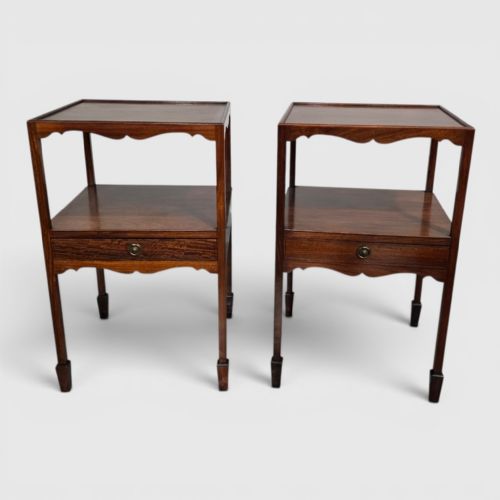
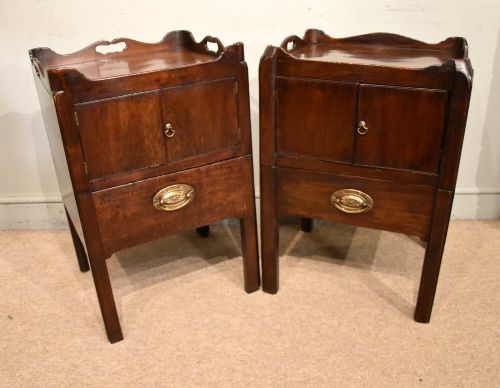
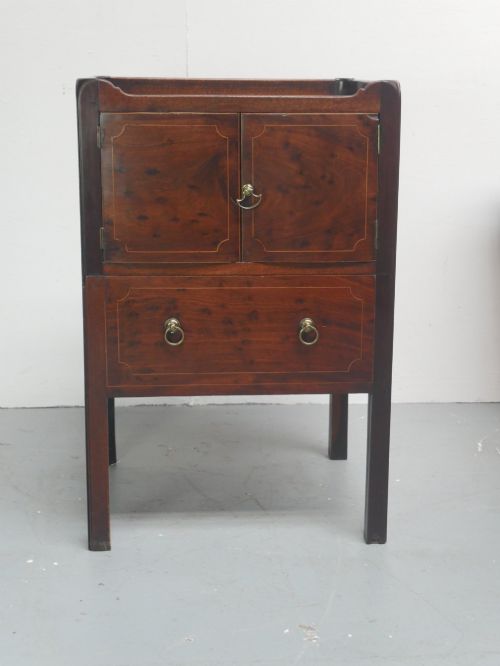
When you search for georgian bedside stands, you encounter a variety of functional forms, from enclosed pot cupboards to open tables and washstands. The pieces on this page span the Georgian period, the Regency era, and later revivals, reflecting how bedroom furniture evolved across centuries.
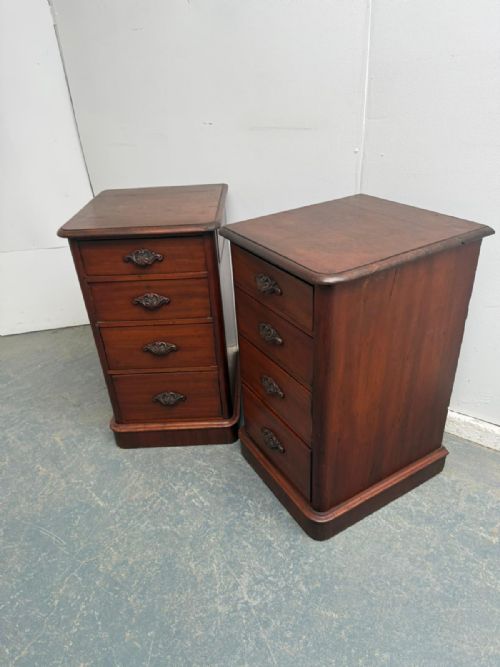
Mahogany dominates the selection, appearing in plain timber, Cuban varieties, and figured grains. You will find small four-drawer cabinets, night stands, and occasional tables designed to sit neatly beside a bed.
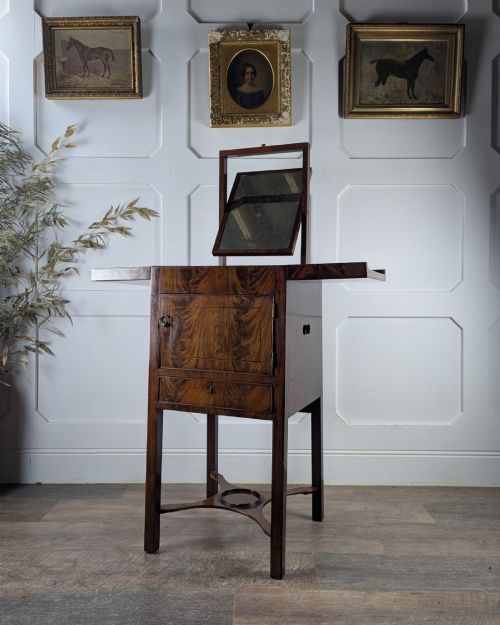
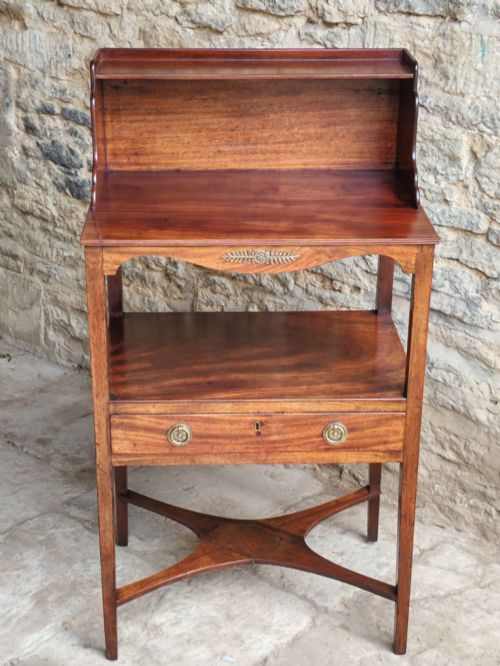
Alongside standard bedside tables, the listings include washstands, wig stands, and multi-tiered whatnots adapted from their original uses. These items demonstrate the versatility of small-scale furniture from the eighteenth and nineteenth centuries.
How they were made
Cabinet makers relied heavily on solid mahogany and rich veneers, often selecting Cuban timber for its deep colour and durability. Burr walnut also appears in specific revival pieces, adding dramatic grain patterns to the surface.
Construction techniques included subtle details such as boxwood inlay, tambour shutters, and fold-away mechanisms designed for washstands. Brass hardware and occasional metal fittings provided functional support and contrast to the dark wood.
Mahogany is the dominant material across the listings, accompanied by brass fittings, boxwood inlay, and walnut.
What varies in quality
The distinction between standard utility pieces and superior examples lies in the selection of timber and the crispness of the joinery. Finely figured mahogany and delicate boxwood inlay elevate a simple bedside cabinet into a more decorative object.
Proportion and utility also separate the ranges, as smaller dimensions and clever internal configurations demand greater skill from the maker. Original hardware, balanced proportions, and well-executed secondary woods determine the standing of each piece.
The Georgian Bedside Stands Glossary
- Pot cupboard
- A small bedside cabinet designed originally to enclose a chamber pot. These often feature a panelled door and a drawer above.
- Tambour
- A flexible shutter made of narrow vertical strips of wood glued to canvas, allowing curved cabinet doors to slide open smoothly.
- Washstand
- A specialised table or cabinet equipped to hold a basin and pitcher for morning ablutions. Many surviving examples convert easily into bedside use.
- Whatnot
- A set of open shelves supported by slender pillars, used for displaying or storing small items. Regency versions often feature tiered platforms.
- Boxwood inlay
- A contrasting light wood inserted into the darker mahogany surface in thin decorative lines or geometric motifs. This technique highlights the edges and panels of the cabinet.
Georgian Bedside Stands: Frequently Asked Questions
How were these stands used originally?
These stands served practical functions in the bedroom, holding chamber pots, washbasins, or lighting before modern plumbing and electricity existed.
Over time, many of these small tables and cabinets transitioned into general bedside use for holding books, lamps, and personal items.
Are all these stands genuinely Georgian?
The selection includes pieces from the eighteenth and early nineteenth centuries alongside later revival pieces from the twentieth century.
Checking construction methods, timber types, and overall wear helps distinguish original period items from later interpretations.
Can I use a washstand as a bedside table?
Many historical washstands share similar dimensions with bedside tables, making them suitable for modern bedrooms.
Their tiered structures, drawers, and surface space accommodate lamps and books effectively.
What wood is most common?
Mahogany is the primary timber found across these listings, valued for its strength and deep reddish-brown tone.
Walnut and burr walnut also appear, particularly in later pieces and revival styles.