

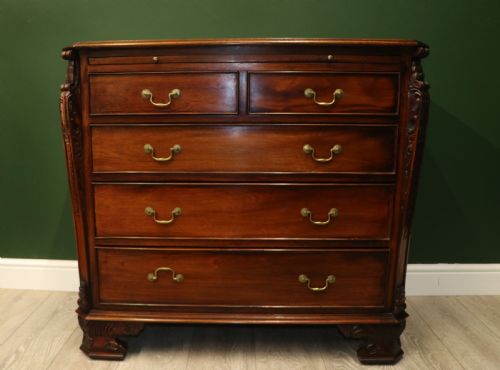


Georgian Bachelors Chest Slide
A georgian bachelors chest slide is a compact, multipurpose drawer unit designed for writing and storage that brings period elegance to any bedroom.
Georgian Bachelors Chest Slide
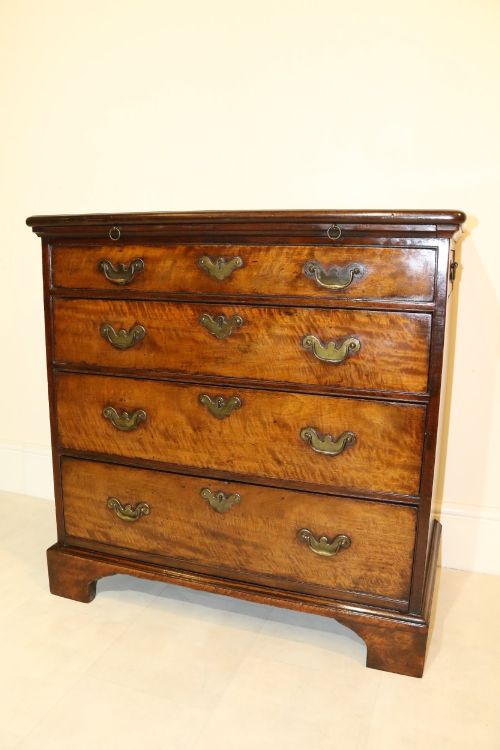
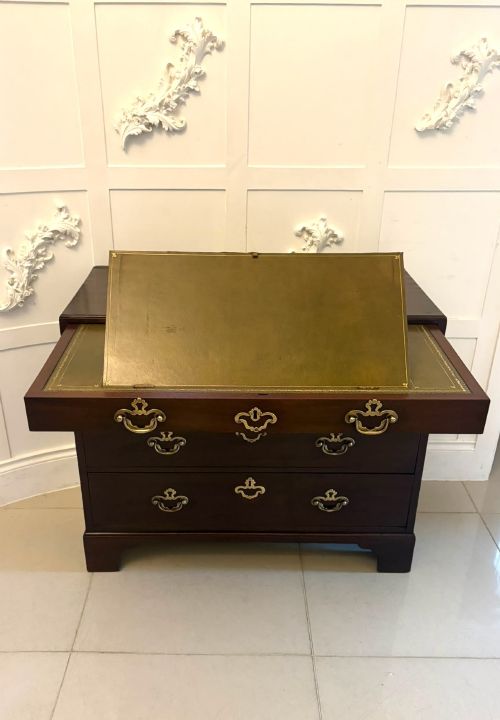
A georgian bachelors chest slide combines the deep storage of a standard drawer unit with a pull-out shelf intended for correspondence. These pieces date principally from the eighteenth century, spanning the reigns of George II and George III.
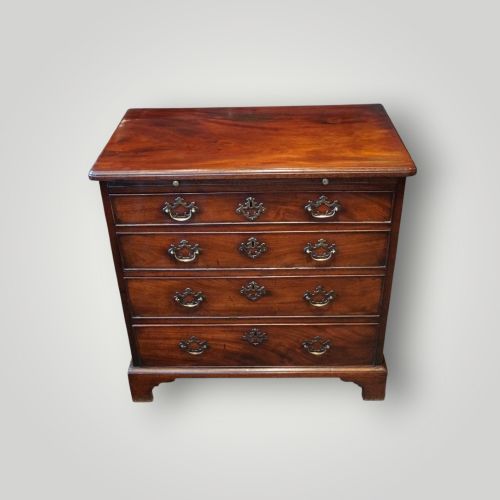
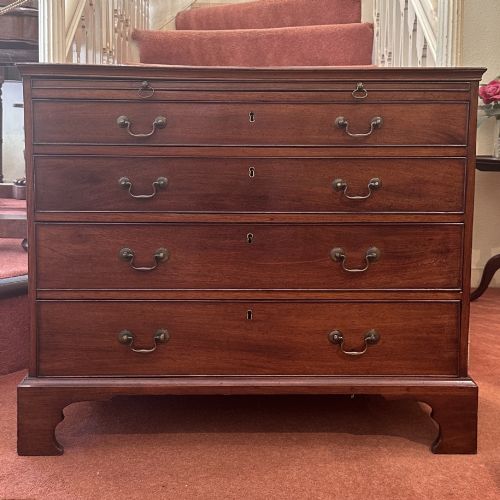
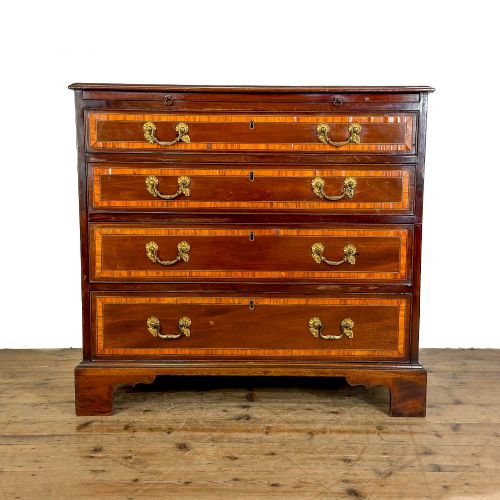
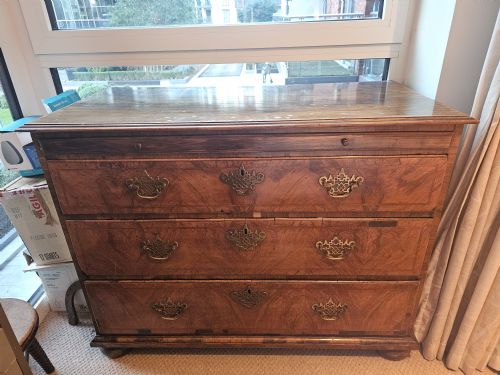
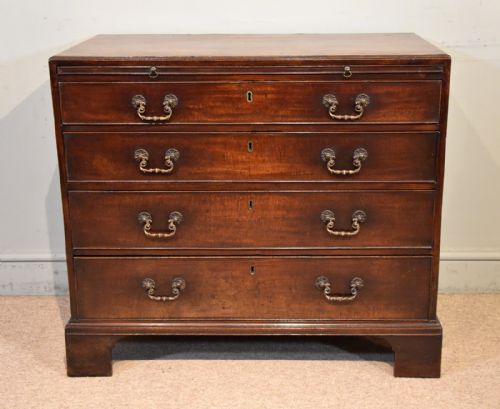
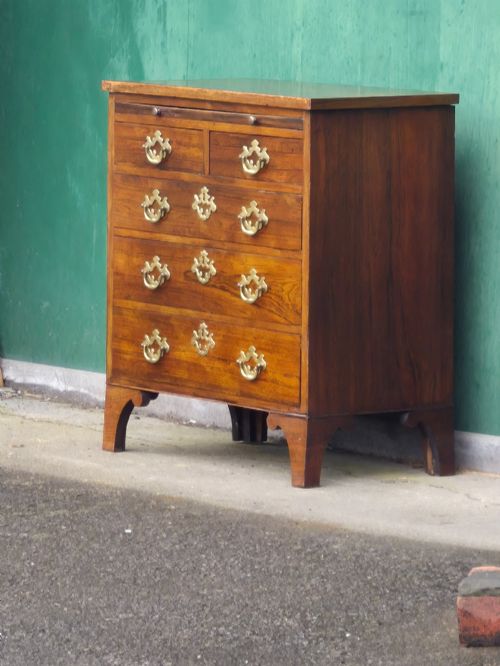
The version most commonly met on this page is a small mahogany chest of drawers incorporating a sliding wooden panel or brushing slide directly above the primary drawers. Examples also appear in walnut, oak and rosewood, spanning periods from the eighteenth century through to later revivals.
Makers designed these compact items for personal chambers rather than grand reception rooms, resulting in proportions that suit contemporary domestic spaces while retaining period character.
How they were made
Cabinet makers built these pieces using solid timbers and selected veneers over secondary woods, relying on dense mahogany and figured walnut for the primary exterior surfaces. Joiners housed the sliding writing panel within the upper frame so it operated smoothly above the uppermost drawer.
Brass hardware, including drop handles and escutcheons, secured the drawer fronts while offering a subtle contrast to the dark polished wood. Secondary linings in oak or pine provided structural stability for the internal drawer boxes.
Early writers used the slide so their sleeves avoided wet ink.
What varies in quality
The distinction between standard examples and top-tier pieces rests on timber selection and timber figure, such as flame mahogany or burr walnut. Untouched surfaces displaying rich patination command greater interest than those stripped and heavily refinished.
Proportion and scale also dictate worth, with smaller, narrower chests showing finer craftsmanship in the execution of the drawer joints, moulding details and the integrated sliding panel.
The Georgian Bachelors Chest Slide Glossary
- Brushing slide
- A pull-out wooden shelf positioned above the main drawers used originally for folding clothes or writing letters. This feature defines the primary utility of a bachelors chest.
- Flame mahogany
- A decorative veneer cut from wood where the branch meets the trunk, producing a rippling, flame-like pattern. Cabinet makers used this figure on premium drawer fronts.
- Escutcheon
- A protective plate surrounding a keyhole, usually cast in brass. It prevents the wood from splitting around the lock.
- Commode chest
- A decorative low chest of drawers, often featuring a bow front. These pieces combine storage with refined serpentine or curved profiles.
Georgian Bachelors Chest Slide: Frequently Asked Questions
What is a bachelors chest slide?
A bachelors chest slide is a compact chest of drawers featuring a pull-out wooden shelf located just beneath the top surface. This sliding board served as a writing desk or a clean shelf for garments.
Cabinet makers in the eighteenth century designed these versatile pieces to save space in private chambers while providing adequate storage and a writing surface.
How do I use one today?
These chests function exceptionally well as bedside tables, hallway storage units or small dressers in modern bedrooms. The pull-out slide offers a handy spot to place a cup or hold a small book.
Their restrained proportions allow them to fit into narrow alcoves where standard dressers would overwhelm the room.
Are all these chests from the eighteenth century?
While the form originated in the eighteenth century during the Georgian period, the selection includes pieces from the nineteenth century and later revival eras. Edwardian and twentieth-century interpretations also replicate the traditional design.
Checking the construction methods, timber types and hardware helps determine the exact period of manufacture.
What woods were used for these chests?
Mahogany remains the dominant timber across the inventory, appearing in both plain grain and highly figured flame varieties. Walnut and oak also feature prominently, particularly in earlier eighteenth-century examples.
Secondary woods like pine or oak are typically found inside the drawer boxes and internal framing.