

George V Trinket Box
When you search for a george v trinket box, you are looking for small containers made in Britain during the reign of King George V.
George V Trinket Box
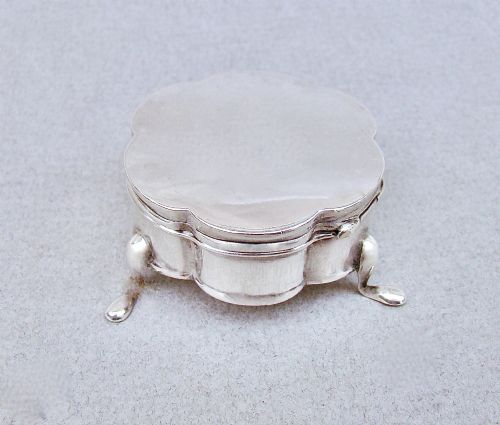
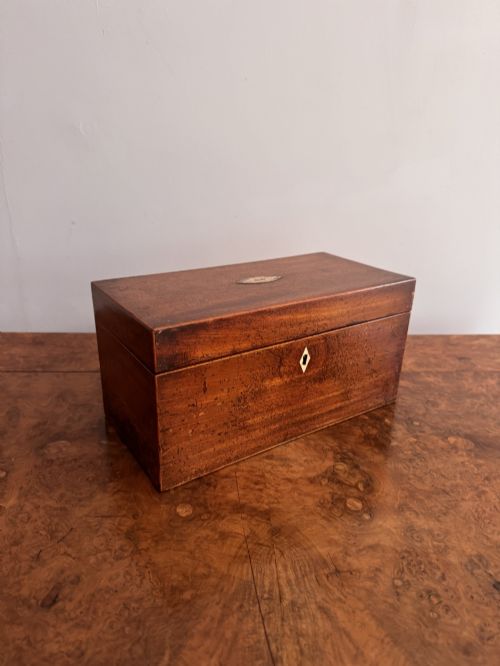
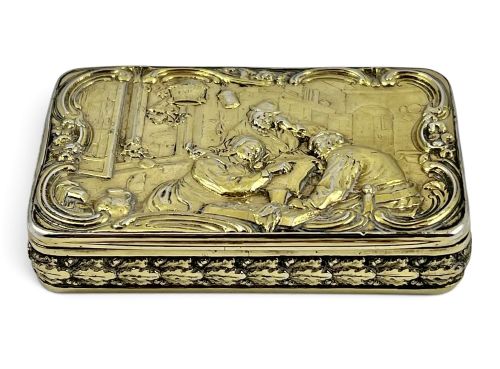
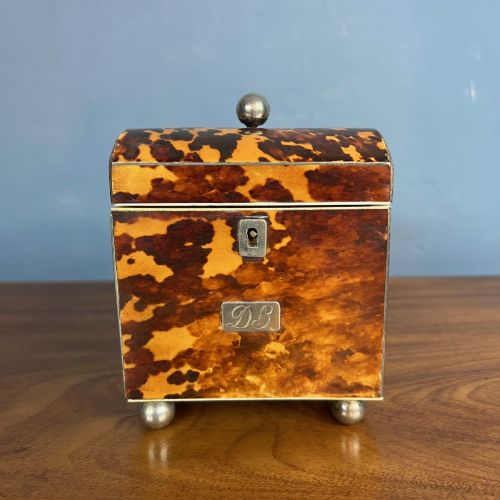
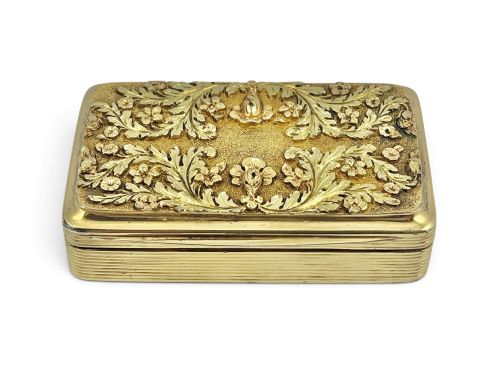
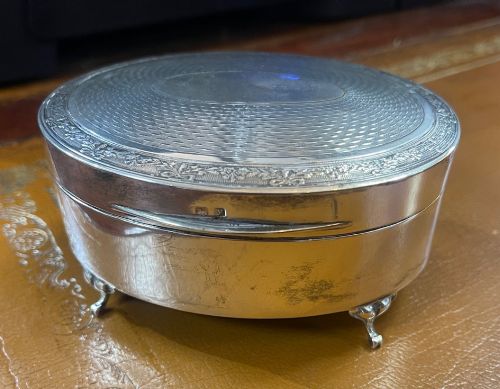
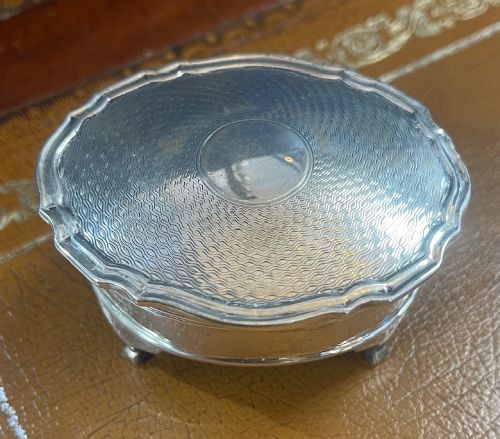
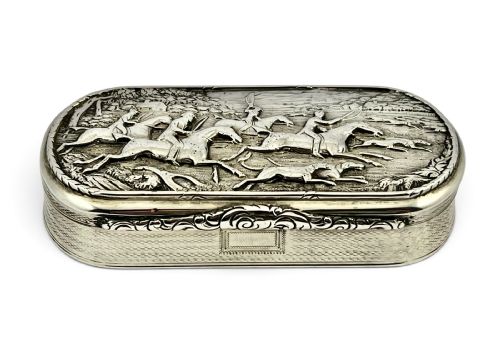
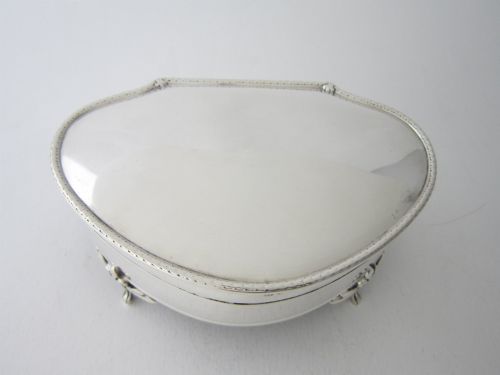
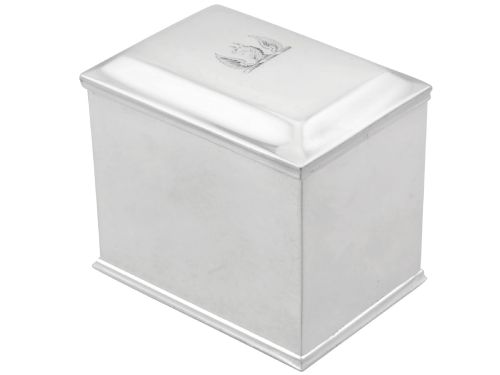
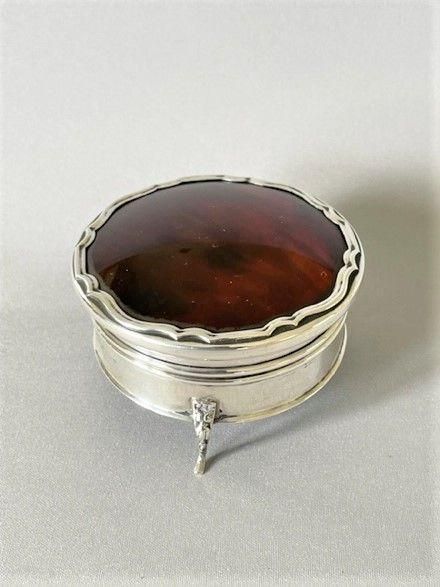
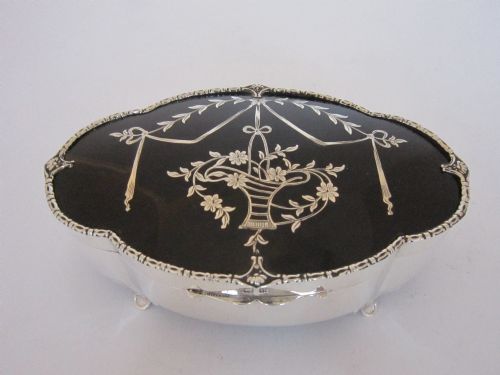
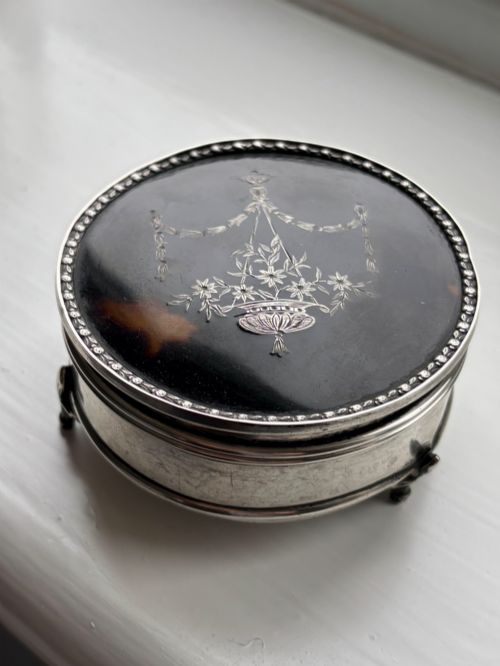
A george v trinket box usually takes the form of a small lidded container designed for dressing tables or desk use to hold small valuables and personal items. The pieces on this page span several decades, featuring sterling silver alongside tortoiseshell, glass, and ebonised wood.
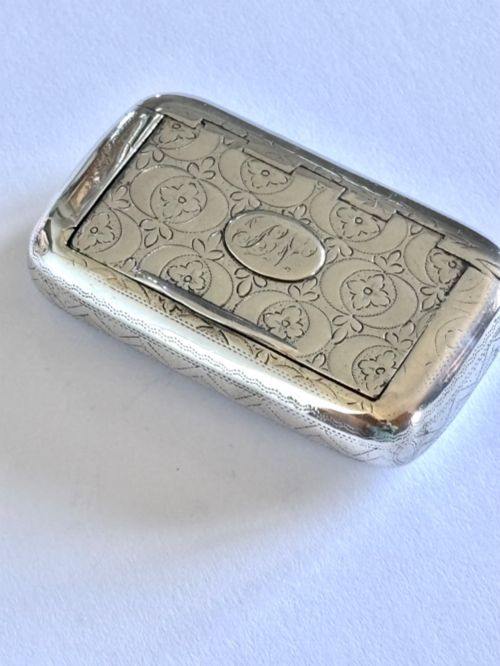
While the search term specifies the 1910 to 1936 period, the broader selection includes earlier boxes from the Georgian and Regency eras, alongside snuff boxes, tea caddies, and vinaigrettes. Most examples from the twentieth century combine sterling silver mounts with inset panels or glass bodies.
How they were made
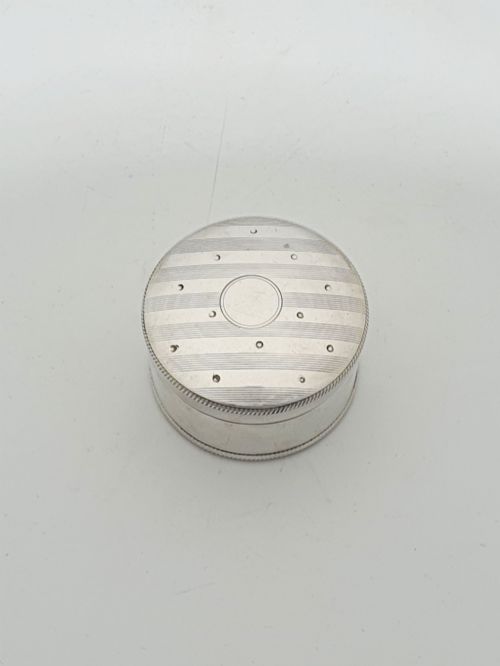
Makers utilised sterling silver for frames and lids, often applying engine-turned geometric patterns to the metal surfaces using specialised machinery. Glass bodies such as Kralik glass were combined with silver mounts, while wooden pieces relied on mahogany, satinwood, and yew with careful inlay work.
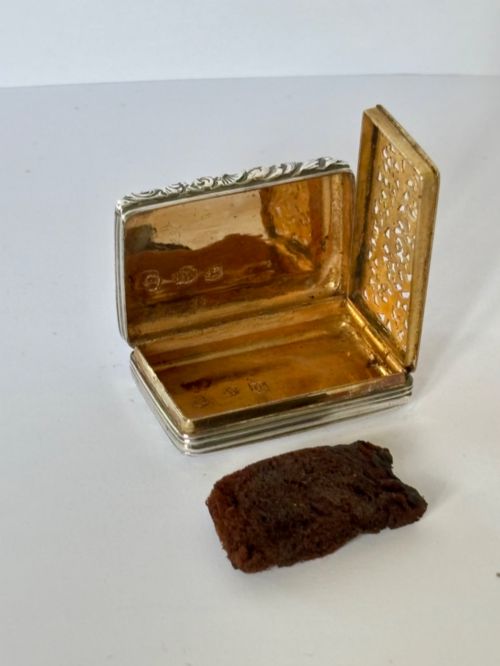
Internal components included hinged lids, fitted trays, and small sponge inserts for vinaigrettes, all assembled by hand in workshops located in Birmingham and London. Hallmarks stamped directly into the metal record the assay office, city, and year of manufacture.
George V Trinket Box Retail Price Guide 2026
Typical asking prices for george v trinket box among the pieces listed under this phrase on Sellingantiques today, from the lower quarter to the upper quarter. They describe what is for sale here now, not the wider market.
Several boxes include tiny internal sponges that once held aromatic vinegar to revive owners from tight corsets.
What varies in quality
The distinction between standard items and exceptional pieces rests on the precision of the metalwork, the clarity of the hallmarks, and the integration of decorative materials like tortoiseshell or enamel. Boxes featuring named makers or specialised techniques display superior execution in hinges, catches, and overall symmetry.
Weight and structural integrity also separate simpler utility items from presentation pieces, with heavier gauge silver and crisp engraving indicating higher workshop standards.
JOSEPH WILLMORE·JOHN SHAW·SAMUEL PEMBERTON·CORNELIUS BLAND·Paul Storr·George Adam Scheid·Giles Loyer·Alexander James Strachan·Charles Rawlings·Matthew Linwood·Henry Williamson Ltd·A. J. PEPPER & CO·Ollivant & Botsford
The George V Trinket Box Glossary
- Sterling silver
- A silver alloy containing 92.5 percent pure silver and 7.5 percent other metals, typically copper, used widely for British boxes and hallmarks.
- Vinaigrette
- A small ornamental box fitted with an internal grille, holding a sponge soaked in aromatic vinegar.
- Engine turned
- A surface decoration technique involving geometric patterns mechanically engraved into metal.
- Hallmark
- A series of official marks stamped on precious metals in Britain to indicate standard of purity, maker, and year.
- Tortoiseshell
- A mottled brown material derived from the shell of certain turtle species, utilised for inlay and decorative panels.
George V Trinket Box: Frequently Asked Questions
What is a george v trinket box?
A george v trinket box is a small lidded container manufactured during the reign of King George V, typically constructed from sterling silver and tortoiseshell or glass.
These pieces were kept on dressing tables to store small personal items such as rings and pins.
How do I date a silver box?
You date a silver box by locating the stamped hallmarks, which include a date letter indicating the exact year of assay.
Additional clues come from the overall style, maker's mark, and material combinations recorded in the piece.
What is the difference between a trinket box and a pill box?
A trinket box is generally larger and designed for dressing table accessories, whereas a pill box is a miniature container intended for carrying medicinal doses.
Pill boxes often feature tight-fitting push lids or small hinged covers suitable for pockets.
Were these boxes used every day?
These boxes served practical daily functions in domestic households, holding small valuables, cosmetics, and medical items.
Their survival in good condition reflects careful handling by owners over successive generations.