



George IV Pedestals
George iv pedestals are substantial pieces of nineteenth-century furniture built around sturdy central pillars that anchor a room.
George IV Pedestals
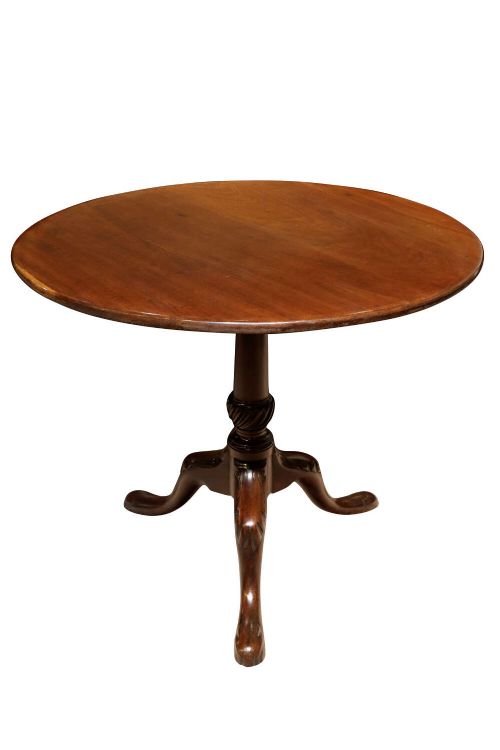
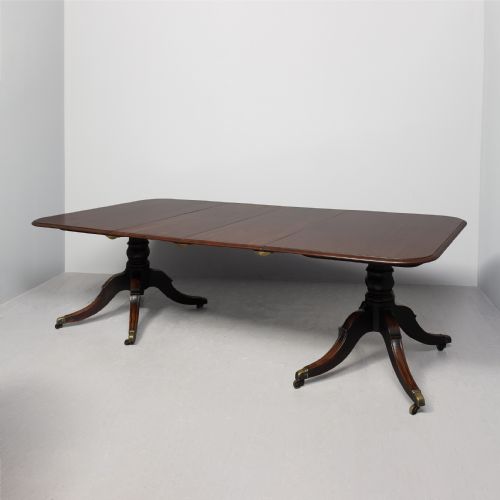
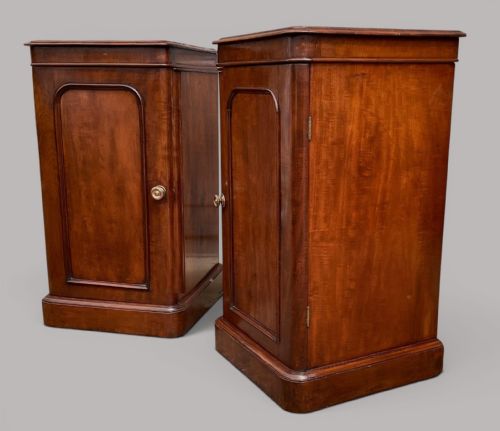
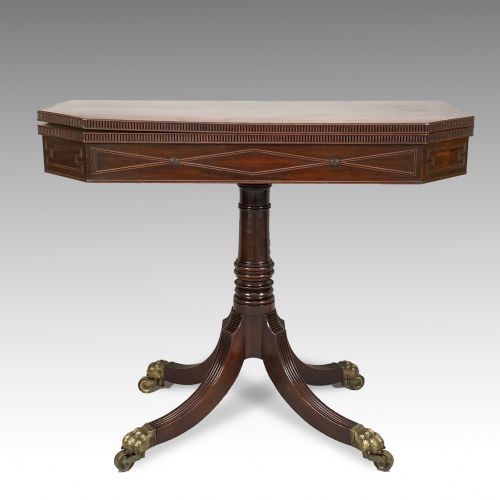
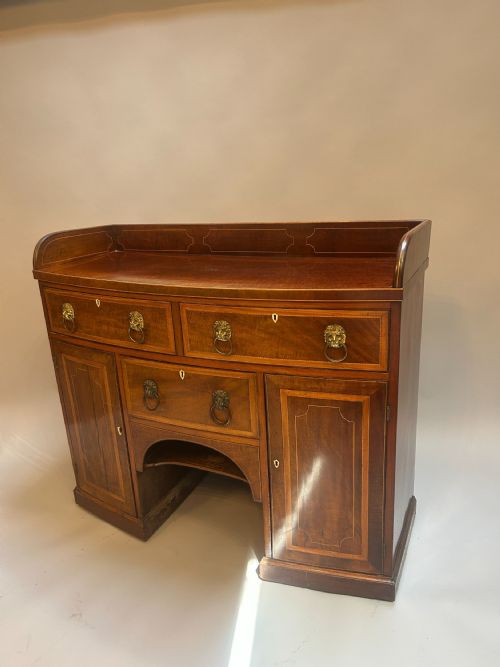
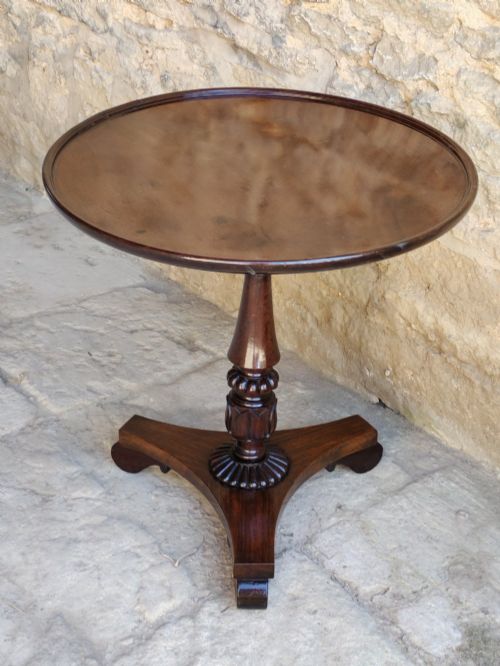
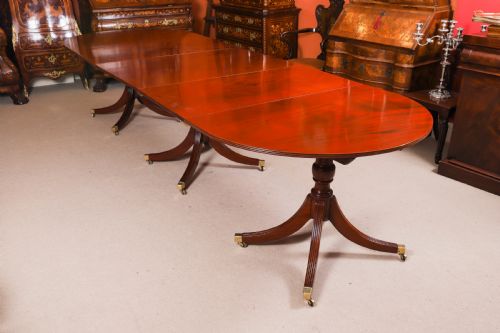
George iv pedestals encompass a variety of heavy-timbered furnishings built during the early decades of the nineteenth century, including dining tables with multiple pillar supports, library tables, and individual display stands. You will encounter twin pillar and triple pillar dining tables alongside smaller occasional pieces, card tables, and drum tables resting on central columns.
The objects frequently combine the Georgian tradition of cabinet making with the bolder lines of the Regency style, surfacing in domestic spaces as versatile tables and cupboards. Mahogany and rosewood dominate the selection, often accompanied by pollard oak and marble inserts that signal the period's preference for rich grain.
Materials and Construction
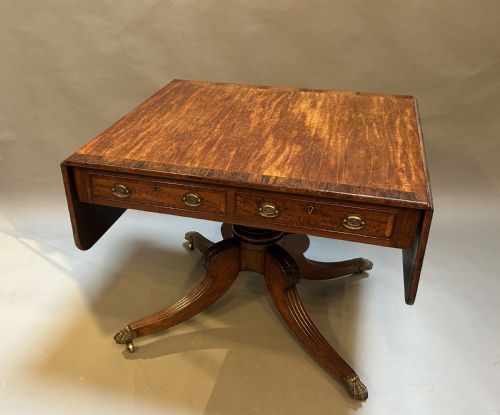
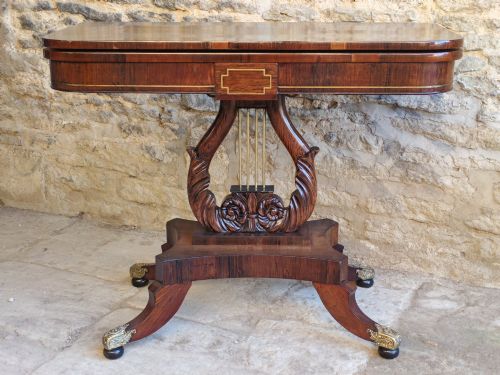
Cabinet makers relied heavily on solid and veneered mahogany and rosewood, applying figured timbers to tabletops and pedestal bases to create visual depth. Workshops also utilised exotic woods such as goncalo Alves, birdseye maple, and pollard oak, sometimes pairing them with brass mounts, leather inserts, and inset marble slabs.
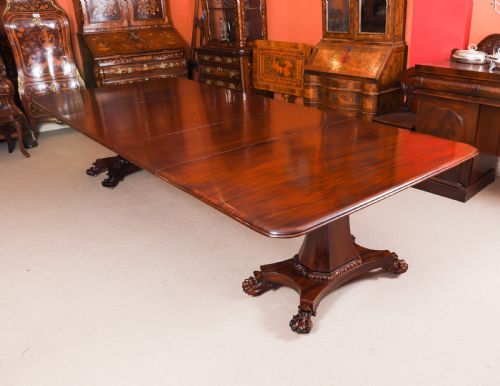
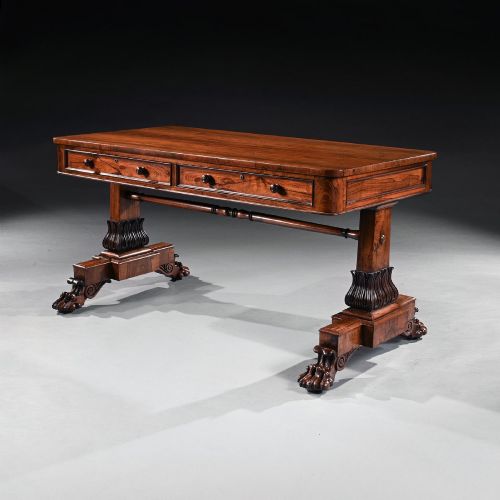
The structural integrity of these pedestals rests on heavy central pillars that branch into sturdy feet, frequently carved with lion paws or supported by platform bases. Tilt-top mechanisms, folding leaves, and drop-in extensions demonstrate the mechanical ingenuity applied to dining and occasional tables of this era.
An adjustable duet music stand appears among the heavy timber tables, ready for Victorian musicians to share a single sheet.
Evaluating Quality
The calibre of a piece is determined by the selection of the timber grain, particularly how master cabinet makers matched figured veneers across expansive surfaces like dining leaves and drum table tops. Superior examples display restrained, crisp carving on the pedestal base and feet rather than heavy, indistinct moulding.
Structural stability in the central pillar and the smoothness of mechanisms, such as tilt-top catches or table extension runners, separate workshop masterpieces from standard domestic furniture. Integration of secondary woods and the precision of brass inlays further distinguish the finer productions.
Holland and Sons·William Trotter·Gillows of Lancaster
The George IV Pedestals Glossary
- Pedestal
- A structural central pillar supporting a tabletop, cabinet, or display stand, replacing traditional four-leg configurations.
- Tilt-top
- A hinged tabletop mechanism allowing the surface to fold vertically for storage against a wall when not in use.
- Pollard oak
- Timber harvested from trees that were pollarded, resulting in a dense, highly clustered knot pattern valued for decorative veneers.
- Drum table
- A circular library or writing table with a deep top resembling a drum, fitted with alternating drawers around the circumference.
- Goncalo alves
- A dense exotic hardwood featuring striking dark brown and golden-brown contrasting stripes, utilised for decorative accents.
George IV Pedestals: Frequently Asked Questions
How do I use a twin pedestal dining table?
These tables provide generous seating capacity because the central pillars leave ample leg room around the perimeter compared to standard four-leg tables. Extra leaves can be inserted to extend the length for larger gatherings.
When not extended, the pillars offer a balanced appearance in formal dining rooms and libraries, anchoring the space without crowding the floor area.
Where should I place a rosewood centre table?
Centre tables are designed to stand free in the middle of a room rather than pushed against a wall, allowing access from all sides. They serve well in entrance halls or large living spaces as display surfaces for lighting and decorative objects.
Positioning them away from direct sunlight protects the rosewood grain and polished finish from fading over time.
What is the function of a drum table?
Drum tables were historically utilised in libraries and studies as revolving or stationary desks where paperwork could be stored in the peripheral drawers. The deep frieze hides functional storage while presenting a clean, circular silhouette.
They function effectively today as central library tables or large side tables in spacious reception rooms.
How do I distinguish George IV pieces from earlier Georgian furniture?
George iv pieces generally exhibit heavier proportions, bolder Regency influences, and an extensive use of figured rosewood and pollard oak veneers. Carved details like lion paw feet and faceted pillars appear more pronounced than on eighteenth-century equivalents.
Cabinet makers of this period embraced darker exotic timbers and architectural mounts that reflected a changing aesthetic towards classical revival.