



George IV Mahogany Pedestal Table
These george iv mahogany pedestal table pieces bring solid presence and rich timber tone to a room, offering the sturdy utility and polished grain that collectors prize.
George IV Mahogany Pedestal Table
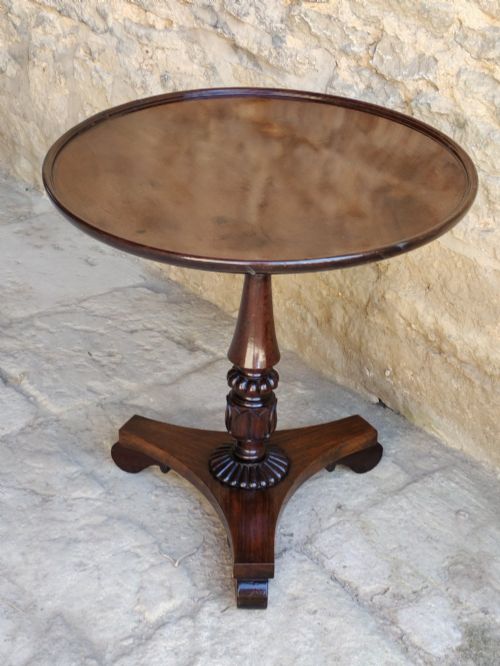
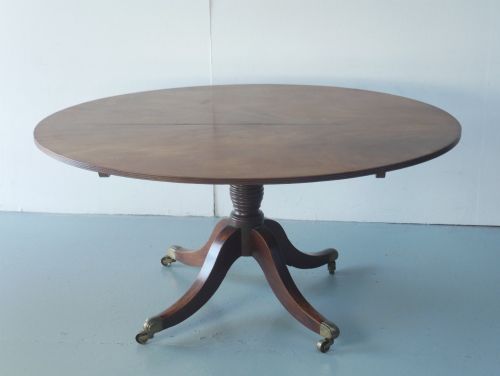
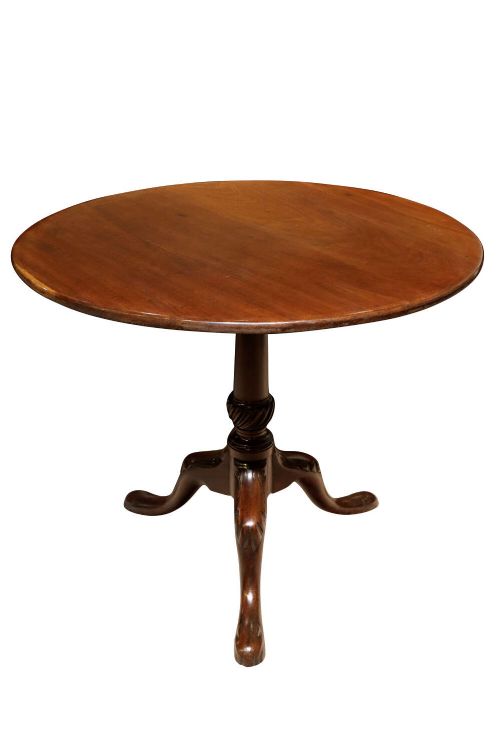
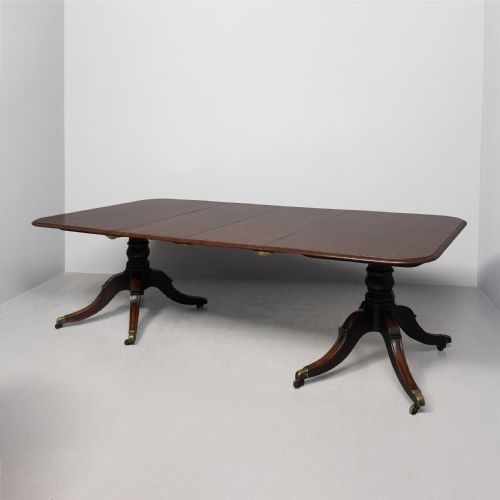
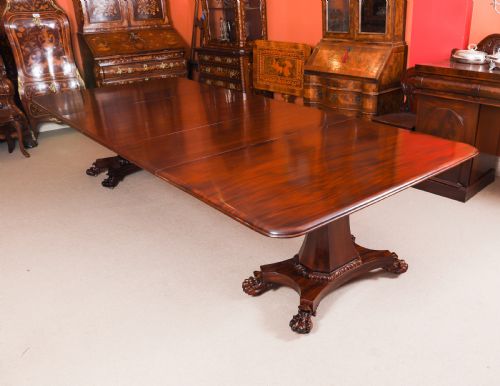
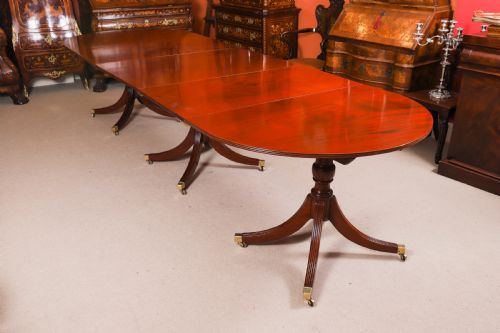
When searching for a george iv mahogany pedestal table, you are looking at sturdy timber furniture originating from the Georgian and Regency periods of the early nineteenth century. The listings on this page show a strong representation of dining tables, supported by twin or triple pillars, alongside various occasional and tea tables.
The most common formats you will meet here are the pedestal dining table, often equipped with extra leaves, and smaller occasional or drum tables. These pieces combine practical utility with the characteristic dark grain of mahogany, frequently enhanced by rosewood, brass, and leather details.
How they were made
Cabinet makers of the period relied primarily on solid mahogany and mahogany veneers, sometimes pairing the timber with rosewood and ebony for contrasting borders. Brass fittings, such as castors and toe caps, appear frequently on the feet of these pedestal supports.
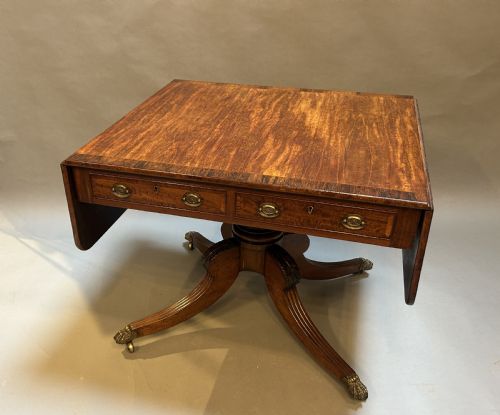
Construction techniques involve tilting tops, foldover mechanisms for tea tables, and pillar supports that branch into multiple legs. Leather inserts also feature on specific functional surfaces like writing and drum tables.
George IV Mahogany Pedestal Table Retail Price Guide 2026
Typical asking prices for george iv mahogany pedestal table among the pieces listed under this phrase on Sellingantiques today, from the lower quarter to the upper quarter. They describe what is for sale here now, not the wider market.
Listings feature periods spanning Georgian, Regency, and the wider nineteenth century, utilising mahogany, rosewood, brass, leather, and ebony.
What varies in quality
Quality in these pieces is dictated by the depth of the mahogany grain and the precision of the cabinet work in the pedestal base. Tables with well-matched extra leaves and sophisticated pillar turnings stand apart from simpler iterations.
The integration of secondary materials like rosewoodbanding, ebony inlay, and original brass castors elevates a piece. Better examples show careful attention to structural stability, particularly where the central pillar meets the feet.
Holland and Sons·Mack Williams and Gibton
The George IV Mahogany Pedestal Table Glossary
- Pedestal
- A central pillar supporting a table top, often branching into three or four legs at the base. This design allows for greater legroom around dining tables.
- Tilt-top
- A table top hinged to the pedestal so it can be tilted vertically when not in use. This mechanism saved space in nineteenth-century rooms.
- D-end
- A table end shaped in a semicircle, resembling the letter D. These sections are frequently found on dining tables that accept central leaves.
- Drum table
- A circular library or occasional table with a deep frieze resembling a drum. These often contain drawers and occasional leather-lined surfaces.
- Foldover
- A table top designed with a hinged leaf that folds out to double the surface area. This mechanism is typical of tea and card tables.
George IV Mahogany Pedestal Table: Frequently Asked Questions
How do I seat guests comfortably?
Many of these pedestal tables come with extra leaves or removable sections that allow you to extend the length for dinner parties. The central pillar design helps ensure that table legs do not obstruct chair placement.
When configuring the table for a meal, consider the placement of the twin or triple pillars underneath. Selecting a version with D-ends and leaves gives you the flexibility to adapt the length to your room size.
Can I use a tea table daily?
Foldover tea tables were originally designed for social hospitality, making them practical for modern living as side or console tables. The hinged top opens easily when you need extra surface area.
Keep in mind that the foldover mechanism relies on older hinges and timber joints. Treat the opening action with care to preserve the original structure of the table.
How do I care for mahogany surfaces?
Mahogany responds well to regular dusting with a soft cloth and occasional treatment with appropriate wood waxes. Avoid placing these tables in direct sunlight or near heat sources to prevent the timber from drying out.
Promptly wipe away any moisture to protect the polished finish and any inlaid leather or contrasting rosewood borders. Gentle maintenance preserves the natural depth of the grain over time.
What defines the George IV style?
The George IV period blends late Georgian restraint with the bolder, classical influences of the Regency era. You will see robust pedestal bases, rich mahogany timbers, and occasional use of brass and rosewood.
Pieces from this era emphasise structural solidity combined with refined decorative details like reeded edges and carved pillar supports. This balance gives the furniture its enduring presence in traditional and modern interiors.