



George IV Chest
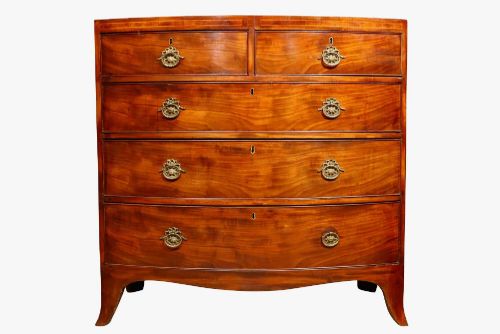
A george iv chest delivers the solid proportions and rich cabinet timber that define early nineteenth-century English rooms.
George IV Chest
When searching for a george iv chest, buyers encounter a sturdy form of storage typically constructed during the Regency and early nineteenth-century periods. The most common iteration on this page is the classic mahogany chest of drawers, though variations include bow front formats, compact apprentice pieces, and Wellington chests.
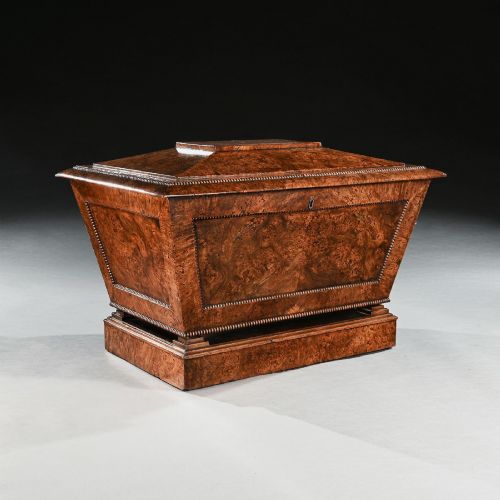
Beyond standard drawer units, the category stretches to encompass specialised storage such as military campaign chests, linen presses, combinated wardrobes, and cellarettes. These pieces reflect the varied domestic and travelling needs of the period while maintaining the architectural dignity associated with the era.
Materials and construction
Cabinetmakers of the period relied heavily on mahogany, utilising flame mahogany veneers and figured cuts to create striking drawer fronts and cabinet surfaces. Secondary timbers such as oak and pine appear in drawer linings and internal framing, demonstrating traditional joining methods suited to heavy daily use.
More elaborate pieces incorporate exotic woods like goncalo alves, amboyna, and pollard oak, often accented with marquetry or brass fittings. Dovetailed drawer construction and turned or bracket feet complete the structural integrity of these items.
Listings feature woods like mahogany, goncalo alves, amboyna, pollard oak, and rosewood across Georgian and Regency periods.
Assessing quality
Quality in a george iv chest rests on the choice of timber figure and the precision of its grain matching across drawer fronts. Superior examples exhibit deep natural patina, crisp brass hardware, and tightly fitted internal joints that survive centuries of opening and closing.
Lesser pieces may show replaced handles, tired secondary woods, or poorly matched veneers that disrupt the visual harmony of the facade. The balance between utilitarian strength and refined decorative detail dictates the standing of each individual cabinet.
Gillows·W Day The Strand
The George IV Chest Glossary
- Bow front
- A convex curved cabinet front that projects outward in the centre, popular during the Regency period. This shape softens the room's geometry while maximising internal storage capacity.
- Cellarette
- A freestanding box or cabinet designed to hold wine bottles, often lined with lead or compartmentalised inside. They frequently sit on low legs or pedestal bases.
- Linen press
- A tall piece of furniture featuring upper cabinet doors enclosing sliding trays, placed above a base of wider drawers. These units served to store folded textiles before modern wardrobes became standard.
- Goncalo alves
- A dense exotic hardwood with striking contrasting dark brown stripes, utilised for decorative veneers and marquetry details. It adds distinct visual weight to luxury pieces.
George IV Chest: Frequently Asked Questions
How do I identify a george iv chest?
Look for the characteristic timber selections, such as flame mahogany or rosewood, paired with proportions typical of the 1820s and 1830s. Brass ring handles and turned feet frequently accompany these forms.
Examine the secondary woods inside the drawers, like oak or pine, which help confirm the period of manufacture alongside structural joinery details.
What is a military campaign chest?
A campaign chest is built in two separate sections with recessed brass pulls and corner brackets, designed for easy transport by officers on active service.
The modular construction allowed dismantling for transit without sacrificing the rigid stability required in temporary quarters.
Where should I place a cellarette?
A cellarette works effectively as a freestanding side table or drinks cabinet in a dining room or living space. Its compact footprint accommodates bottle storage within an architectural frame.
Keep these pieces away from direct heat sources and strong sunlight to protect the aged polish and delicate veneer work.
Are apprentice chests miniature furniture?
Apprentice chests are smaller scale models built by woodworkers to demonstrate their proficiency before gaining master status. They replicate full-size drawer units with identical construction techniques.
Collectors prize these diminutive items for their fine detailing and the exact replication of standard cabinetmaking standards.