


George III Walnut Desk
A george iii walnut desk brings warmth and architectural precision to a study, built from rich timber that deepens in tone over centuries.
George III Walnut Desk
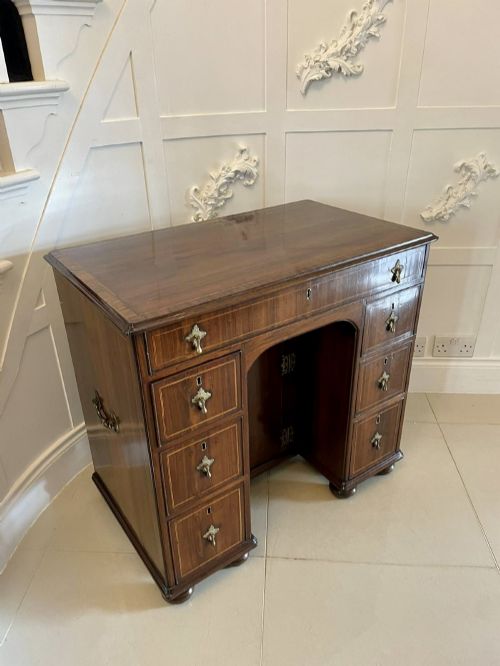
When searching for a george iii walnut desk, a buyer encounters pieces primarily from the eighteenth century, spanning the Georgian period with several examples dating around seventeen eighty. The most common form in this category is the kneehole desk, alongside pedestal desks, partner desks, and bureau bookcases that showcase the cabinetmaker's skill.
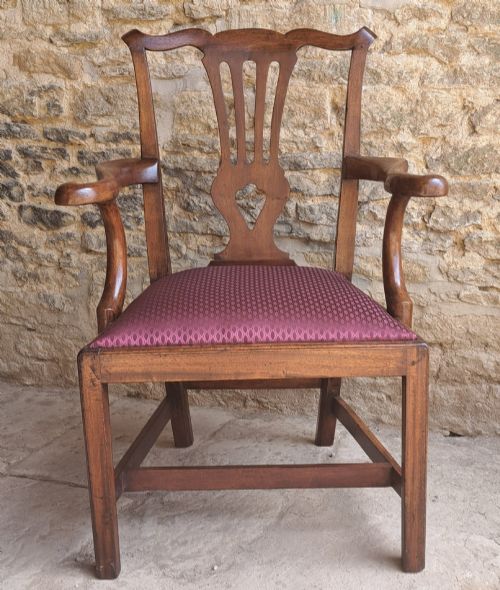
The selection ranges from compact writing tables and lowboys on cabriole legs to grander double-sided partner desks fitted with original handles. Regional variations also appear, including Scottish seating and Irish armchairs that share the era's walnut vocabulary, though the core of the offering remains dedicated to writing furniture.
Materials and construction methods
Walnut serves as the primary timber, often selected for figured grain and rich burr patterns that create striking surface movement across desk tops and drawer fronts. Secondary woods such as oak provide sturdy interior framing for drawers and carcases.
Brass hardware, including mounts, drop handles, and escutcheons, provides functional contrast against the dark timber. Writing surfaces frequently incorporate fabric, textile, or wool needlepoint inserts to create a suitable pad for correspondence.
The listings on this site combine walnut writing furniture from the eighteenth century with related seating and timepieces.
Assessing quality in walnut furniture
Quality rests in the selection of the timber veneer, where dense burr walnut or carefully matched grain patterns elevate the visual presence of the desk. The crispness of carved details, such as cabriole legs or bracket feet, demonstrates the artisan's hand.
Originality of hardware and internal timber components heavily influences the integrity of the piece. Desks retaining their period brass mounts and uncompromised drawer linings hold greater historical weight.
JOHN TAYLOR OF LONDON
The George III Walnut Desk Glossary
- Kneehole desk
- A compact writing desk featuring a central recessed cupboard flanked by small drawers on either side. This form offers efficient storage while maintaining a modest footprint in smaller rooms.
- Cabriole leg
- A furniture leg that curves outward at the knee and tapers inward to an ankle, finishing in a pad or foot. This stylistic element draws inspiration from animal forms popular in eighteenth-century design.
- Bureau bookcase
- A dual-purpose piece combining a sloping desk flap that opens for writing with upper shelving enclosed by doors. It provides substantial vertical storage alongside a functional writing surface.
- Lowboy
- A small table with one or more drawers, often raised on tall cabriole legs and used historically for writing or dressing. Its diminutive proportions make it versatile for contemporary domestic spaces.
- Partner desk
- A large double-sided desk designed for two people to work opposite one another, featuring drawers and cupboards on both faces. These pieces were traditionally built for libraries or boardrooms.
George III Walnut Desk: Frequently Asked Questions
How do I care for a walnut surface?
Keep walnut furniture away from direct sunlight and strong heat sources to prevent the timber from drying out or splitting. Dust regularly with a soft, dry cloth and apply a quality beeswax periodically to nourish the grain.
Avoid using modern chemical polishes or placing damp items directly onto the wood. Proper humidity control in the room will preserve both the solid timber and the delicate veneer work.
Can I use an antique desk daily?
These desks were built for writing and administrative work, so they handle normal daily use quite well. Ensure that heavy modern equipment does not strain historical drawer bottoms or hinges.
Using a blotter or a protective pad on the writing surface prevents accidental ink stains or scratches on the historic wood. Treat the mechanism with care and pull drawers evenly from the centre.
What defines the Georgian walnut style?
Georgian design balances classical proportion with restrained ornamentation, allowing the natural figuring of the walnut timber to take precedence. Cabinetmakers utilised rich burr veneers and subtle crossbanding to frame drawer fronts and tops.
Cabriole legs, bracket feet, and brass drop handles are typical hallmarks of this period. The overall aesthetic prioritizes functional elegance and sturdy structural framing.
Where should I place a partner desk?
Partner desks are finished on all sides, making them ideal as freestanding centrepieces in the middle of a room rather than pushed against a wall. Ensure there is sufficient clearance around the desk for chairs to pull out comfortably.
Because these desks are substantial in scale, positioning them in a room with adequate floor space allows both sides to be accessed and appreciated fully.