



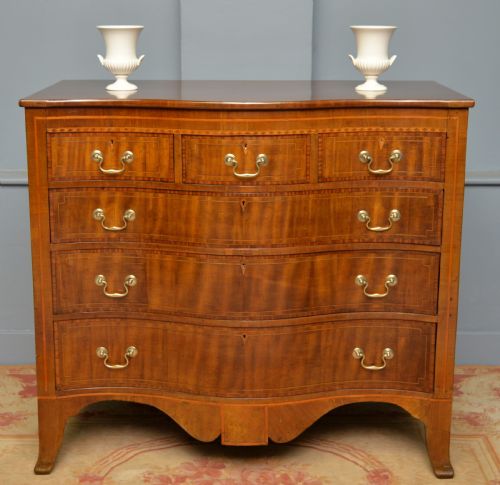


George III Serpentine Drawers
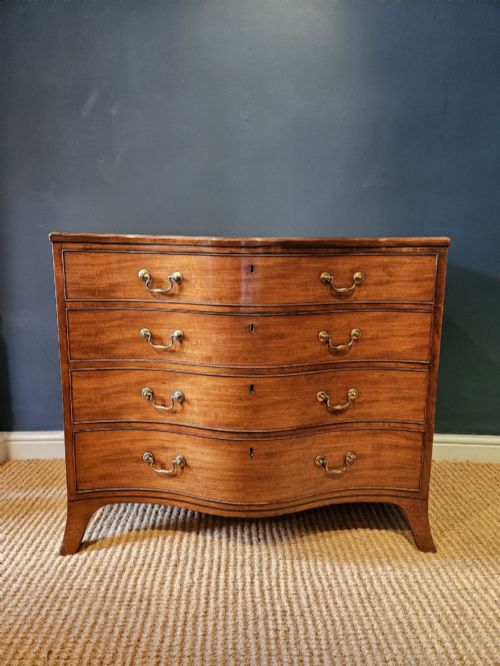
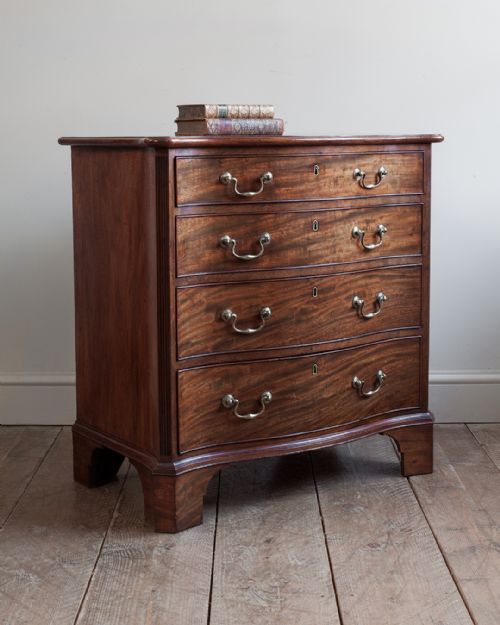
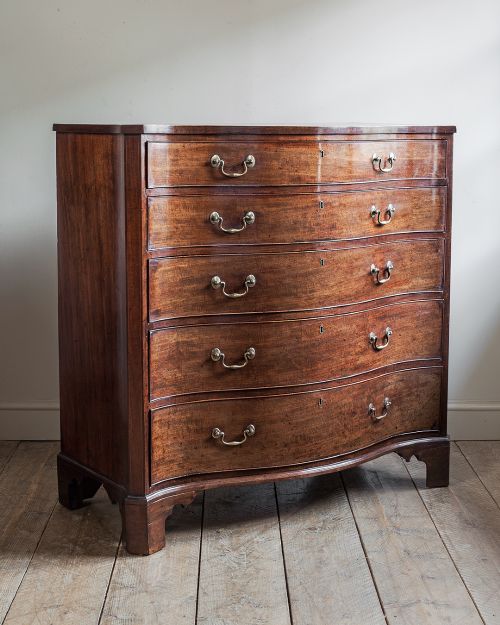
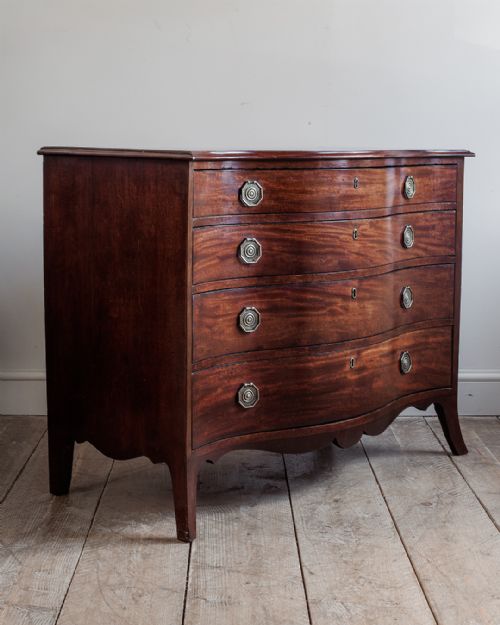
George iii serpentine drawers demand attention for their sweeping curved fronts and disciplined proportions.
George III Serpentine Drawers
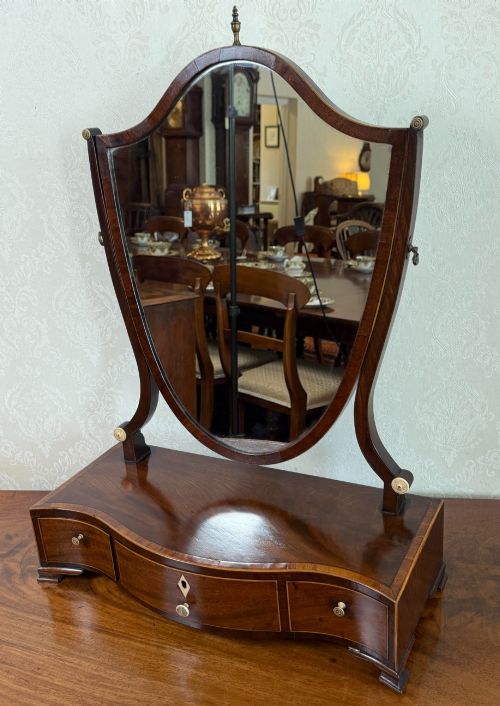
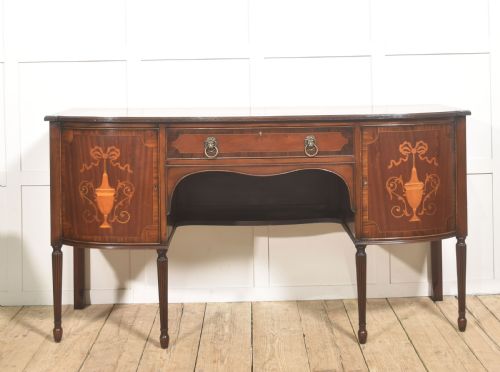
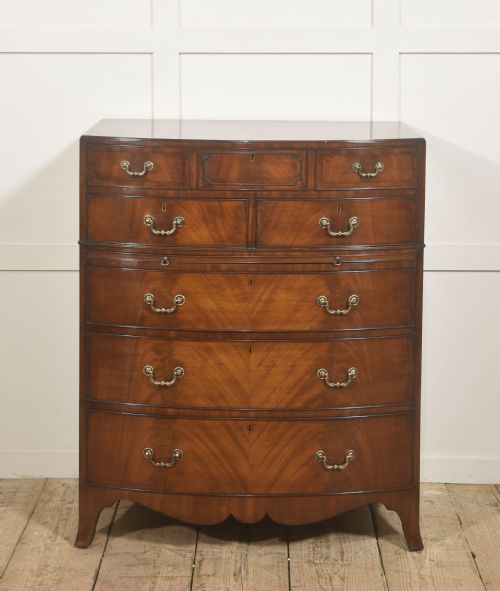
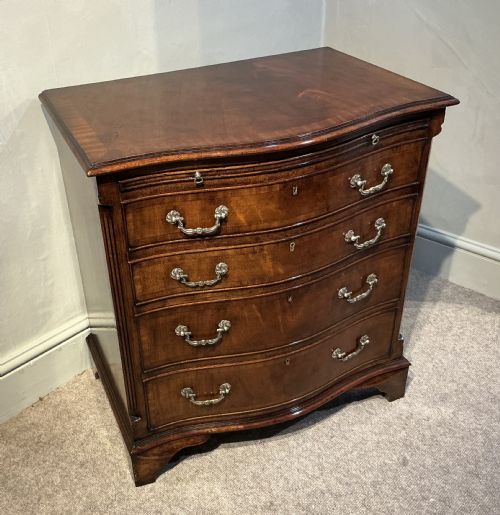
When searching for george iii serpentine drawers, buyers encounter case furniture defined by a convex centre flanked by concave wings. The predominant form on this page is the chest of drawers originating in the eighteenth century, alongside related dressing mirrors, sideboards, and desks.
Most examples hail from the georgian period, constructed in mahogany with occasional use of satinwood, harewood, and oak. Later nineteenth and early twentieth century revivals also appear, bringing similar forms into different decades.
Assessing quality in curved case pieces
Quality rests upon the choice of timber figure, where richly grained mahogany or figured fiddleback veneer elevates a piece above plain stock. The crispness of the serpentine curve and the subtlety of boxwood inlay distinguish superior execution.
Integrity of proportion and the preservation of original brass fittings also dictate value. Pieces exhibiting refined proportions and untouched eighteenth-century surfaces stand apart from heavily restored or later revival iterations.
George III Serpentine Drawers Retail Price Guide 2026
Typical asking prices for george iii serpentine drawers among the pieces listed under this phrase on Sellingantiques today, from the lower quarter to the upper quarter. They describe what is for sale here now, not the wider market.
Listings span from eighteenth-century georgian items to twentieth-century revivals, recording materials like mahogany, satinwood, and boxwood inlay.
Thomas Chippendale·Waring and Gillow
The George III Serpentine Drawers Glossary
- Serpentine
- A shape featuring a convex centre curving outward between two concave sections curving inward. This contour defines the primary aesthetic of the search phrase.
- Figured mahogany
- Timber exhibiting distinctive grain patterns such as flame or fiddleback. Cabinetmakers selected these boards for prominent drawer fronts.
- Hepplewhite
- A neoclassical furniture style associated with the eighteenth century. Pieces in this manner often display delicate inlay and tapered supports.
- Commode
- A decorative chest of drawers or cabinet. Eighteenth-century examples frequently incorporate the curved serpentine profile.
- Marquetry
- Decorative woodwork where pieces of contrasting wood or bone are fitted into a veneer. This technique ornaments drawer fronts and top surfaces.
George III Serpentine Drawers: Frequently Asked Questions
What defines a serpentine front?
A serpentine front curves outward in the middle and inward at the sides, creating a continuous undulating line. This shape demands precise woodworking to ensure the drawers operate smoothly within the curved frame.
Craftsmen during the eighteenth century adopted this profile to add visual movement and elegance to heavy mahogany case furniture.
How do I spot a revival piece?
Revival pieces often date from the nineteenth or early twentieth centuries, employing machine-cut dovetails or different secondary timbers inside. Examining the construction underneath and behind reveals the age of the materials.
Older eighteenth-century examples display hand-cut joinery and signs of historical wear consistent with their long existence.
Where were these pieces used?
Original eighteenth-century chests and commodes served primarily in principal bedrooms and formal withdrawing rooms. They stored linens and clothing while displaying the owner's taste and wealth.
Smaller dressing table mirrors sat atop matching chests or dressing tables for daily grooming routines.
What woods appear most often?
Mahogany remains the dominant wood across the inventory, frequently selected for its strength and rich grain. Satinwood, harewood, and boxwood appear as secondary veneers and inlay materials.
Oak and other sturdy timbers are typically found inside drawer linings and internal framing.