





George III Piecrust Table
A george iii piecrust table brings carved wooden elegance and distinctive raised rims into a room, made for serving or display.
George III Piecrust Table
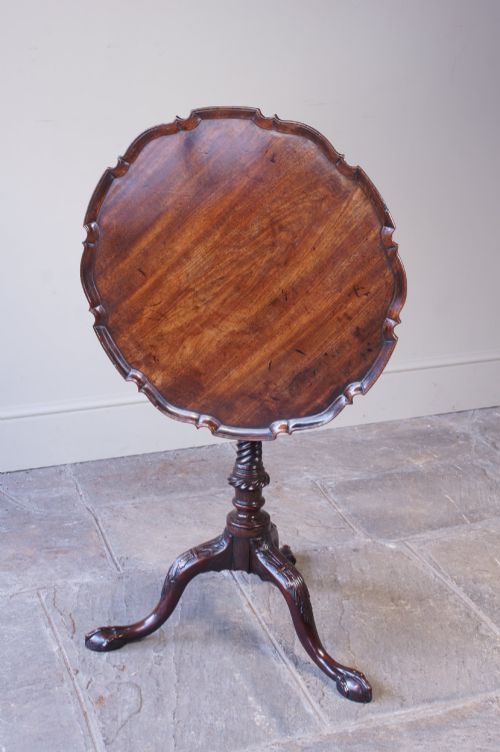
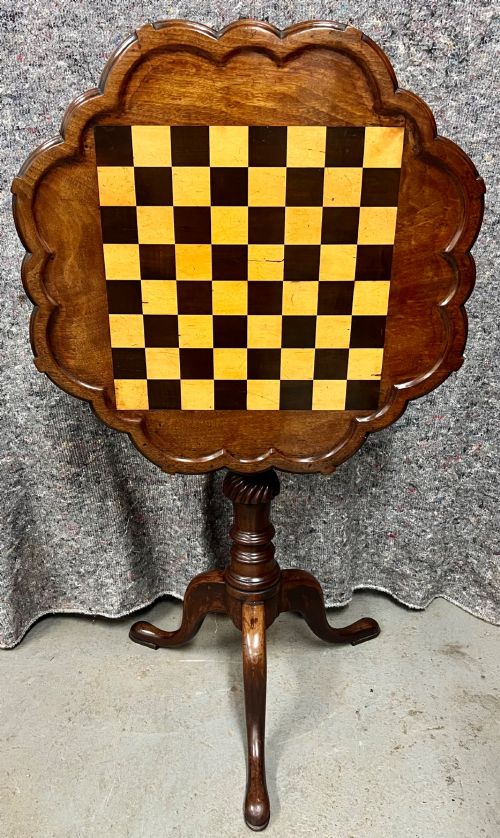
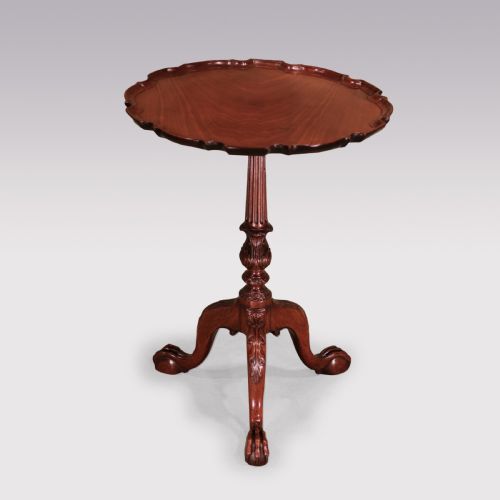
A george iii piecrust table is typically encountered as a tripod table, resting on a central pillar supported by three legs. These items originate predominantly from the eighteenth century, aligned with the Georgian period.
The form functions variously as an occasional table, centre table, or dining centre table. Examples range from simple occasional pieces to those with tilt tops or snap-top mechanisms.
Makers of the era drew on the Chippendale taste, incorporating carved borders into domestic furniture. Such tables served versatile roles in period interiors as lamp tables, wine tables, or coffee tables.
How they were made
Construction relies heavily on mahogany, often selected for its dense grain and durability in tripod table forms. Alternative timbers such as satinwood and hardwood appear alongside occasional wood inlay and brass components.
Edges are shaped into the signature piecrust contour, sometimes complemented by carved decoration on the pillar or tripod base. Tilt-top and snap-top engineering allowed the surface to be folded away when not in use.
George III Piecrust Table Retail Price Guide 2026
Typical asking prices for george iii piecrust table among the pieces listed under this phrase on Sellingantiques today, from the lower quarter to the upper quarter. They describe what is for sale here now, not the wider market.
Listings feature eighteenth-century pieces alongside nineteenth-century interpretations, predominantly constructed from mahogany with occasional satinwood and hardwood examples.
What varies in quality
Quality rests in the crispness of the carved rim and the stability of the tripod base beneath. Finer examples display harmonious proportions between the top, the turned column, and the spread of the legs.
The choice of timber grain and the precision of the joinery distinguish standard pieces from superior works. Carving depth and execution on the piecrust edge reflect the skill invested by the maker.
The George III Piecrust Table Glossary
- Piecrust edge
- A raised, scalloped perimeter carved directly from the solid timber of the table top. This decorative moulding emulates pastry crusts popular in domestic design.
- Tripod table
- A small freestanding table supported by a central pillar and three radiating legs. This configuration prevents wobbling on uneven floors.
- Tilt top
- A mechanism allowing the table top to pivot to a vertical position. This saved valuable floor space in period rooms.
- Occasional table
- A small movable table intended for specific, intermittent use rather than permanent placement. These items moved easily around the room.
- Chippendale taste
- A design style reflecting the aesthetics popularised by Thomas Chippendale during the eighteenth century. It incorporates carved details and classical proportions.
George III Piecrust Table: Frequently Asked Questions
What is a piecrust table?
A piecrust table is a small circular table featuring a raised, scalloped wooden rim. The edge is carved directly from the solid top to resemble pastry work.
These pieces typically date from the eighteenth century and stand on a central pillar with three legs.
How were they used originally?
These tables served flexible domestic purposes for serving drinks, holding lamps, or displaying decorative items. Their portable nature allowed them to be moved easily around the home.
Many featured tilt-top mechanisms so the surface could be folded flat against the wall when not in use.
How do I identify a Georgian period table?
Identification relies on observing timber choices like mahogany, traditional joinery methods, and characteristic silhouettes from the eighteenth century. Details such as carved tripod legs and turned central columns point to this era.
Stylistic influences often align with the Chippendale taste prevalent during the reign of George III.
Can I use one as a coffee table?
Their compact dimensions and sturdy tripod bases suit modern living spaces well as low display surfaces or lamp tables. The raised edge helps keep small items secure on the surface.
Care should be taken to place them where the tilt mechanism, if present, is understood and respected.