

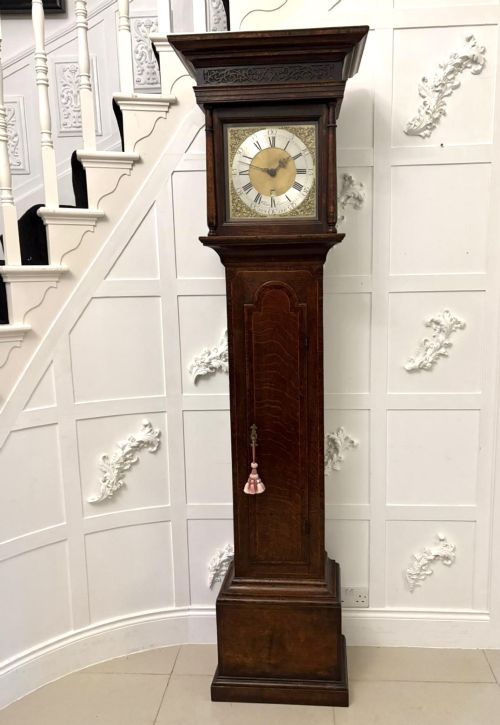


George III Oak Longcase Clock
A george iii oak longcase clock brings the steady tick of the eighteenth century into a room with striking presence.
George III Oak Longcase Clock
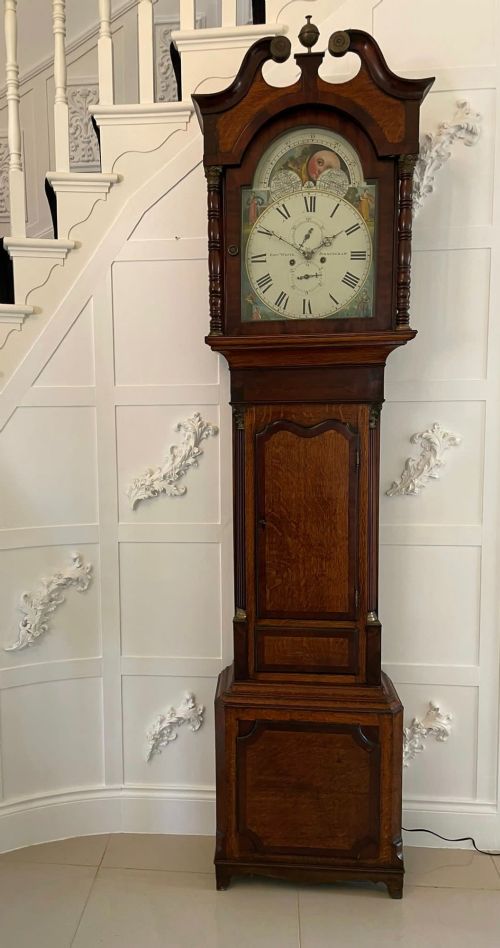
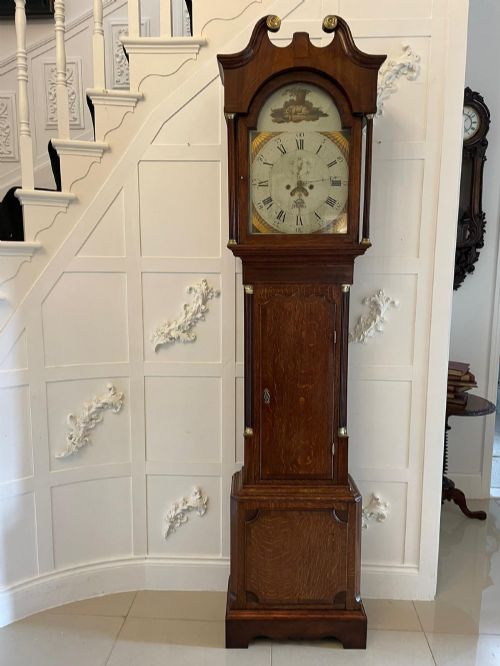
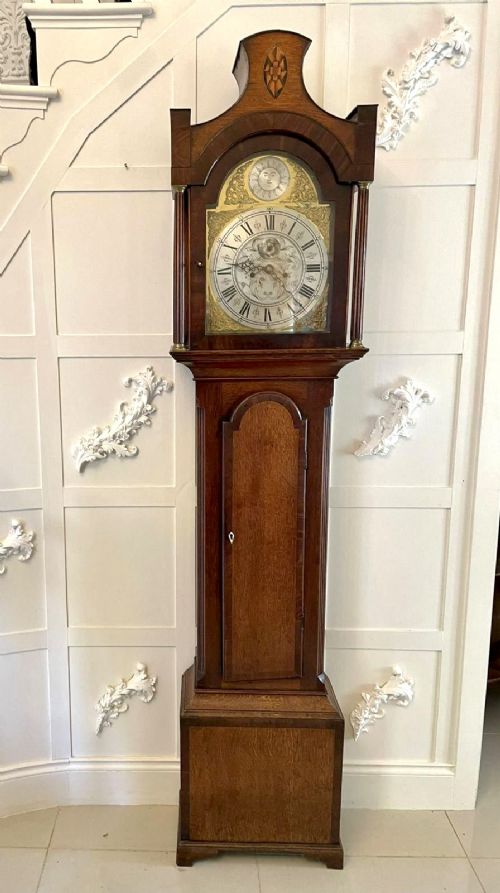
A george iii oak longcase clock stands as a traditional tall timepiece originating from the Georgian period, specifically spanning the eighteenth century and around eighteen hundred. These floor-standing pieces combine practical timekeeping with stately cabinet work, often incorporating regional variations from makers across the country.
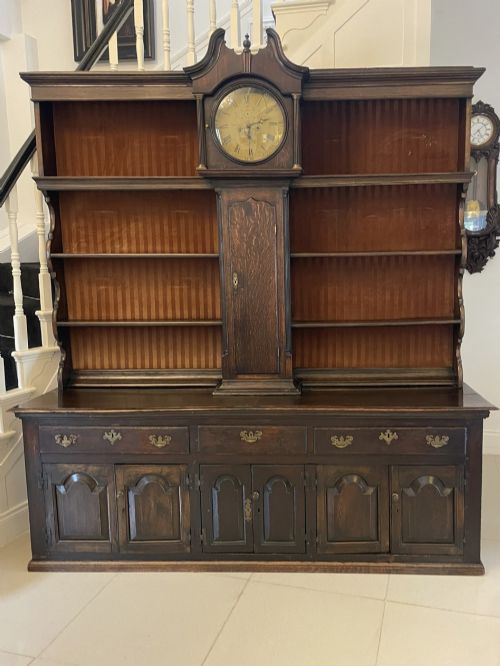
The versions most commonly met on this page combine sturdy timber cases with brass or painted dials, sometimes featuring eight-day movements or moon phase complications. Alongside standard timepieces, the selection occasionally records combined forms such as dressers fitted with longcase clocks.
Makers inscribed their dials with towns ranging from Birmingham and Nottingham to Nantwich, York, and Manchester. This creates a rich variety of provincial styles rooted firmly in Georgian craftsmanship.
Materials and construction
Makers built the tall cases primarily from solid oak, frequently banding or combining the timber with mahogany and burr oak highlights. Glass protects the dial face within the hood, while carved details and fan decoration inlaid marquetry add architectural depth to the casework.
The mechanical interiors rely on brass and steel components to drive the movement and regulate the hours. Dials appear in polished brass or painted enamel, displaying the craftsmanship of regional horologists who signed their work directly onto the face.
George III Oak Longcase Clock Retail Price Guide 2026
Typical asking prices for george iii oak longcase clock among the pieces listed under this phrase on Sellingantiques today, from the lower quarter to the upper quarter. They describe what is for sale here now, not the wider market.
Materials recorded across these listings include oak, brass, glass, mahogany, burr oak, steel, enamel, and iron.
What separates the grades
The distinction between standard examples and the finest pieces rests upon the sophistication of the movement and the richness of the timber. Eight-day movements and complex dial work, such as moon phases or centre second sweeps, mark out the more ambitious commissions.
Cabinet work also dictates standing power, where well-figured burr oak, mahogany banding, and carved detailing elevate a provincial case into a piece of standout presence. The clarity of the maker signature on the dial provides a final measure of distinction.
Edward White Birmingham·Walker of Nantwich·Hudfon Of Nottingham·William LIster·John Collier Cheadle·Barlow of Ashton·Fisher of Preston·John Smith Chester·Richard Bolt·Bullock of Ellesmere·Henry Frost Philmoorehill·Rowntree York·Henricus Baker of Appleby·Jacob Lovelace Exeter·John Kent Manchester
The George III Oak Longcase Clock Glossary
- Longcase clock
- A tall freestanding pendulum clock enclosed in a wooden case, historically known as a grandfather clock. These pieces combine heavy weights with precision gear trains.
- Moon phase
- A mechanical dial feature tracking the lunar cycle behind a painted aperture. This complication adds visual movement and technical intricacy to the clock face.
- Eight day movement
- A clock mechanism requiring winding only once a week rather than daily. This feature demanded greater gear train sophistication from the maker.
- Brass face
- A metal dial plate typically engraved and silvered before the development of painted iron faces. These early interfaces often display ornate spandrels in the corners.
- Marquetry
- Decorative veneer work forming intricate patterns using various contrasting timbers. Craftsmen applied this technique to enhance the visual appeal of the case door and hood.
George III Oak Longcase Clock: Frequently Asked Questions
How do I wind an eight day longcase clock?
Winding involves using a small crank key inserted into the winding holes on the dial face to draw the weights upward. Care must be taken not to overwind the movement.
Most eight day examples require this attention weekly to maintain accurate timekeeping across the pendulum swing.
Where should I place a tall clock in my home?
A stable, dry interior wall away from direct heat sources and heavy vibrations provides the ideal environment for a tall clock. Level flooring ensures the pendulum swings evenly without catching.
Securing the case to the wall using internal brackets helps prevent accidental tipping in busy hallways or living spaces.
What does a moon phase dial show?
The painted rotating disc tracks the phases of the moon through a curved window on the upper dial. This historical complication was useful for evening travel and tide calculations.
Collectors prize this feature for the artistic painting and mechanical ingenuity required to drive the lunar month.
How do brass and painted dials differ?
Brass dials dominated earlier eighteenth-century production with engraved details and cast brass corner spandrels. Painted iron dials became more widespread toward the turn of the century.
Both styles offer distinct aesthetic qualities, reflecting the shifting fashions of Georgian horology across different regions.