

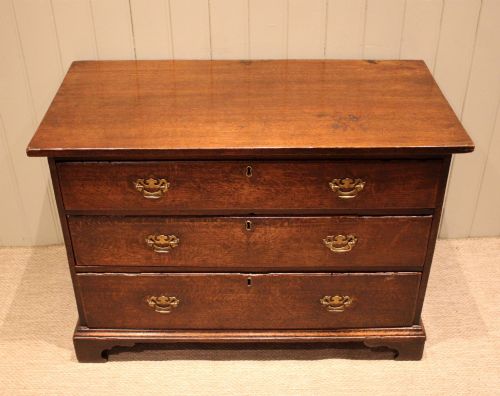
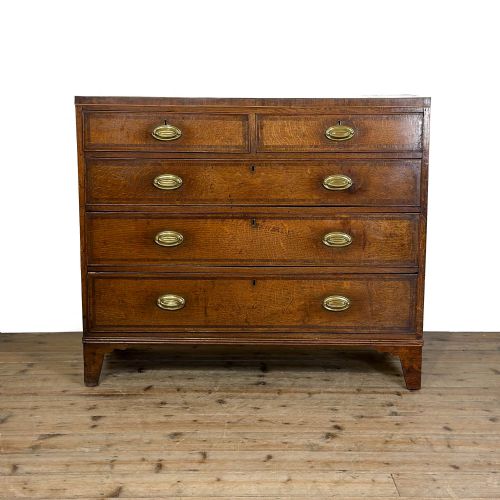
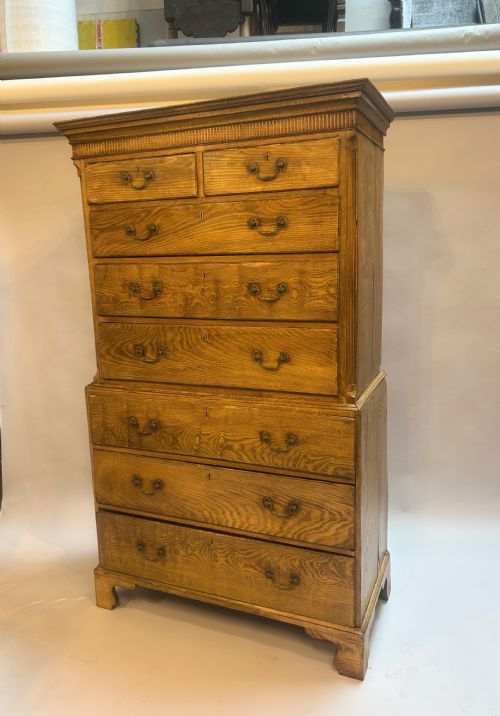
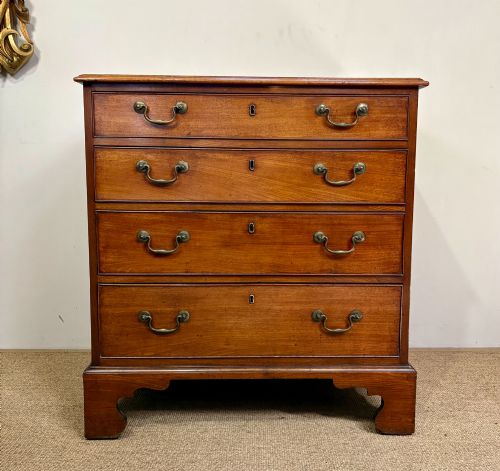
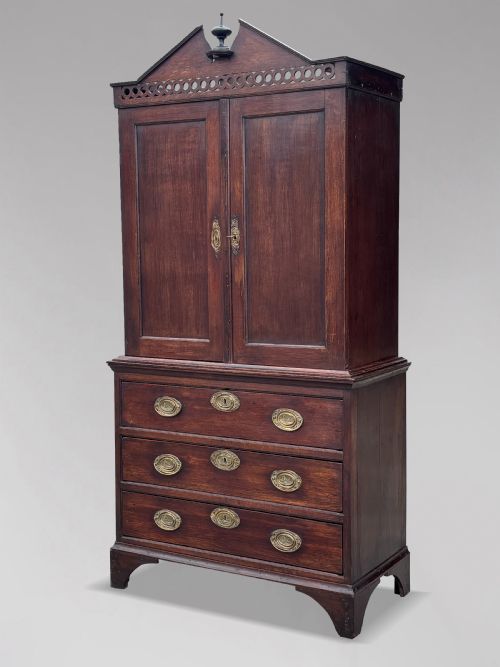


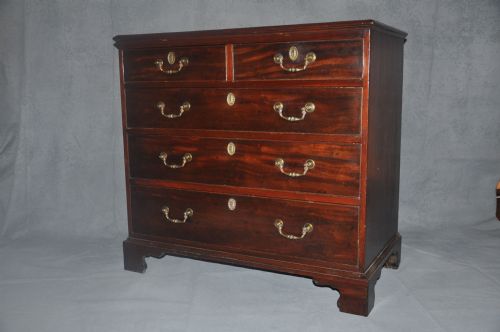


George III Oak Chest of Drawers
A george iii oak chest of drawers brings sturdy timber and honest joinery into a room, offering practical storage with Georgian character.
George III Oak Chest of Drawers
When you search for a george iii oak chest of drawers, you are looking at substantial storage furniture dating from the Georgian period, typically spanning the latter half of the eighteenth century up to around eighteen hundred. These pieces range from straightforward drawer chests and tallboys to chests on chests, mule chests, and housekeepers cupboards, reflecting the domestic needs of the era.
The versions you are most likely to meet on this page are constructed from oak, sometimes complemented by mahogany, fruitwood inlay, marquetry inlay, or brass and iron hardware. Provincial examples often show a utilitarian robustness, while others incorporate refined details such as bow fronts or screw mechanisms within linen presses.
Beyond the standard drawer configurations, the evidence includes related forms like bureaux and batchelors chests from the same stylistic window. These variations demonstrate the breadth of domestic cabinetry produced during the reign of George the Third, uniting practical utility with period craftsmanship.
How they were made
Makers relied primarily on solid oak for the carcases and drawer linings of these chests, selecting timber for its density and durability. Grain patterns were chosen with care, aligning vertical boards to handle the weight of daily use.
Decorative enhancement often involved contrasting timbers, with fruitwood and mahogany used for inlay work and marquetry details. Brass and iron fixtures, including handles and escutcheons, were fitted to secure drawers and doors while adding metallic contrast to the timber.
George III Oak Chest of Drawers Retail Price Guide 2026
Typical asking prices for george iii oak chest of drawers among the pieces listed under this phrase on Sellingantiques today, from the lower quarter to the upper quarter. They describe what is for sale here now, not the wider market.
Some chests hide clever screw mechanisms inside, proving eighteenth century cabinetmakers loved a secret gadget just as much as we do.
What varies in quality
The distinction between standard domestic examples and finer pieces lies in the selection of timber and the precision of the cabinetwork. Better examples exhibit tight joints, well-figured oak boards, and harmonious proportions across the elevation.
Secondary elements such as the execution of inlay work, the quality of brass hardware, and the preservation of original internal mechanisms elevate certain pieces above purely utilitarian chests.
The George III Oak Chest of Drawers Glossary
- Tallboy
- A tall chest of drawers built in two sections, placing a smaller chest on top of a larger base. This form maximised vertical storage space in eighteenth century bedchambers.
- Chest on chest
- A large storage unit comprising two stacked drawer sections, where the upper chest matches the width of the lower section rather than sitting narrower like a tallboy. It provides extensive capacity for linens and apparel.
- Mule chest
- A storage chest featuring one or more drawers built into the base beneath the main lidded compartment. They combine the traditional trunk format with accessible drawer storage.
- Batchelors chest
- A compact drawer chest typically fitted with a fold-over top or sliding shelf for writing. These versatile items served multifunctional purposes in smaller domestic spaces.
George III Oak Chest of Drawers: Frequently Asked Questions
How do I spot a George III chest?
Look for structural proportions typical of the late eighteenth century, including bracket feet, solid timber drawer linings, and period brass drop handles.
Compare the construction methods and wood species against known examples from the Georgian era to confirm the period.
Where were these chests used?
These pieces served primarily in bedchambers, hallways, and living quarters to store clothing, linens, and domestic documents.
Their robust construction allowed them to withstand heavy daily use in busy households.
How do I care for oak furniture?
Keep oak chests away from direct heat sources and dramatic humidity fluctuations to prevent timber movement and splitting.
Apply traditional wax polish occasionally to nourish the surface and maintain the natural grain lustre.
What is a mule chest?
A mule chest is a storage box with drawers integrated into the lower section beneath the main lift-up lid.
This design bridged the gap between traditional blanket boxes and modern drawer chests.