




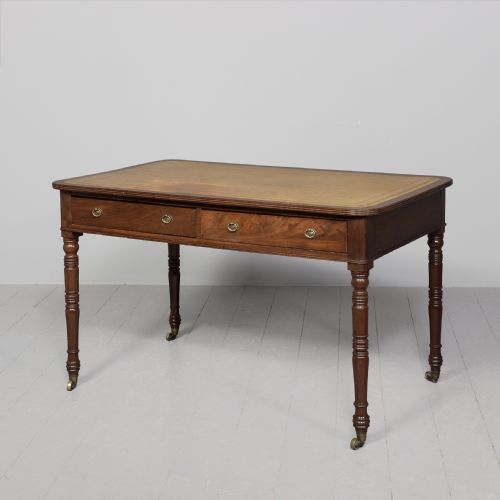


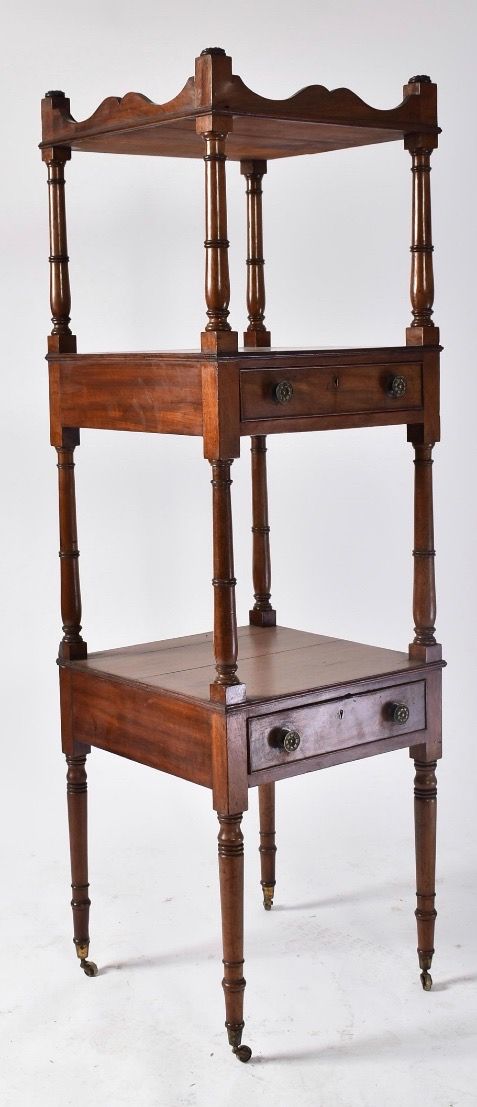


George III Library Table
These george iii library table pieces bring solid mahogany construction and practical writing surfaces into any room.
George III Library Table
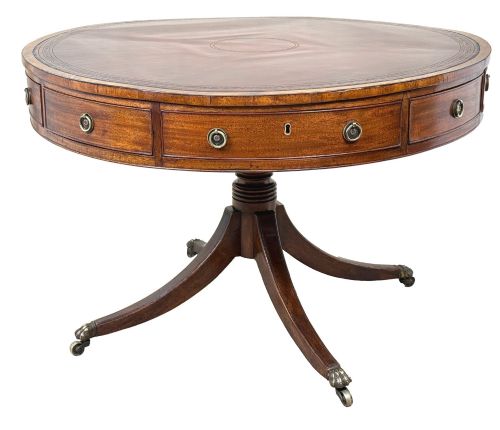
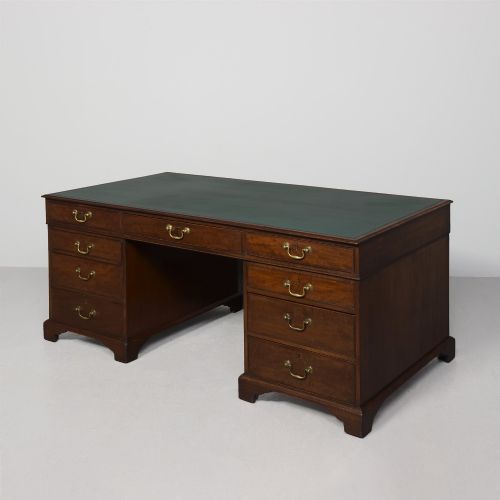
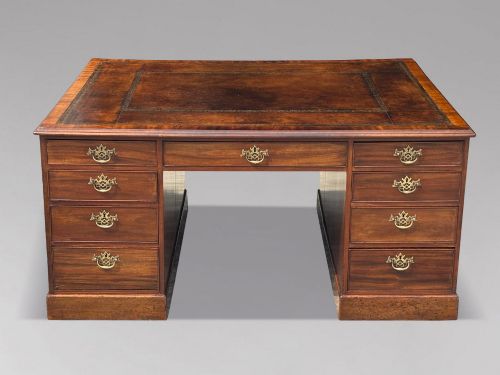
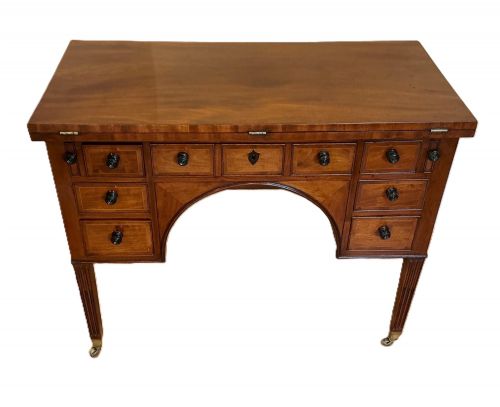
A george iii library table serves as a substantial writing and working surface originating from the Georgian era and later revivals. These forms span large partners desks, drum tables, writing tables, and specialised metamorphic pieces.
The pieces appearing on this page draw from the 18th century up to the 19th century, alongside later revival styles such as Adam Revival and George III Chippendale style. Mahogany dominates the selection, frequently paired with leather inserts and brass hardware.
Buyers encounter freestanding formats designed to occupy the centre of a room rather than sit against a wall. Forms range from multi-drawer partners desks to revolving drum tables and drop flap variants.
Materials and construction
Makers relied primarily on solid mahogany and figured mahogany veneers, sometimes incorporating satinwood and boxwood stringing for contrast. These woods were chosen for durability and rich grain patterns.
Writing surfaces frequently integrate inset leather panels, while drawer construction utilises numerous internal compartments as seen in estate rent tables and multi-drawer partners desks. Brass castors, locks, and handles provide functional mobility and security.
Advanced mechanisms define specific forms, including metamorphic library steps and adjustable reading surfaces that transform simple tables into multi-purpose furniture.
George III Library Table Retail Price Guide 2026
Typical asking prices for george iii library table among the pieces listed under this phrase on Sellingantiques today, from the lower quarter to the upper quarter. They describe what is for sale here now, not the wider market.
Object types include partners desks, kneehole desks, drum tables, rent tables, and metamorphic library steps.
Distinctions in craftsmanship
The tier of quality rests on timber selection and the crispness of carved details such as those found in Chippendale style examples. Figured mahogany veneers and intricate inlay work separate standard utility desks from high-status library furnishings.
Hardware integrity and the survival of original mechanisms dictate the standing of functional pieces like metamorphic tables and multi-drawer partners desks. Fine internal drawer construction and original brass locks reflect superior workshop output.
Gillows Lancaster
The George III Library Table Glossary
- Partners desk
- A large double-sided desk designed for two people to work opposite one another, featuring banks of drawers on both sides.
- Drum table
- A circular library table with a revolving top surrounded by drawers, resting on a central pillar and tripod base.
- Metamorphic furniture
- Pieces engineered to transform into entirely different forms, such as tables incorporating hidden library steps.
- Estate rent table
- A specialised circular table with partitioned drawers labeled for collecting rents and managing accounts.
- Satinwood
- A pale, lustrous exotic timber utilised for contrasting inlay and banding on mahogany furniture.
George III Library Table: Frequently Asked Questions
What is a library table?
A library table is a heavy freestanding desk or table originally created for reading and writing in large home libraries. These pieces feature finished backs so they can stand away from the walls.
Most examples provide ample drawer space and sturdy wooden construction suited for daily study and administrative work.
How do I use a partners desk?
Partners desks are built with drawers and cupboards on both opposing sides, allowing two individuals to sit and work facing each other.
Placed in the centre of a room, they function as grand focal points while offering generous workspace and storage.
How do I identify George III style?
George III furniture spans the second half of the 18th century, defined by sturdy mahogany timbers and classical proportions. Details often include brass hardware, leather writing inserts, and subtle inlay work.
Later pieces from the 19th century and revival periods often emulate these proportions and material combinations.