


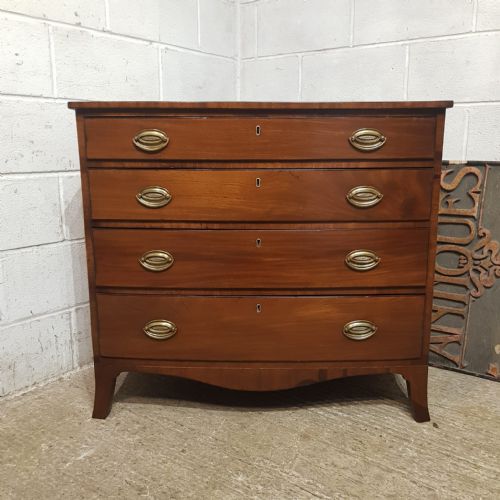
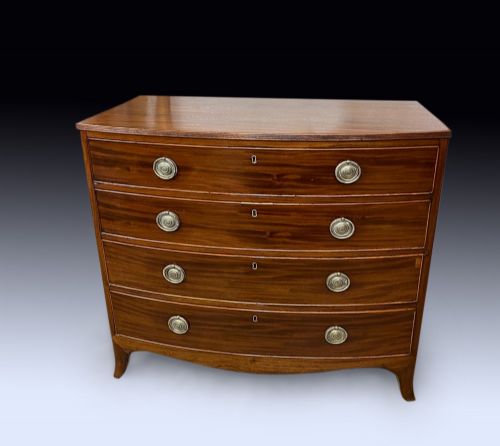
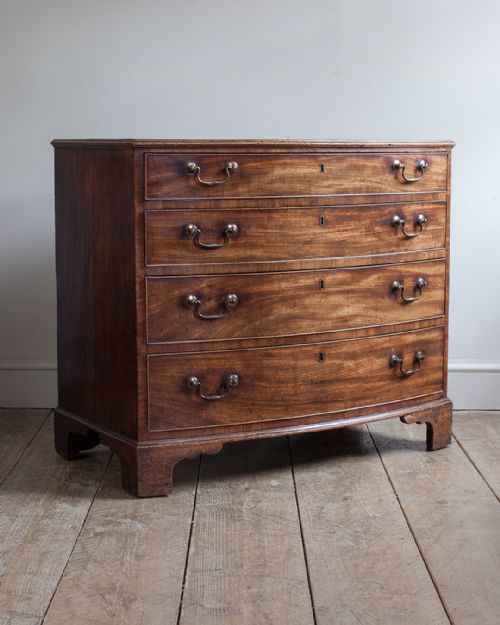


George III Bowfront Dresser
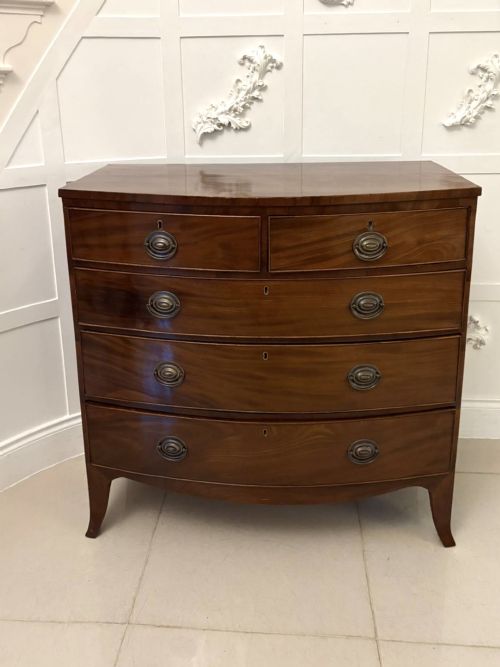
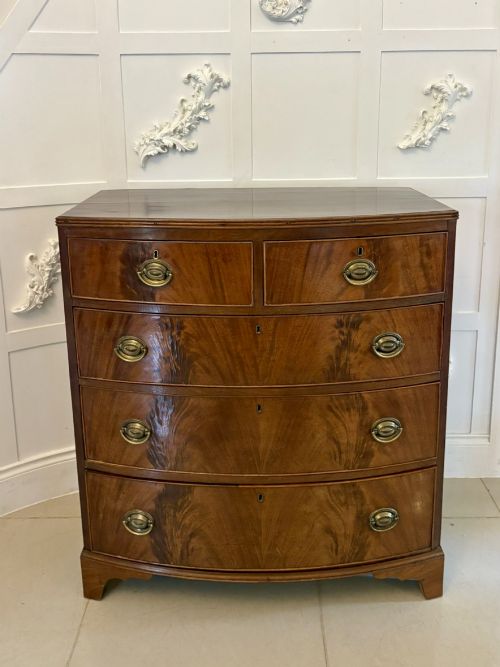
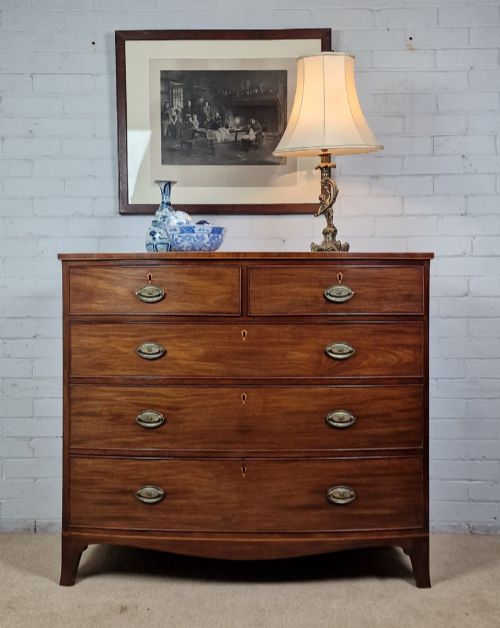
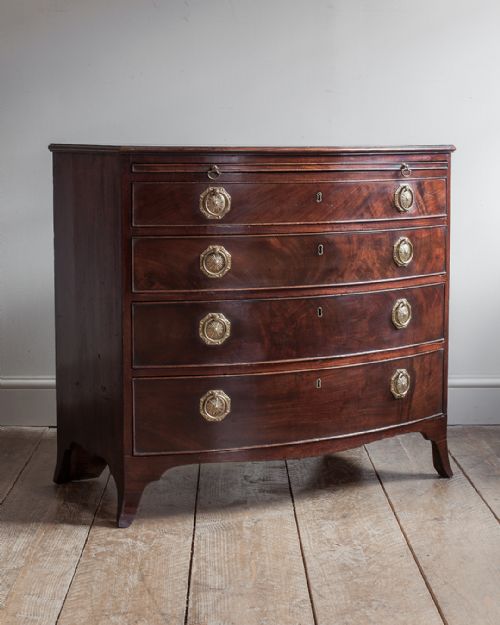
A george iii bowfront dresser offers curved fronts and rich timber warmth, bringing classic Georgian proportion to any bedroom.
George III Bowfront Dresser
When you search for a george iii bowfront dresser, you are looking at chests of drawers featuring a prominent curved front profile. Most examples on this page date from the Georgian and 19th Century periods, constructed with multiple drawer configurations.
The form typically presents as a chest of drawers rather than a kitchen dresser, utilising the distinctive bowed silhouette to soften room lines. Pieces span the 18th Century through to the early 19th Century, reflecting the prevailing cabinet-making styles of the era.
How they were made
Makers utilised solid timbers and veneers, predominantly mahogany, supplemented by satinwood and oak for internal structures. Brass hardware appears frequently on the drawer fronts for pulls and escutcheons.
Detailing often incorporates boxwood and bone inlay work to accent the curved drawer edges. Construction relies on traditional joinery methods suited to the complex geometry of a bowed facade.
George III Bowfront Dresser Retail Price Guide 2026
Typical asking prices for george iii bowfront dresser among the pieces listed under this phrase on Sellingantiques today, from the lower quarter to the upper quarter. They describe what is for sale here now, not the wider market.
Listings span the Georgian period, 18th Century, and 19th Century, utilising mahogany, satinwood, oak, and brass.
What varies in quality
Superior execution shows in the choice of figured mahogany and contrasting satinwood veneers, displaying rich grain patterns across the curved drawer fronts. Finer pieces demonstrate precise inlay work and seamless joinery around the bow.
The handling of secondary timbers like oak in the drawer linings indicates the standard of workshop production. Structural integrity of the curved carcase and the preservation of original brass fittings further distinguish the range.
Gillows
The George III Bowfront Dresser Glossary
- Bowfront
- A curved cabinet or chest front that swells outward in the centre. This shape gained popularity during the Georgian period to soften room geometry.
- Mahogany
- A durable tropical hardwood prized for its deep reddish-brown colour and stable grain. It served as the primary timber for high-end cabinet work.
- Satinwood
- A light-yellow timber with a lustrous sheen used for decorative banding and veneer work. It provides striking contrast against darker woods.
- Escutcheon
- A protective plate surrounding a keyhole, often made of brass. These functional elements contribute to the decorative scheme of the drawer fronts.
George III Bowfront Dresser: Frequently Asked Questions
What is a bowfront chest?
A bowfront chest is a set of drawers featuring a convex curved front that projects outward. This design was particularly favored by Georgian cabinet makers to create a softer silhouette than flat-fronted pieces.
The curved shape requires precise woodworking skill to ensure the drawers operate smoothly within the bowed carcase.
How do I date these chests?
Dating relies on examining construction methods, timber choices, and hardware styles associated with the Georgian era and the early 19th Century. Secondary woods like oak and the presence of hand-cut dovetails offer clues to the period of manufacture.
Changes in veneer preferences, such as the shift from plain mahogany to figured grains and satinwood inlay, also help narrow down the decade.
Where should I place it?
These chests suit bedrooms, hallways, or living spaces where the curved front adds visual interest without blocking narrow walkways. The finished back and sides on finer examples allow for flexible placement within a room.
Ensure the placement avoids direct sunlight and dramatic humidity changes to protect the delicate wood veneers.
What woods were used?
Primary construction relies heavily on mahogany, often selected for its rich figure. Satinwood and boxwood appear as decorative elements for stringing and crossbanding.
Internal drawer linings and carcase backs commonly utilise oak or other native timbers, reflecting the standard practice of the workshop.