




George I Walnut Highboy
A george i walnut highboy brings immense presence to a room, offering rich timber figures and deep storage in two stacked sections.
George I Walnut Highboy
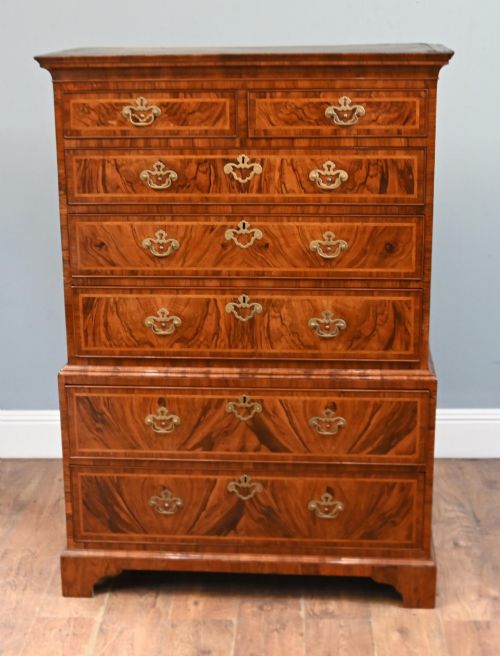
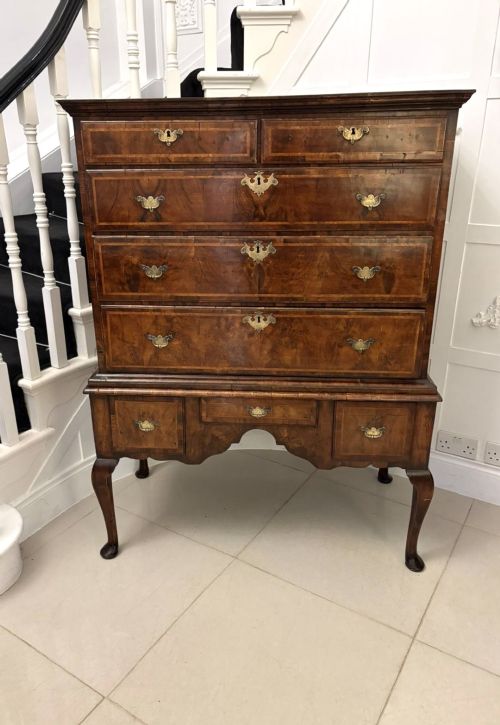
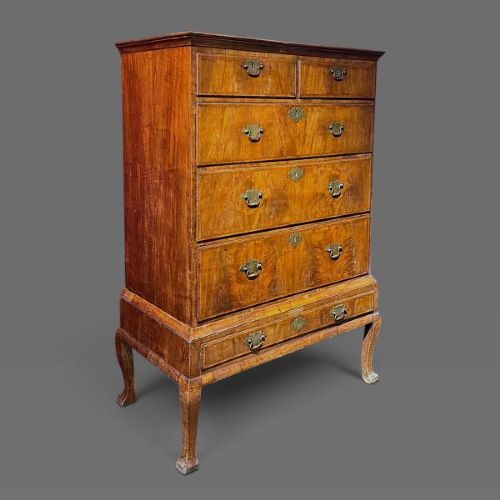
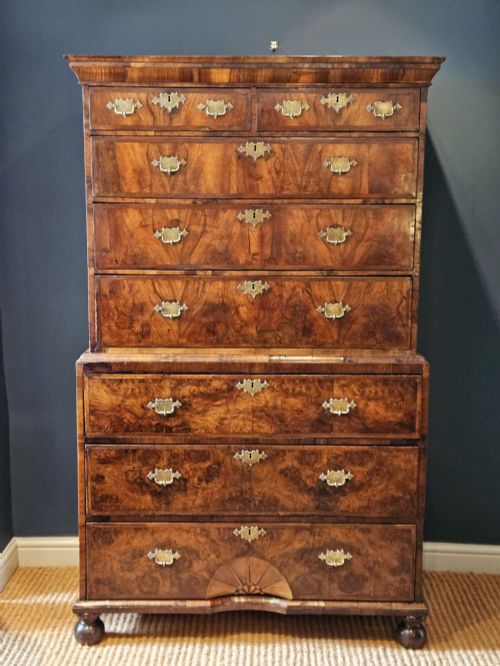
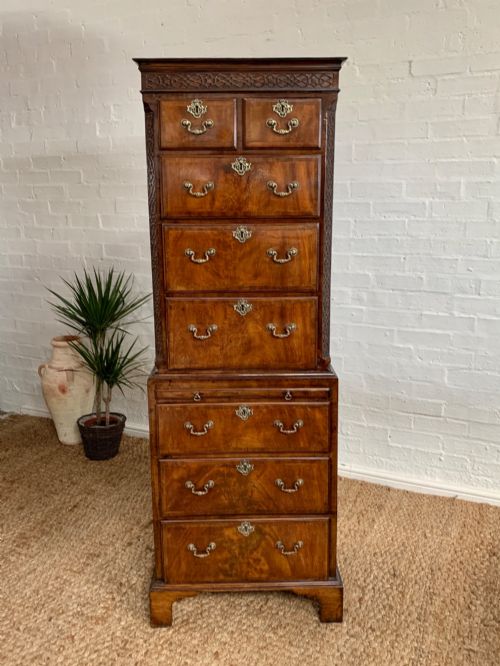
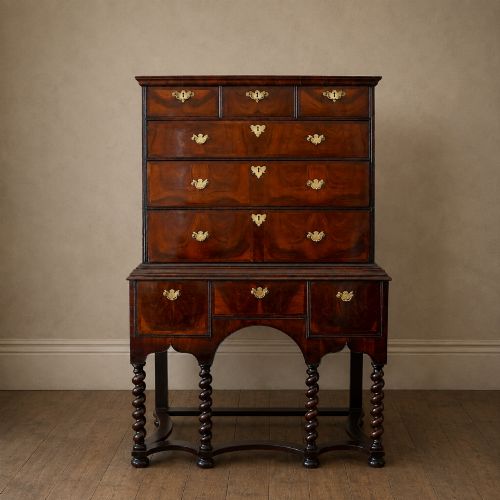
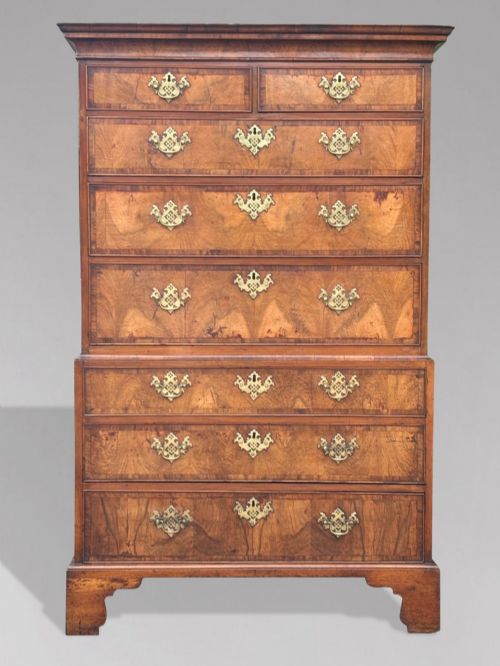
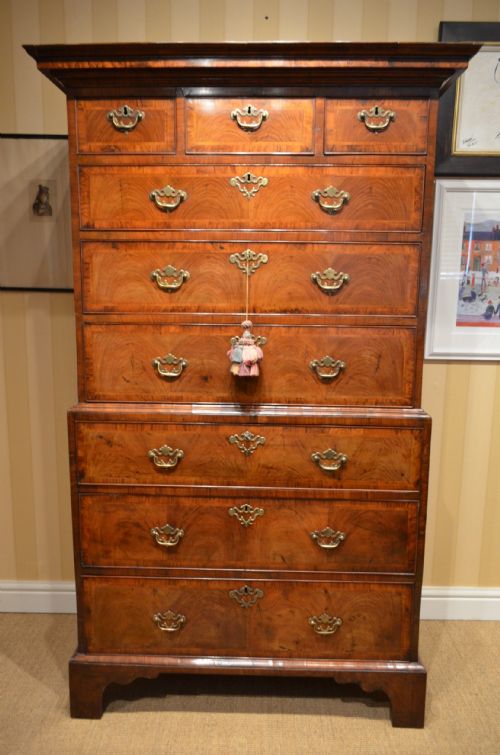
A george i walnut highboy generally appears as a chest on stand or a taller chest on chest, also known as a tallboy. The forms seen here span the 18th century alongside later revival periods such as the 19th century and 1920.
The dominant forms are walnut chests on stands raised on cabriole legs, alongside substantial chests on chests featuring multiple graduated drawers. Buyers will encounter authentic early pieces as well as later styles bearing the hallmarks of earlier reigns.
How they were made
Cabinetmakers constructed these pieces primarily using walnut and burr walnut veneers applied to secondary structural timbers like oak and pine. Details such as boxwood stringing and brass hardware finish the construction.
Techniques relied on precise veneering, sometimes incorporating oyster veneer patterns or sunburst inlays on the drawer fronts. Carved cabriole legs anchor the lower sections of the stands, while internal carcases maintain structural stability.
Listings feature walnut, burr walnut, oak, pine, and boxwood across Georgian, Victorian, and 1920 periods.
What varies in quality
The choice and grain matching of the walnut veneer dictate much of the visual impact, particularly where figured burr walnut or sunburst inlays are deployed. Richness of colour and depth of figure separate superior examples from standard ones.
Proportion and the integrity of the original stand or base construction govern the structural merit. Pieces retaining original brass handles and well-proportioned cabriole legs hold greater distinction.
The George I Walnut Highboy Glossary
- Chest on stand
- A two-part form comprising an upper chest of drawers resting on a separate low frame with legs. This form provides elevated storage while maintaining a lighter footprint than a full wardrobe.
- Chest on chest
- A tall storage unit formed by stacking a smaller chest directly on top of a larger base chest. It is frequently referred to as a tallboy in historical and trade contexts.
- Cabriole leg
- A furniture leg that curves out in a convex arc and tapers inward in a concave arc, ending in a foot. It evokes the shape of an animal's leaping leg and is typical of early 18th-century design.
- Burr walnut
- Wood taken from a walnut tree growth or burl, yielding swirling, highly decorative grain patterns. Cabinetmakers sliced this timber into thin veneers for principal surfaces.
- Oyster veneer
- Circular or oval pieces of branch wood sliced across the grain to create repeating patterns resembling oyster shells. This technique creates a distinctive speckled surface texture.
George I Walnut Highboy: Frequently Asked Questions
What is a highboy?
A highboy is a tall chest of drawers split into two stacked sections, often raised on a supportive stand with legs. It provides generous vertical storage while occupying minimal floor space.
In British cabinet-making traditions, these forms are frequently catalogued as chests on stands or chests on chests. They combine functional compartmentalised storage with prominent decorative presence.
How do I date a walnut highboy?
Dating relies on examining construction methods, timber choice, hardware fixings, and overall stylistic proportions. Early 18th-century pieces display specific edge moulding and drawer lining characteristics.
Secondary timbers like oak and pine, alongside the specific cut of walnut veneers, help differentiate original Georgian pieces from later 19th-century or 1920 revival interpretations.
Where should I place a highboy?
These tall pieces suit principal bedrooms, landings, or high-ceilinged reception rooms where vertical proportions balance the surrounding architecture. They require adequate wall clearance to display their top cornices safely.
Positioning them away from direct sunlight and heating vents preserves the sensitive walnut veneers and polished timber surfaces over time.
Are highboys and tallboys the same?
The terms are often used interchangeably, though a traditional tallboy usually refers to a chest stacked directly upon a wider chest. A highboy more specifically denotes a chest raised on a distinct legged stand.
Both forms belong to the broader category of multi-tier case furniture designed to maximise vertical storage capacity in historic domestic interiors.