


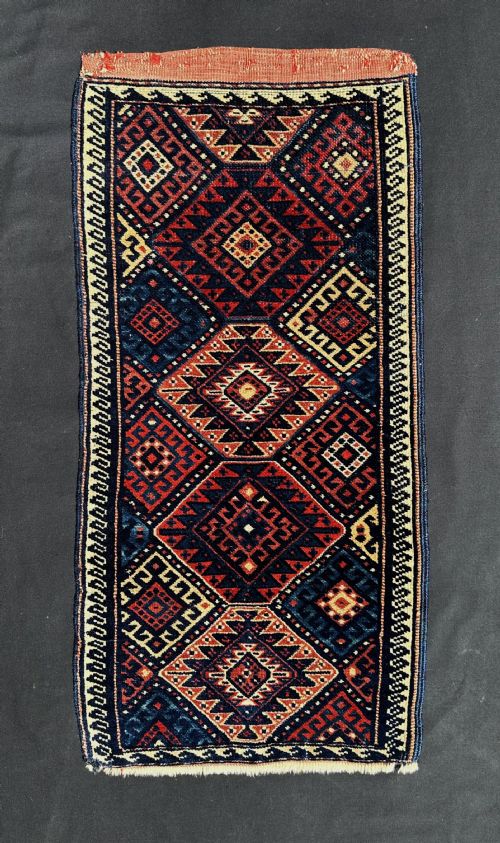

Geometric Tribal Bag
These historic examples of a geometric tribal bag bring authentic nomadic textile art into contemporary interiors through precise craftsmanship and bold regional designs.
Geometric Tribal Bag
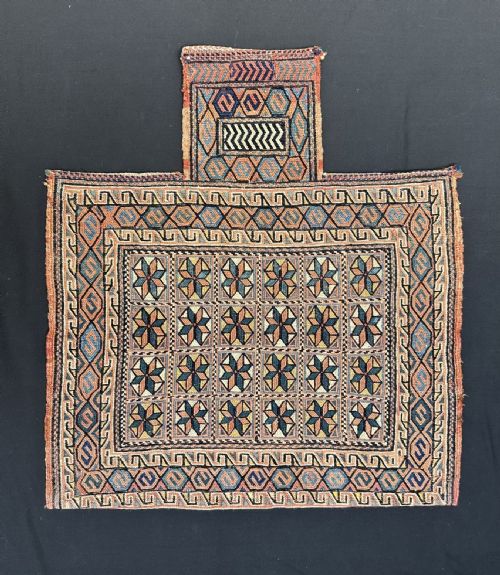
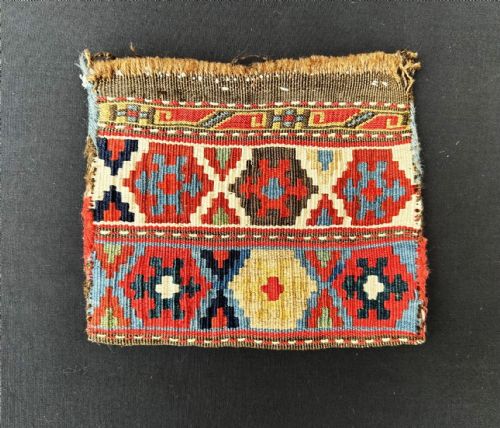
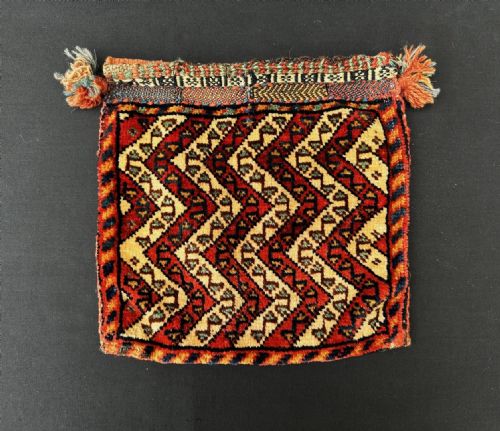
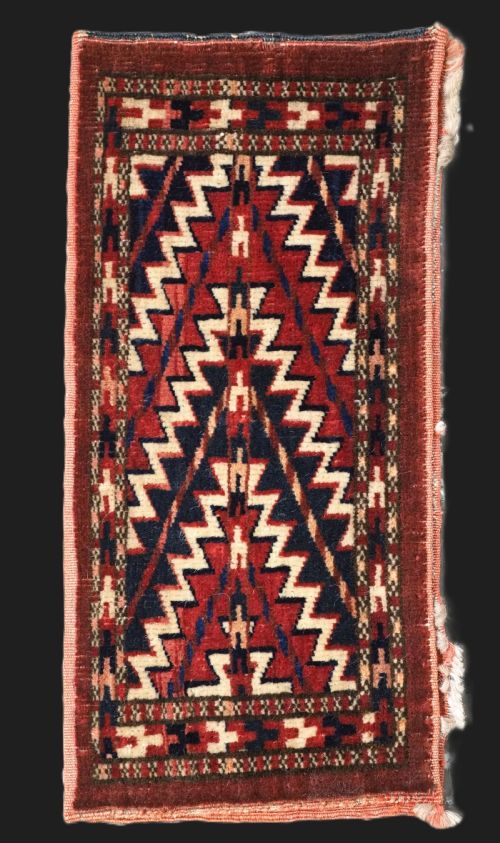
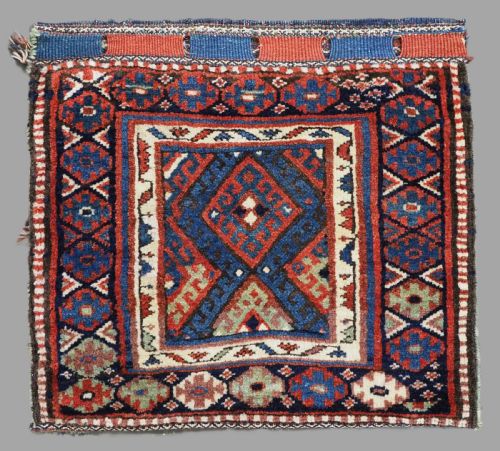
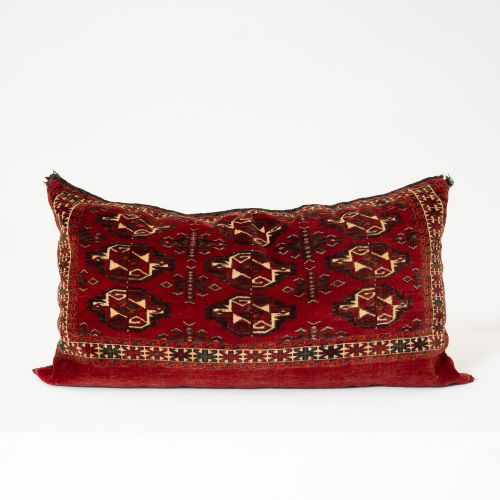
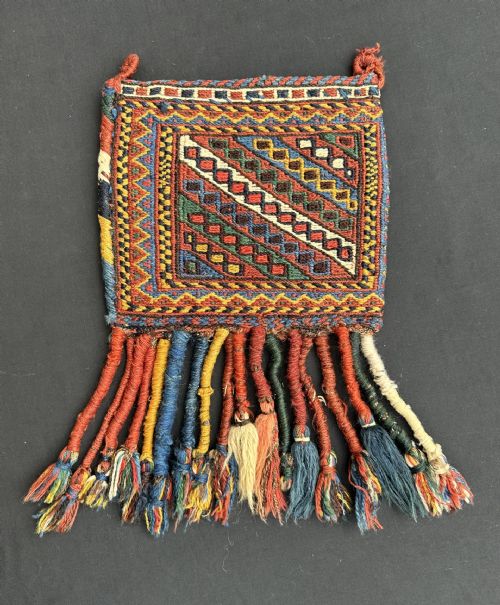
A geometric tribal bag represents functional textile weaving created by nomadic and village groups across Persia, the Caucasus, and Central Asia during the nineteenth and early twentieth centuries. These utilitarian objects served various practical purposes within tribal camps, functioning as saddle bags, storage containers, salt bags, and vanity pouches before entering the collector market as decorative fragments or preserved cushions.
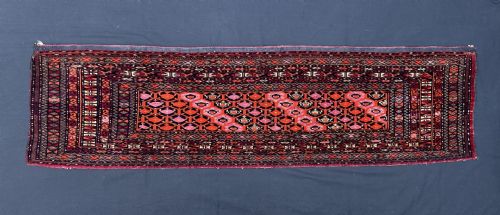
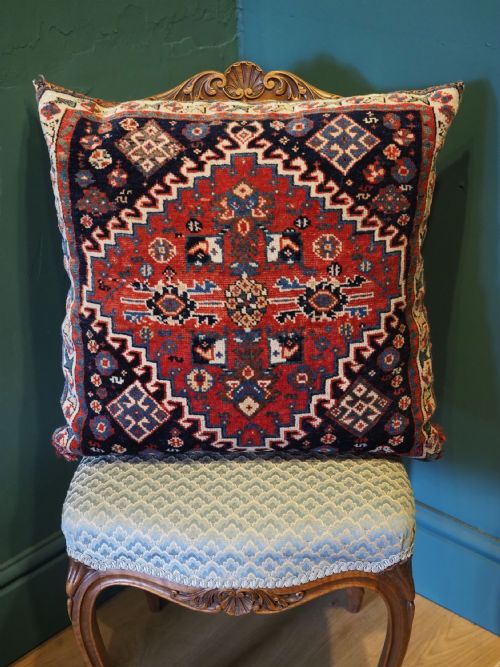
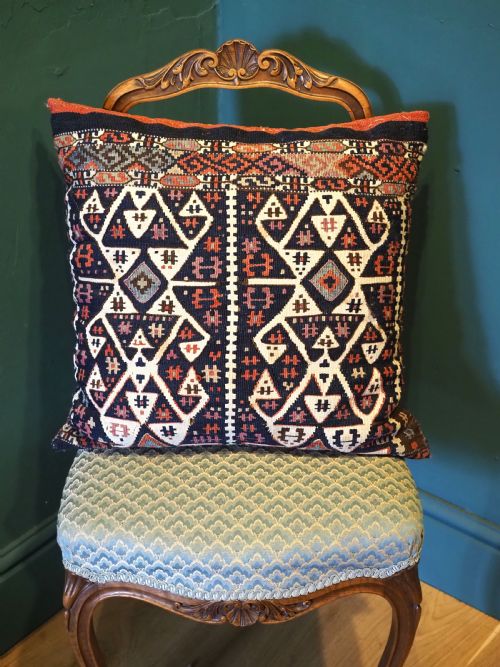
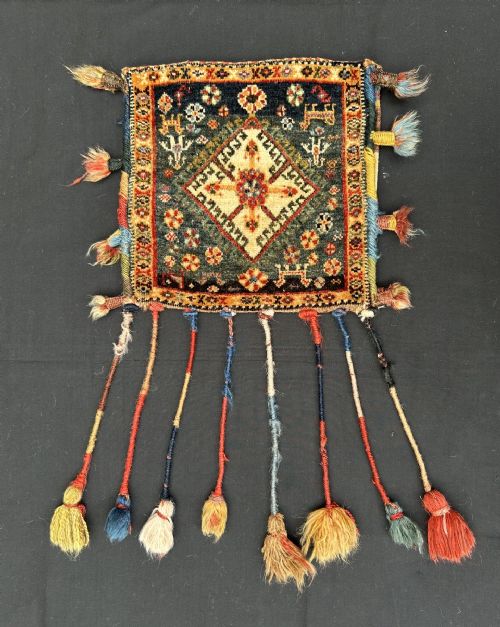
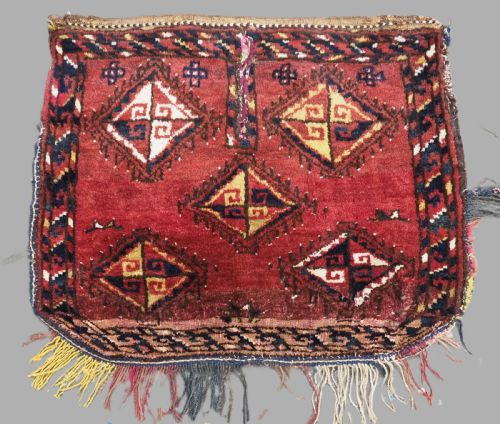
You will frequently encounter specific regional forms on this page, including Shahsevan sumac saddlebags from Azerbaijan, Qashqai bag faces from south-west Persia, and Turkmen torba or chuval pieces from Central Asia. Many survive as complete double pouches with original plain weave backs, while others appear as single bag faces adapted for domestic cushion use.
Materials and construction methods
The makers relied primarily on hand-spun wool for its durability and resilience, combining it with cotton in selected structural elements. Natural dyes provided the rich palette characteristic of these nomadic weavings, ensuring deep and stable colours that age with a soft patina.
Weavers utilised diverse techniques ranging from standard pile knotting to flat-weave soumak work and balanced plain weaves. The integration of structural flat-weave backs alongside patterned faces ensured the containers could endure the heavy demands of daily nomadic life.
Current listings feature nineteenth and early twentieth-century examples woven with natural dyes and hand-spun wool by nomadic groups across Persia, the Caucasus, and Central Asia.
Evaluating quality and execution
The distinction between ordinary and exceptional examples rests upon the precision of the tribal weave and the complexity of the geometric layout. Tighter knotting or more intricate soumak work demonstrates superior technical proficiency by the weaver.
Visual balance and the depth of natural dye colours further separate standard items from the finest work. A well-preserved original back and complete side cords significantly elevate the historical integrity of the piece.
The Geometric Tribal Bag Glossary
- Torba
- A small Turkmen tent-bag or storage sack, usually wider than it is tall. These pieces often feature gul motifs and were hung against the lattice walls of a yurt.
- Chuval
- A large Turkmen storage bag used for bedding and household goods inside the tent. They display bold repeating primary guls across the face.
- Soumak
- A flat-weave technique where coloured weft threads wrap around the warp threads in a continuous herringbone pattern. This method creates a thicker, more durable fabric than standard kilim weaving.
- Khorjin
- The Persian term for a double saddlebag used during animal transport. Surviving examples often retain both pockets and the central connecting web.
- Jollar
- A long, narrow Turkmen hanging bag placed over tent doorways or used for pack animal equipment. They typically exhibit intricate hooked patterns and polychrome border designs.
Geometric Tribal Bag: Frequently Asked Questions
What were tribal bags used for?
Nomadic communities utilised these woven containers for transporting belongings across rugged terrain on pack animals and for organising household goods within tents. They stored essential provisions, salt, grain, vanity items, and bedding.
Over decades, many functional containers lost their original transport context through conversion into decorative cushions or wall hangings while retaining their structural integrity.
How do I identify different tribal origins?
Distinct regional aesthetics distinguish the pieces, such as the sharp geometric panels of Shahsevan work from Azerbaijan and the deep red palettes of Turkmen guls from Central Asia. Qashqai and Afshar examples from Persia introduce characteristic medallions and animal motifs.
Examining the specific wool preparation, structural border designs, and weaving techniques provides further confirmation of the tribe responsible for the creation.
Are these bags meant for daily use?
Most antique pieces function best as decorative cushion covers or wall displays rather than heavy-use floor furnishings. Their aged wool and historical construction require gentle placement to preserve the delicate natural dyes and original weave.
Rotating the textiles away from direct sunlight protects the natural wool fibres and maintains the rich colouration over time.
What is the difference between a bag face and a complete bag?
A complete bag retains both original pockets and often the plain weave connecting web or reverse side, preserving its full utilitarian form. A bag face represents only the decorative front panel, which was frequently separated for preservation or conversion into a cushion.
Both forms offer authentic glimpses into nomadic textile traditions, though complete examples remain scarcer within the surviving inventory.