



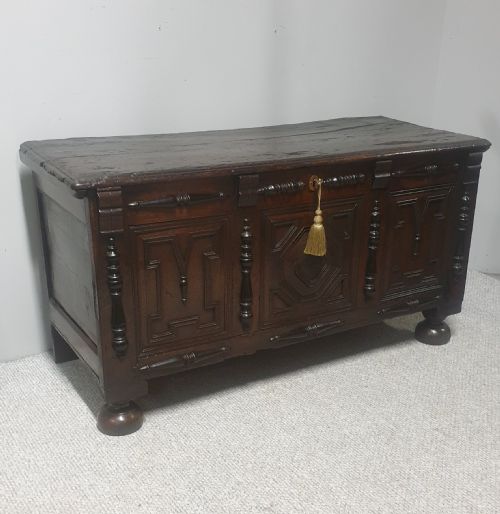


Geometric Storage Trunk
These geometric storage trunk pieces are solid timber coffers and blanket chests built for domestic storage, offering period character.
Geometric Storage Trunk
When you search for a geometric storage trunk, you are looking at sturdy wooden coffers, mule chests, and blanket chests designed to hold household goods and textiles. These items range from late Elizabethan and seventeenth-century originals to later revivals from the nineteenth and early twentieth centuries.
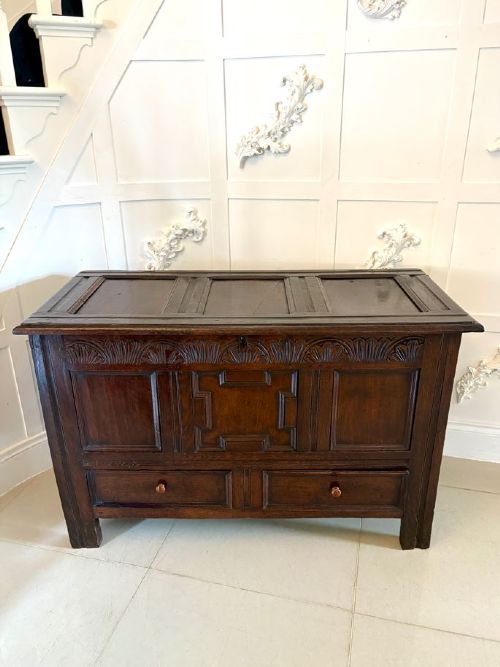
The version you are most likely to meet on this page is the oak coffer or mule chest, frequently featuring traditional panelled construction and period surface details. These sturdy containers served central functions in early homes, storing everything from linens to personal valuables before fitted wardrobes became common.
How they were made
Makers built these pieces primarily using solid oak and diverse timbers like fruitwood and ebonised wood, shaping them with hand tools. Boards were joined to form sturdy frames and panels designed to withstand regular domestic use.
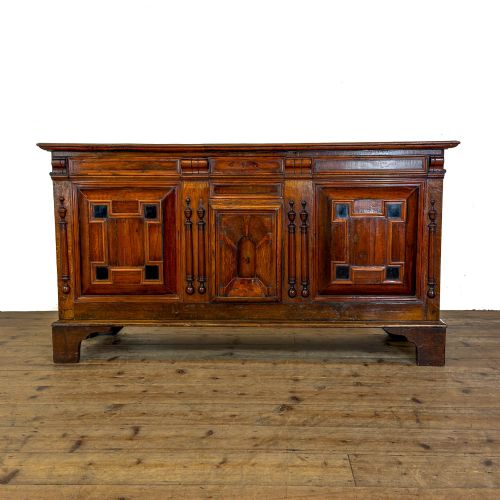
Surface enrichment relied on applied geometric moulding, carved details, and iron or brass hardware such as hinges and locks. These structural and decorative choices ensured durability alongside visual depth.
Geometric Storage Trunk Retail Price Guide 2026
Typical asking prices for geometric storage trunk among the pieces listed under this phrase on Sellingantiques today, from the lower quarter to the upper quarter. They describe what is for sale here now, not the wider market.
The furniture forms include coffers, mule chests, blanket chests, and ottomans executed in Jacobean and Arts and Crafts styles.
What varies in quality
Quality rests in the integrity of the timber, the crispness of the geometric moulding, and the survival of original hardware. Pieces retaining their early hinges and uncompromised structural joints stand apart from heavily altered examples.
The sophistication of the carving and the depth of the timber's patina dictate the standing of a piece within the range. Patina earned through centuries of handling distinguishes the more desirable examples from later revivals.
The Geometric Storage Trunk Glossary
- Mule chest
- A storage chest featuring one or more drawers beneath the main lift-top compartment. This form evolved from the standard coffer to provide more accessible storage.
- Coffer
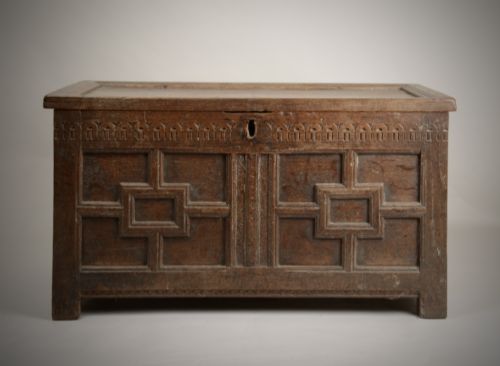
- A heavy wooden chest traditionally used for storing valuables, documents, or clothes. These pieces often feature hinged lids and sturdy boarded or panelled construction.
- Geometric moulding
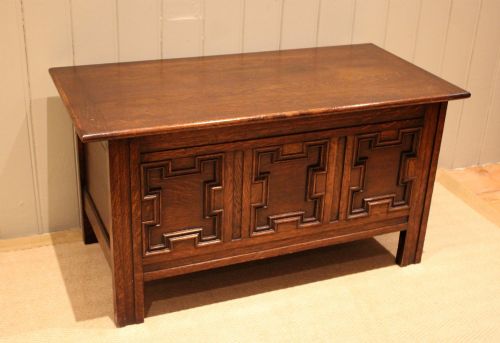
- Raised wooden decoration applied to surfaces in repeating angular patterns. This technique added texture and visual relief to early storage furniture.
- Ebonised wood
- Timber treated with a chemical stain or finish to imitate ebony. This dark finish was often utilised to create sharp contrast against lighter panels.
Geometric Storage Trunk: Frequently Asked Questions
What is a geometric storage trunk?
A geometric storage trunk refers to heavy wooden chests, coffers, and mule chests adorned with raised geometric mouldings. These pieces functioned as primary domestic storage for linens and belongings in early homes.
They combine robust joinery with decorative surface work, spanning centuries from the Elizabethan era through to later revivals.
How were these chests used?
These chests served primarily for storing household textiles, garments, and valuables securely within domestic spaces. Their heavy lids also allowed them to function as makeshift tables or seating benches when necessary.
Over time, the addition of lower drawers in mule chests made accessing smaller items easier without disturbing the items stored above.
How do I date an oak coffer?
Dating relies on examining the construction methods, tool marks, timber selection, and style of any carving or mouldings. Early pieces often show hand-riven timber and pegged joints rather than modern fixings.
Comparing the specific moulding profiles and hardware styles against known period examples helps clarify whether a piece is seventeenth-century or a later revival.
How do I care for antique oak?
Keep antique oak furniture away from direct heat sources and dramatic humidity fluctuations to prevent the timber from splitting. Maintaining a stable environment preserves the structure and the natural patina.
Apply a light application of suitable wax polish occasionally to nourish the wood surface without building up excessive residue.