
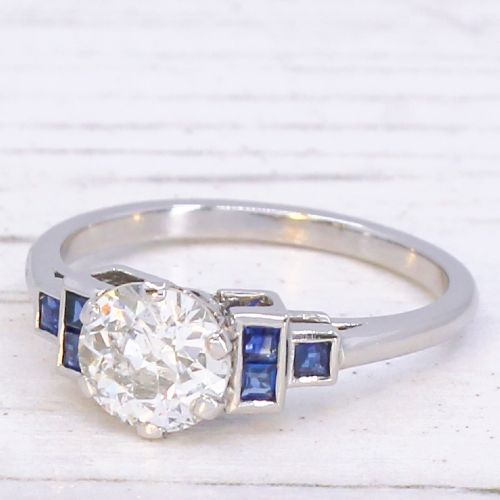


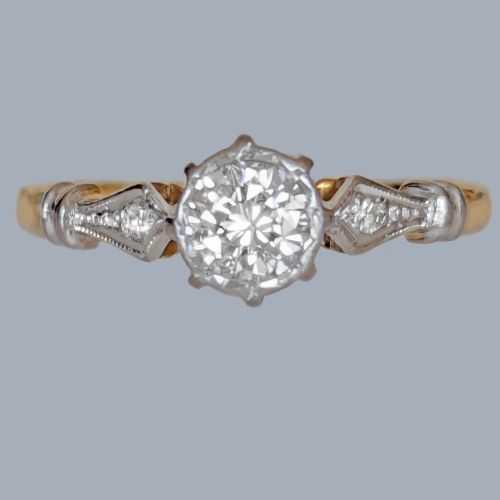


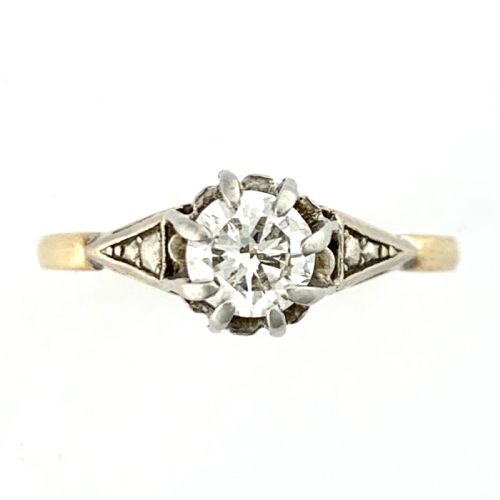
Geometric Shoulder Diamond Ring
A geometric shoulder diamond ring brings together clean linear shoulders and bright central stones from the early twentieth century.
Geometric Shoulder Diamond Ring
A geometric shoulder diamond ring typically presents a central diamond flanked by structured shoulders, aligning with the designs of the Art Deco period. These pieces originate from eras spanning the Edwardian period through the 1950s, capturing distinct shifts in twentieth-century jewellery design.
Solitaire settings dominate the available forms, showcasing old cut diamonds mounted alongside sapphire, opal, or pearl accents. The pieces combine central stones with geometric metalwork on the band to frame the finger with architectural precision.
How they were made
Platinum and 18ct white gold provide the primary foundations for these mountings, frequently paired with yellow 18ct gold elements. These metals allow for secure, fine settings that support old cut diamonds alongside contrasting gemstones like sapphire and opal.
Craftsmen utilised durable metal alloys to build angular settings and linear shoulders that define the style. The stones are secured in formations that highlight the brilliance of old cut diamonds while integrating pearls or natural pearls into the design.
Geometric Shoulder Diamond Ring Retail Price Guide 2026
Typical asking prices for geometric shoulder diamond ring among the pieces listed under this phrase on Sellingantiques today, from the lower quarter to the upper quarter. They describe what is for sale here now, not the wider market.
What varies in quality
The precision of the metalwork along the shoulders separates standard production from finer examples of the period. Clean geometric lines and secure stone integration indicate higher levels of initial craftsmanship.
The proportion and cut of the central diamond relative to the surrounding platinum or gold setting dictate the visual balance of the piece. Subtle variations in stone shape and metal weight change how the ring sits on the hand.
The Geometric Shoulder Diamond Ring Glossary
- Art Deco
- A design style spanning the 1920s and 1930s characterised by geometric shapes, clean lines, and symmetrical patterns.
- Old cut
- A vintage diamond cutting style featuring a smaller table and larger facets that produce a softer, distinct sparkle compared to modern cuts.
- Solitaire
- A ring setting designed to showcase a single main gemstone, most commonly a diamond.
- Platinum
- A dense, durable white metal frequently utilised in early twentieth-century jewellery for secure and fine settings.
- Shoulder
- The portion of the ring band that transitions upward toward the main setting.
Geometric Shoulder Diamond Ring: Frequently Asked Questions
What defines a geometric shoulder diamond ring?
These pieces feature structured shoulder details alongside a central diamond, often reflecting Art Deco design principles.
The integration of linear metalwork creates an architectural framing effect around the main stone.
Which periods do these rings come from?
The available evidence spans from the Edwardian era through the 1910s, 1920s, 1930s, and into the 1950s.
Art Deco examples from the 1920s and 1930s form a significant portion of the selection.
What metals are used in these rings?
Platinum and 18ct white gold appear frequently, providing a strong, bright backdrop for the stones.
Some pieces also incorporate traditional 18ct yellow gold within the band construction.
Are other stones combined with the diamonds?
Sapphires, opals, and pearls are recorded alongside diamonds in these settings.
These secondary materials add colour and textural contrast to the primary white stones.