


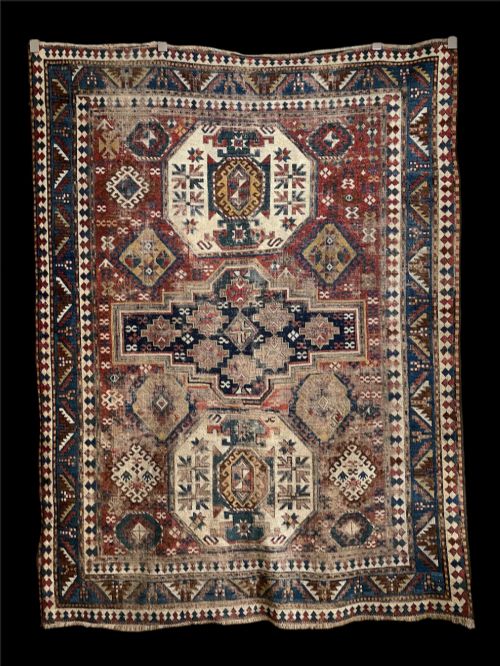


Geometric Kazak Rug
A geometric kazak rug brings bold tribal medallions and saturated wool colour straight from the Caucasus onto the floor.
Geometric Kazak Rug
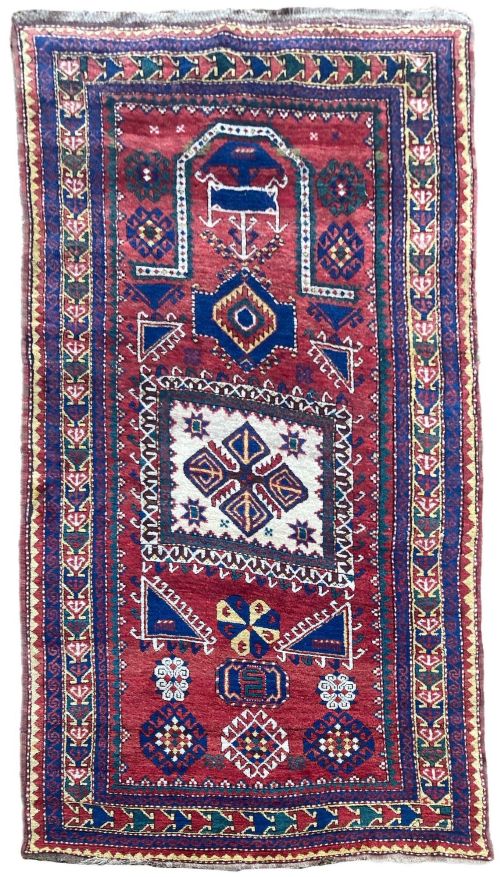
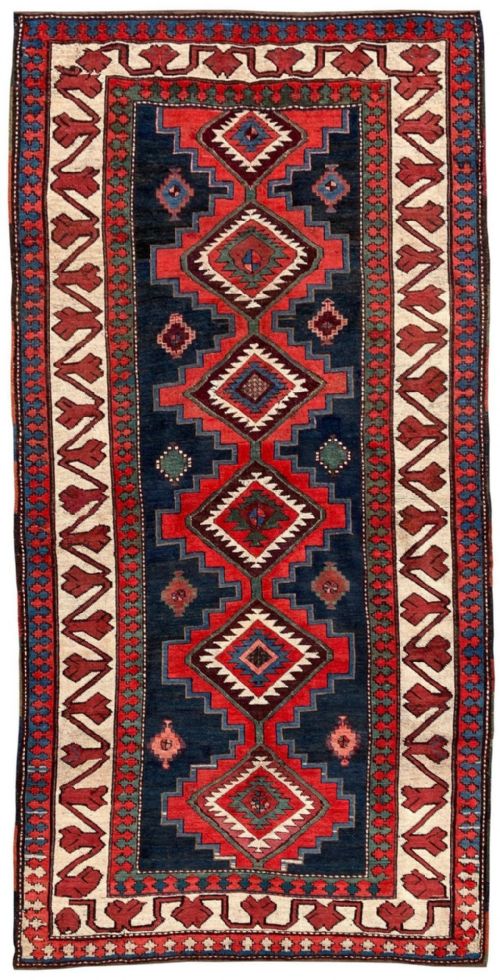
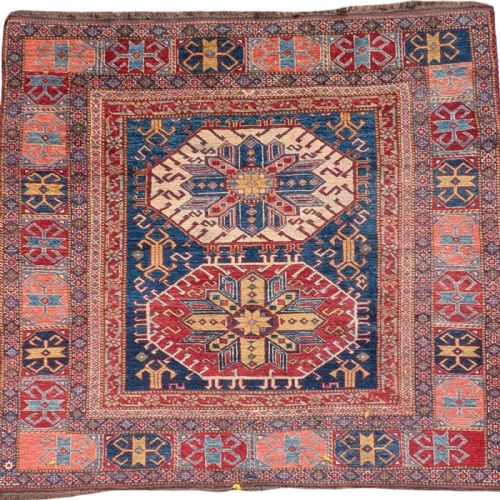
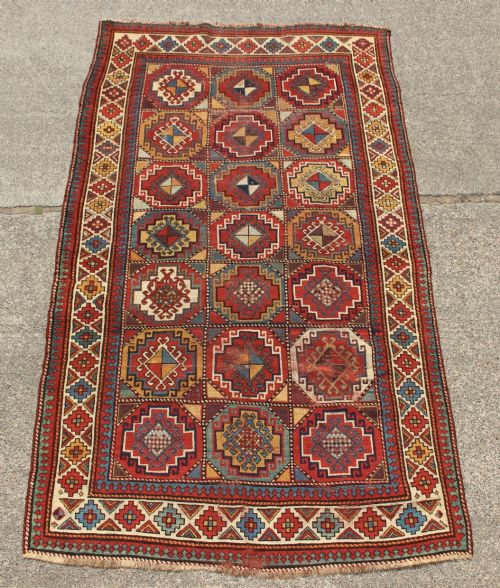
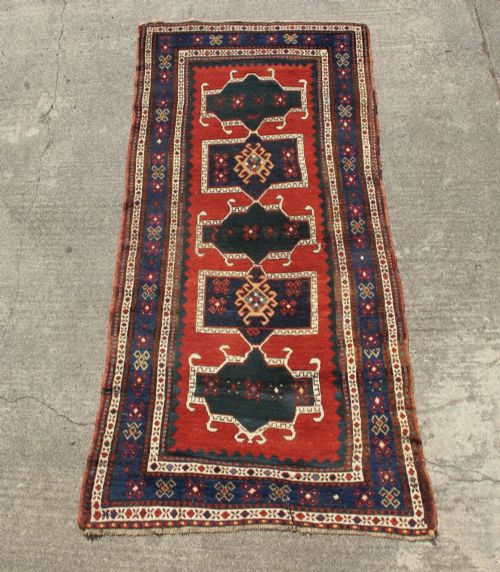
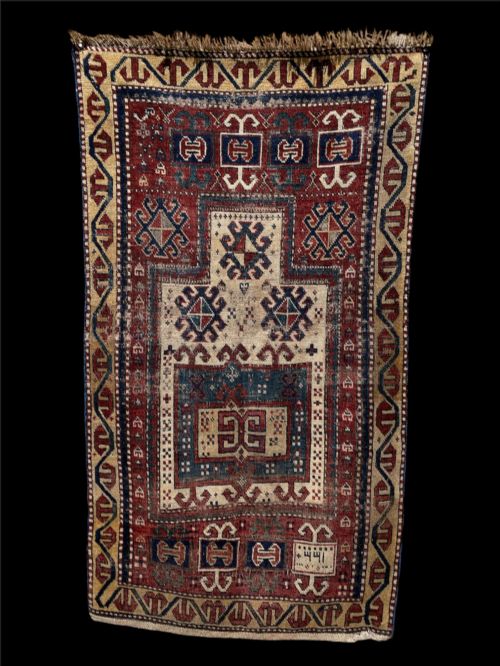
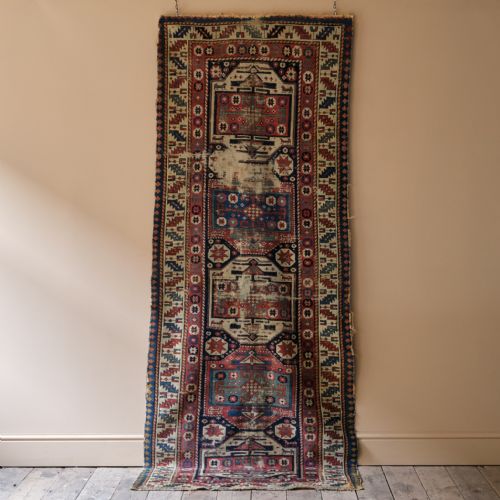
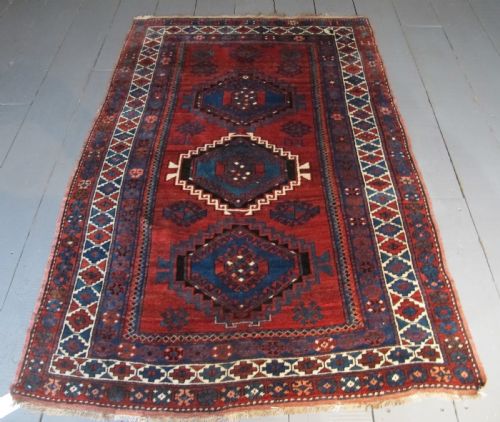
A geometric kazak rug is a hand-woven piece hailing from the nineteenth and early twentieth centuries, shaped by Caucasian and tribal design traditions. These textiles appear primarily as area rugs, prayer rugs, and longer runners carrying distinctive medallion structures and rectilinear motifs.
Makers in regions such as Fachralo, Borchalu, Moghan, and Karachov produced specific variations of the geometric kazak rug, often identifiable by hooked motifs and regional palettes. Pieces span from compact square formats to expansive runner dimensions.
Dating ranges chiefly from the mid nineteenth century into the 1930s, encompassing both traditional room-sized carpets and smaller prayer formats.
Materials and construction methods
Weavers constructed each geometric kazak rug using wool foundation yarns paired with hand-spun wool pile, sometimes supported by cotton elements in later examples. The reliance on natural dyes yielded deep, lasting tones that mellow across decades of exposure.
The density of the weave and the thickness of the hand-spun wool determine the substantial weight and structural rigidity characteristic of these tribal floor coverings.
Certain runners carry intentionally crooked borders, reflecting the weaver's playful disruption of absolute symmetry.
Assessing quality in weaving and dye work
Quality rests heavily upon the purity of the natural dyes and the crispness of the geometric drawing within the medallions. Finer knots per square inch and well-balanced palettes distinguish superior examples from simpler village work.
The integrity of the wool pile and the survival of the original outer borders dictate the preservation level of an antique piece.
The Geometric Kazak Rug Glossary
- Prayer rug
- A small format textile featuring a distinct mihrab or arch design at one end, traditionally oriented towards Mecca during daily worship.
- Medallion
- A central ornamental motif dominating the field of the rug, frequently rendered in stepped or hooked geometric configurations.
- Runner
- A long, narrow carpet format designed specifically for hallways, corridors, or narrow passageways.
- Natural dyes
- Organic colourants derived from plants, insects, and minerals before the widespread adoption of synthetic aniline dyes in the late nineteenth century.
- Boteh
- A traditional almond-shaped or paisley motif with a curved upper end, originating in Persian textile design and frequently adapted in Caucasian weaving.
Geometric Kazak Rug: Frequently Asked Questions
Where were these rugs made?
These textiles originate from the Caucasus region, encompassing historic weaving areas and villages such as Fachralo, Borchalu, Moghan, and Karachov.
Local tribal groups passed down specific border patterns and medallion structures through generations, creating distinct regional signatures.
How do I care for an antique rug?
Vacuum gently using suction attachment without a rotating beater bar to protect the hand-spun wool pile from excessive friction.
Keep the textile away from direct, harsh sunlight and rotate the placement periodically to ensure even wear across the surface.
What is a prayer niche?
A prayer niche, or mihrab, is a pointed architectural arch depicted at one end of the rug field to indicate direction.
Weavers often filled this triangular space with distinct amulets or geometric hooks intended to ward off misfortune.
How can I tell the age?
Age is assessed through structural analysis, examining the composition of the foundation yarns, the presence of hand-spun wool, and the chemistry of the dyes.
Design asymmetries and irregularities in the weave often point towards older village production rather than later standardised output.