

Geometric Jewellery
When you handle geometric jewellery, you hold strict lines and clean angles that defined decades of design from the Edwardian era onwards.
Geometric Jewellery
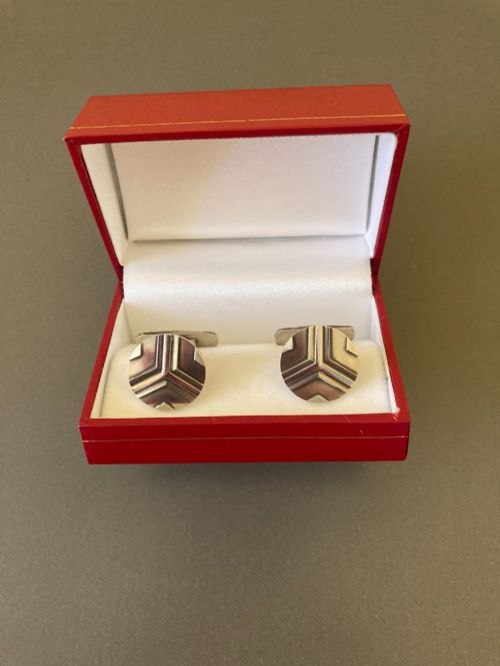
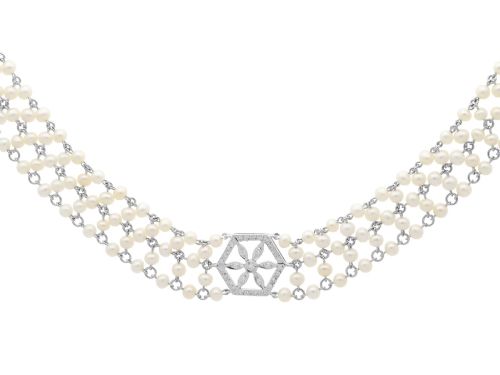
Geometric jewellery encompasses rings, bracelets, necklaces, earrings, brooches, pendants, and cufflinks built around clear shapes like squares, rectangles, triangles, and octagons. These pieces span periods from Edwardian times through the 1920s, 1930s, 1940s, 1950s, and 1960s, reflecting shifts from early symmetrical layouts to Scandinavian modern and mid-century forms.
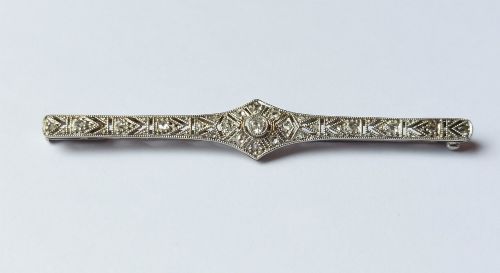
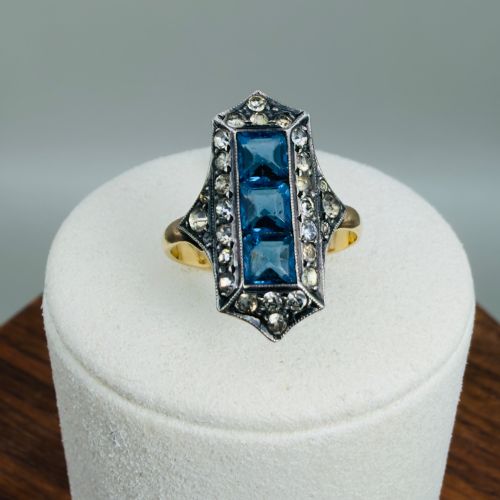
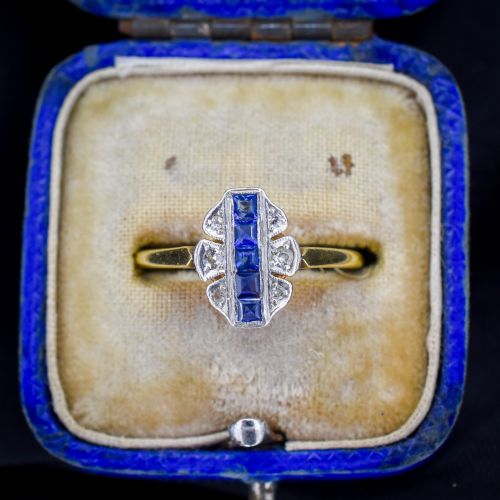
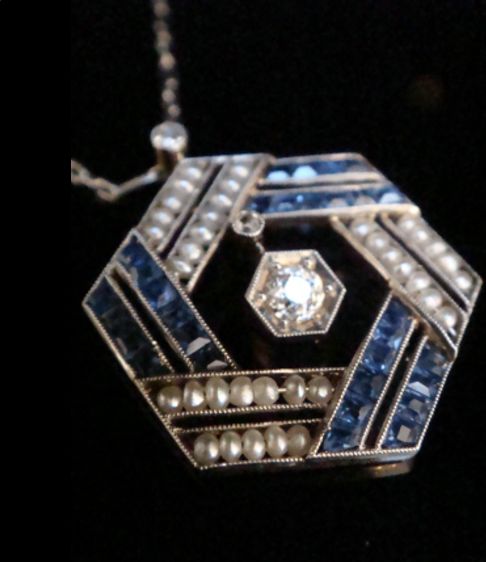
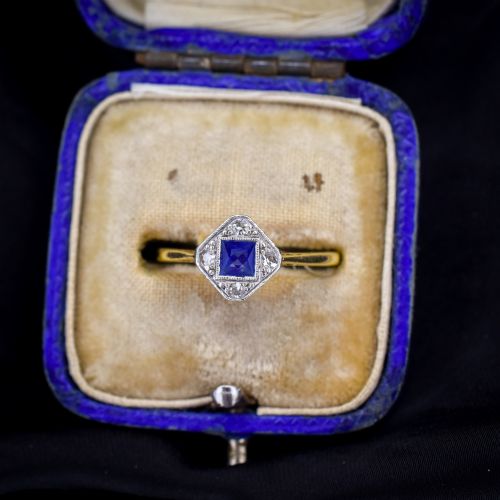
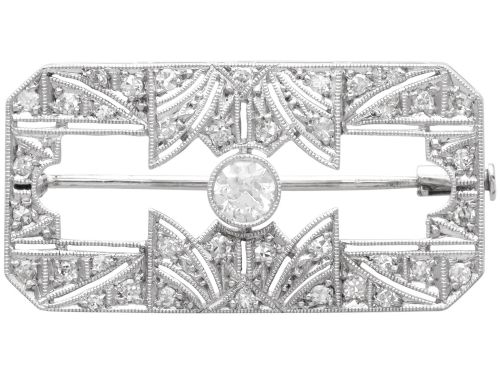
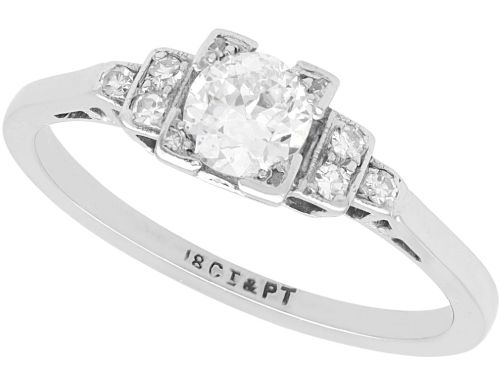
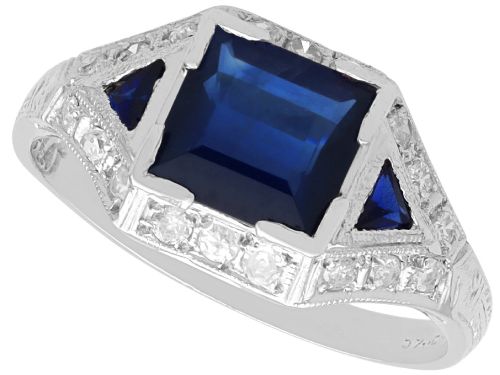
The version you are most likely to meet on this page is the Art Deco cluster ring or platinum brooch, typically pairing diamonds with sapphires, emeralds, or black enamel. These items rely on repetitive linear motifs and sharp angles that break away from nineteenth-century curves.
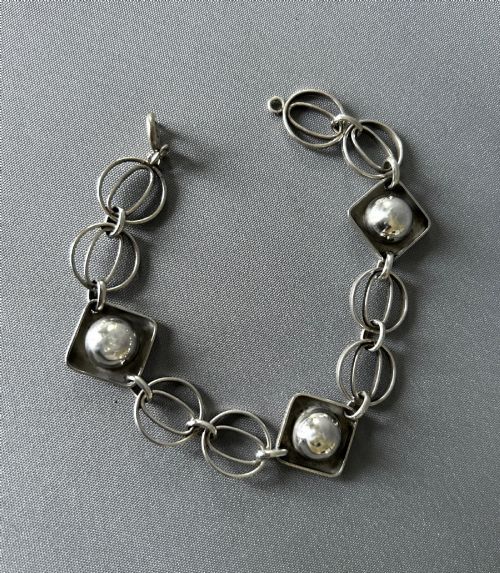
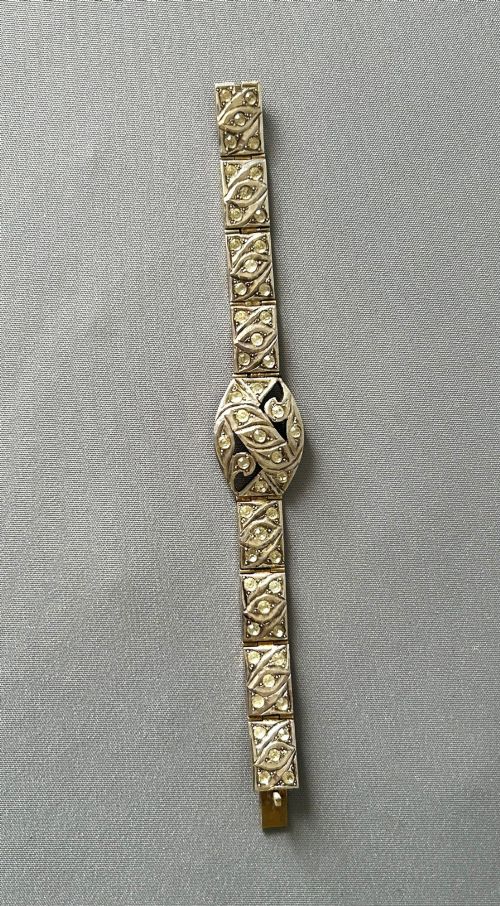
Makers and designers from diverse origins, including Danish silversmiths and Italian workshops, adopted these angular principles for everyday dress items as well as formal wear. The resulting inventory ranges from silver link bracelets to platinum line bracelets set with calibrated stones.
Materials and Technique
Goldsmiths and platinum smiths utilised durable white metals like platinum, 18ct white gold, and silver to construct rigid settings that held tightly packed geometric stone arrangements. Platinum allowed artisans to form knife-edge bars and fine millegrain borders without adding heavy bulk to the metalwork.
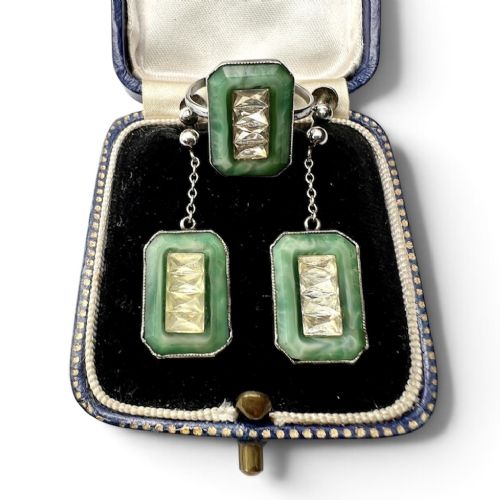
Gemstones were cut into specific geometric facets - such as trapezoids, navettes, marquise, and baguettes - to fit flush within strict rectangular or octagonal outlines. Enamel work and onyx inlays were frequently introduced alongside diamonds and sapphires to create stark colour contrast and sharp block patterns.
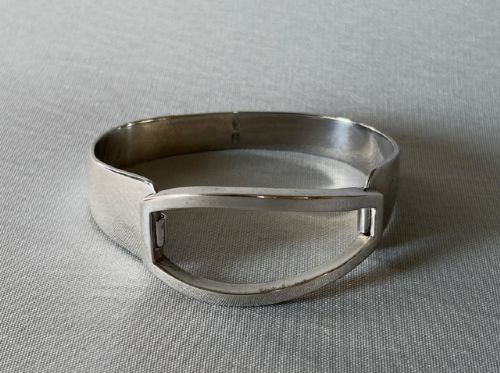
Silver and gold components were constructed using piercing, channel setting, and bezel techniques that emphasised clean structural lines. Danish pieces often favoured smooth cast silver surfaces with minimal stone use, highlighting form through metalwork alone.
Geometric Jewellery Retail Price Guide 2026
Typical asking prices for geometric jewellery among the pieces listed under this phrase on Sellingantiques today, from the lower quarter to the upper quarter. They describe what is for sale here now, not the wider market.
Listings span periods from Edwardian and 1910 through the 1920s, 1930s, 1940s, 1950s, and 1960s, uniting platinum, gold, and silver forms.
Assessing Quality
The standard of execution in these pieces rests on the precision of the stone calibration and the tightness of the metal joints. High-grade examples display stones cut specifically to fit the geometric channels, whereas lesser pieces use standard round stones crammed into square or triangular bezels.
Metalwork refinement dictates overall grade, visible in the crispness of pierced platinum galleries and the uniformity of hand-cut enamel or onyx inlays. Superior workshops maintained exact symmetry across complex multi-tiered brooch frames and cluster rings.
Georg Jensen
The Geometric Jewellery Glossary
- Navette
- A boat-shaped gemstone cut or ring mounting featuring pointed ends and curved sides. This shape creates an elongated geometric silhouette on the finger.
- Cluster
- An arrangement of multiple gemstones grouped tightly around a central stone. In these pieces, the outer cluster forms a distinct square, star, or octagonal outline.
- Millegrain
- A decorative technique consisting of a row of tiny raised metal beads along the edge of a setting. It softens the strict boundary of geometric metalwork.
- Calibrated
- Gemstones cut to precise, uniform dimensions to fit a specific geometric channel or pattern. This uniformity is a hallmark of disciplined period manufacturing.
- Marquise
- An oval gemstone cut with pointed ends, resembling a small hull. It introduces curved geometric tension into linear platinum settings.
Geometric Jewellery: Frequently Asked Questions
What defines geometric jewellery?
Geometric jewellery relies on straight lines, sharp angles, and repeating mathematical patterns rather than organic floral curves. These designs draw inspiration from architectural movements and modernist art.
Items in this category typically feature square, rectangular, triangular, or octagonal stone arrangements set in platinum, white gold, or silver.
How do I wear these pieces?
These items suit daily wear when chosen in durable metals like platinum or sturdy white gold. Line bracelets, geometric rings, and simple silver necklaces pair easily with modern wardrobes.
More elaborate brooches and multi-stone cluster pieces function well as statement fasteners for lapels or evening wear.
How do I spot an Art Deco piece?
Art Deco examples display strict symmetry, high-contrast colour combinations like diamond and onyx, and step-cut stones. Look for platinum settings with calibrated sapphires and sharp corner work.
Makers from this period favoured geometric motifs over the flowing floral lines of earlier Edwardian designs.
Are these items made of platinum?
Many pieces from the 1920s and 1930s utilise platinum because its strength allowed artisans to create fine, rigid geometric structures. White gold and silver also appear frequently across different decades.
Jewellers selected these white metals to complement the icy sparkle of diamonds and the deep tones of sapphires and emeralds.