


Geometric Gold Ring
A geometric gold ring brings together linear symmetry and precious metal from periods spanning the Edwardian era to the mid-century.
Geometric Gold Ring
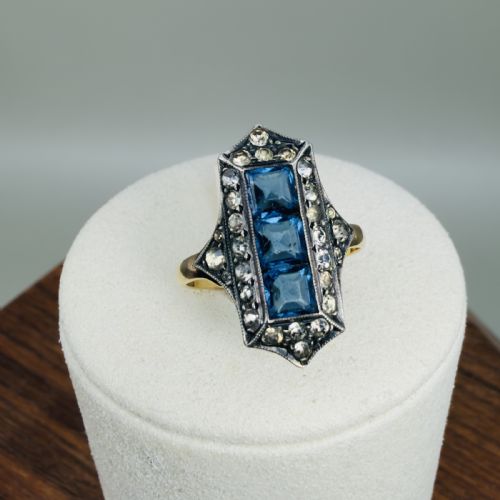
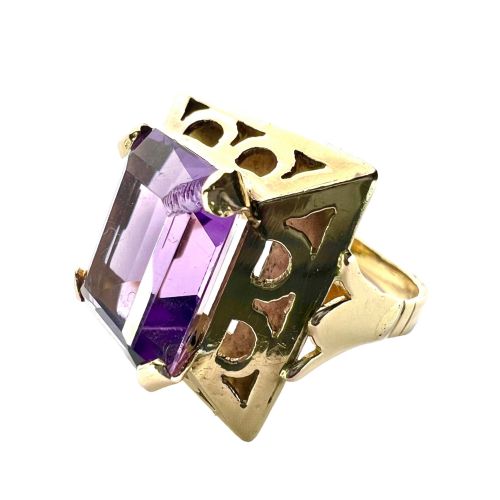
A geometric gold ring draws on linear motifs, rectangles, squares, and starburst arrangements seen across Edwardian, Art Deco, and mid-century designs. Most examples encountered here date from the 1920s and 1930s, featuring structured frameworks set with diamonds and coloured gems.
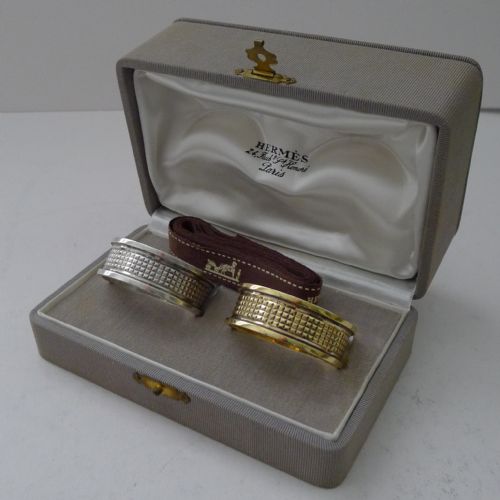
Makers utilised yellow gold, white gold, and platinum alongside contrasting stones like sapphire, ruby, and emerald. While rings dominate the selection, occasional variants such as napkin rings appear from mid-century makers.
The aesthetic relies on proportion and repeating angles, moving away from organic curves towards architectural clarity. Pieces range from delicate solitaire and trilogy bands to substantial cluster and plaque formations.
How they were made
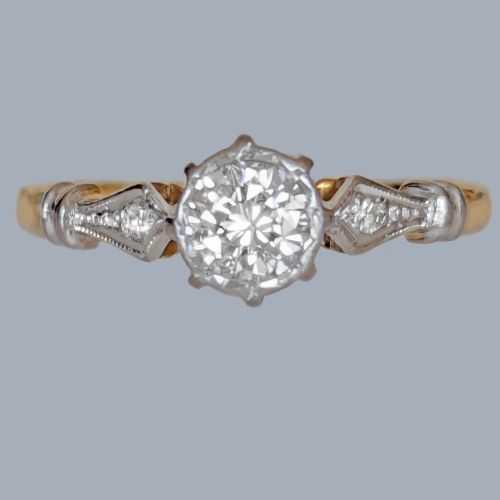
Goldsmiths combined 18ct gold, 9ct gold, and platinum, frequently mounting white metals over yellow gold bands to enhance the brilliance of old cut diamonds. Calibre cut sapphires and emeralds were meticulously shaped to fit tight channel settings within angular motifs.
Techniques relied on hand fabrication, incorporating platinum claw settings, millegrain edges, and starburst engravings that defined the geometric surfaces.
Silver napkin rings from Paris sit alongside fine diamond dress rings, proving geometry applies to dining tables too.
What varies in quality
Quality rests in the precision of the stone setting and the crispness of the geometric lines. Superior examples maintain structural integrity without thinning in the band, ensuring the platinum or gold architecture remains sharp under magnification.
The calibre of gemstones influences value, particularly when matching natural sapphires, rubies, or old cut diamonds to strict linear channels.
Hermes Paris·Toni Cavelti
The Geometric Gold Ring Glossary
- Calibre cut
- Gemstones specifically shaped and faceted to fit flush within a tight geometric channel or border.
- Old cut diamond
- A diamond cut with a smaller table, higher crown, and open culet, typical of pieces predating modern brilliant faceting.
- Millegrain
- A decorative technique featuring a line of tiny raised metal beads along the edge of a setting.
- Plaque ring
- A ring featuring a flat, wide top surface covered in stones, often taking a geometric or saucer shape.
- Target ring
- A circular cluster design featuring concentric rings of contrasting gemstones around a central diamond.
Geometric Gold Ring: Frequently Asked Questions
How do I identify an Art Deco geometric ring?
Look for symmetrical patterns, straight lines, and contrasting materials like platinum and yellow gold.
Settings often incorporate calibre cut stones and stepped shoulders rather than flowing floral motifs.
Were these rings worn as engagement rings?
Many examples function as engagement rings, particularly solitaire, trilogy, and diamond cluster designs.
Makers also produced them as dress rings and half eternity bands.
What metals are typically found in these pieces?
Jewellers utilised 18ct gold, 9ct gold, and platinum, frequently pairing them together.
White gold and platinum were favored for the top settings to brighten diamond clusters.
How should I care for an antique gold ring?
Store the piece separately to prevent scratching softer stones and delicate platinum settings.
Clean gently with warm soapy water and a soft brush, avoiding harsh chemical dips.