
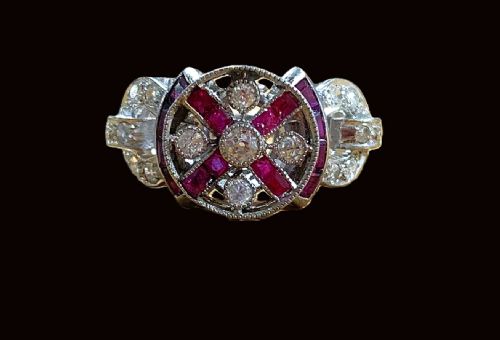


Geometric Diamond Target Ring
A geometric diamond target ring focuses the eye on concentric tiers of stones, offering the sharp symmetry typical of the Art Deco period.
Geometric Diamond Target Ring
A geometric diamond target ring centres on a central stone enclosed by concentric borders of contrasting gems, creating the visual impression of a bullseye. When you search for a geometric diamond target ring, you encounter dress rings and cocktail rings primarily attributed to the 1920s and 1930s, alongside Edwardian and mid-century examples.
The dominant aesthetic is strictly Art Deco, favouring linear precision, concentric circles, and squared plaque outlines. Most specimens combine diamonds with sapphires, rubies, or emeralds, set into platinum or white gold frames.
Materials and construction methods
Craftsmen of the period utilised platinum and 18ct white gold to provide a crisp, monochromatic backdrop that enhanced the brilliance of old cut and rose cut diamonds. Coloured gemstones such as calibre cut sapphires and rubies were shaped specifically to follow the strict geometric contours of the concentric tiers.
Techniques relied heavily on millgraining and fine pierced openwork galleries to lighten heavy metal foundations. Stones sat low to the finger in plaque or cluster settings, securing pavé and channel work without obstructing the concentric layout.
Materials recorded across the selection include platinum, 18ct white gold, 18ct yellow gold, 18ct rose gold, and onyx.
Distinctions in craftsmanship and design
Quality separates along the precision of the concentric borders and the matching of the calibré cut coloured stones. Superior rings maintain exact symmetry in their geometric tiers, where every sapphire or ruby aligns uniformly without visible gaps in the metalwork.
The choice of metal foundation and stone weight also dictates the tier of the piece. Platinum mountings paired with substantial diamond carat weights and clean emerald or ruby accents represent the peak of period execution.
The Geometric Diamond Target Ring Glossary
- Target ring
- A ring featuring concentric circular or geometric tiers of gemstones radiating outwards from a central stone. This layout defines the classic bullseye visual.
- Calibre cut
- Small gemstones precision cut to fit tightly together in geometric channels or borders. This technique creates continuous lines of colour in Art Deco jewellery.
- Platinum
- A dense, durable white metal favoured during the 1920s and 1930s for delicate settings that held stones securely. It allowed jewellers to create fine wirework without risk of breakage.
- Old cut diamond
- A diamond shaped by hand before modern brilliant cutting standards were established in 1919. These stones possess smaller tables and higher culets, giving a distinct candlelit sparkle.
- Plaque ring
- A flat, wide ring top, often circular, square, or hexagonal, covered in pavé set diamonds and gemstones. It sits flush against the hand.
Geometric Diamond Target Ring: Frequently Asked Questions
What is a geometric diamond target ring?
A geometric diamond target ring is a piece of jewellery featuring concentric circles or squares of gemstones surrounding a central diamond. The design mimics a target or bullseye, heavily influenced by Art Deco aesthetics.
Most surviving examples date from the 1920s and 1930s, combining platinum or white gold with contrasting coloured stones like sapphires and rubies.
How do I wear an antique target ring?
These rings function primarily as dress or cocktail rings meant to be worn as standalone statement pieces on the hand. Their low profile plaque settings make them surprisingly practical for daily wear.
Care should be taken to protect the delicate calibre cut stones in the outer rings from hard impacts against metal surfaces.
Are these rings genuinely from the Art Deco period?
The listings consist largely of authentic pieces originating from the 1920s and 1930s, constructed with period techniques like hand-cut gemstones and platinum mountings. Occasional mid-century revival pieces also appear in the selection.
Examining the metal hallmarks and stone cuts helps verify the exact manufacturing era of each individual ring.
What gemstones accompany the diamonds?
Sapphires, rubies, and emeralds appear most frequently as the contrasting coloured borders in these target rings. These stones are often calibre cut to match the strict geometric layout of the mounting.
Pearls and onyx also feature occasionally as alternative border materials in Edwardian and Art Deco designs.