




Geometric Clock
A geometric clock brings distinct linear discipline and period architecture into a room.
Geometric Clock
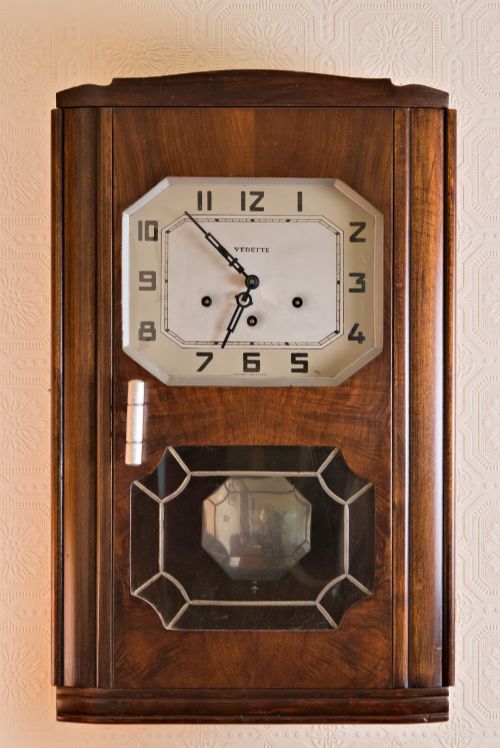
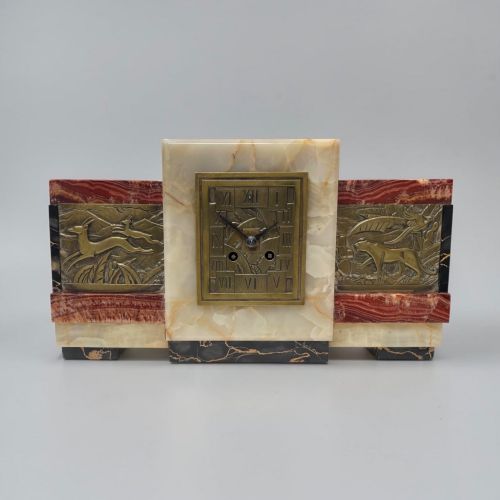
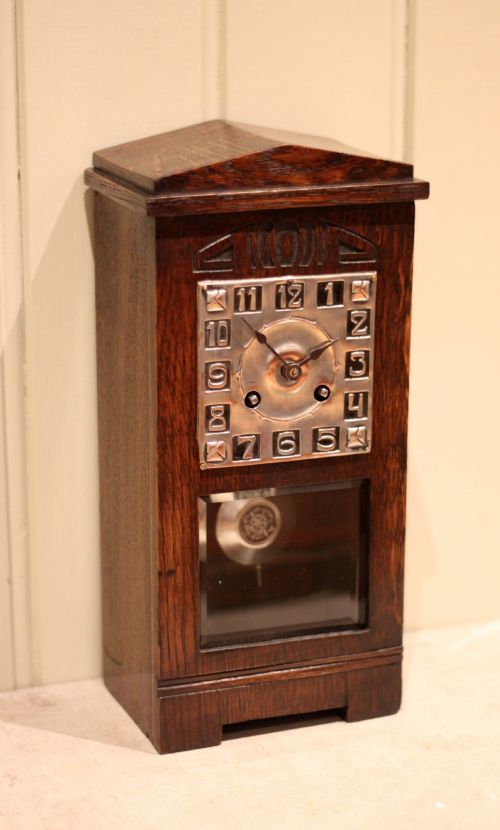
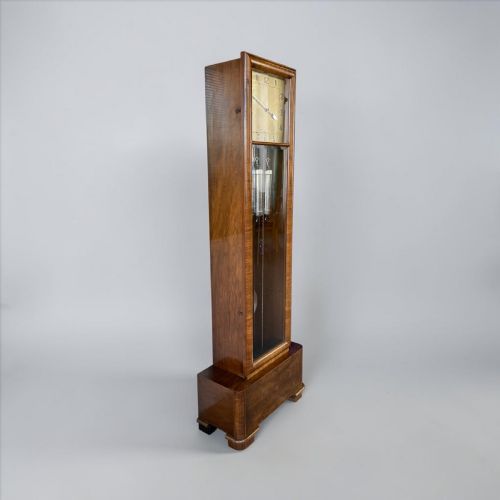
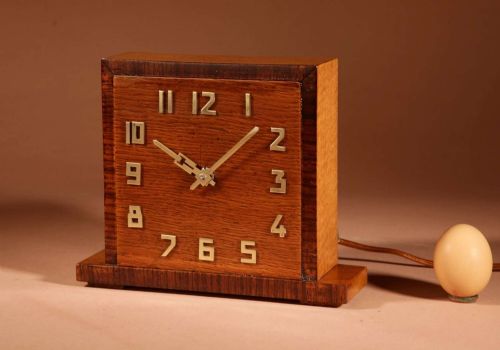
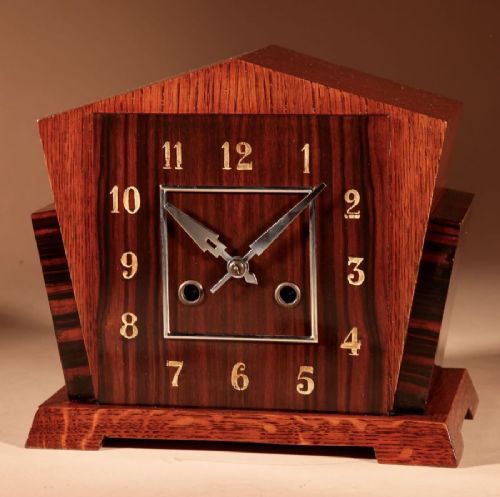
A geometric clock is an architectural timepiece defined by sharp angles, clean silhouettes, and structured shapes. These timepieces emerge strongly from the Art Deco and Amsterdam School eras, alongside earlier Arts and Crafts and Jacobean Revival interpretations in oak.
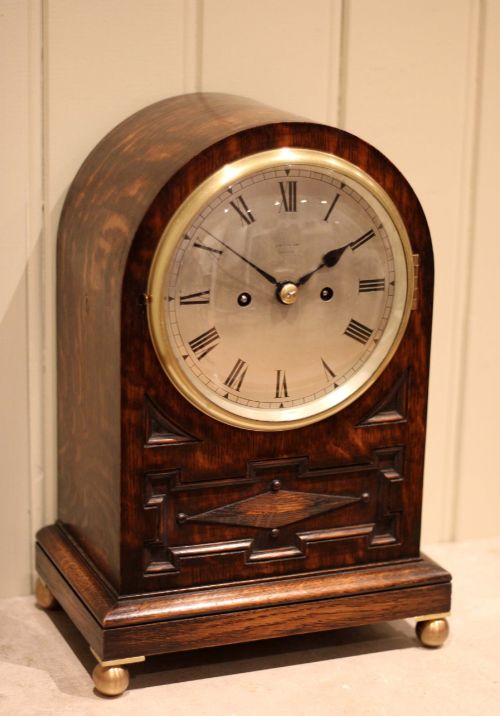
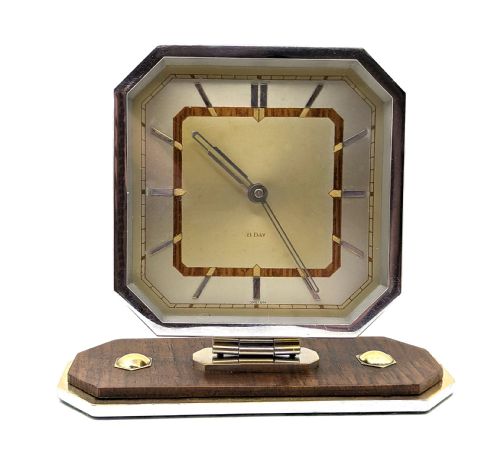
Mantel clocks and wall clocks dominate the selection, often taking form in symmetric wooden cases, stepped marble frames, or streamlined chrome housings. Desk clocks and grander floor-standing longcase variants also appear, anchoring rooms with linear presence.
The aesthetic bridges functional timekeeping with bold decorative art, ranging from compact desk pieces with visible mechanical movements to large chiming wall regulators. Oak, walnut, marble, and chrome frequently establish the characteristic profile of the period.
Materials and construction
Cases combine traditional cabinet woods such as oak and walnut with exotic veneers like macassar ebony and rosewood. Metal elements utilise chrome, brass, and copper, paired frequently with glass, mirror panels, and heavy marble.
Mechanically, these pieces rely on eight-day movements, spring-driven mechanisms, fusee brackets, and early electrical systems like Bulle patents. Dial construction incorporates clear Arabic numerals, geometric chapter rings, and contrasting metal hands.
Geometric Clock Retail Price Guide 2026
Typical asking prices for geometric clock among the pieces listed under this phrase on Sellingantiques today, from the lower quarter to the upper quarter. They describe what is for sale here now, not the wider market.
Listings feature periods spanning from the 19th century through the 1940s, with a strong concentration in the 1920s and 1930s.
Differences in quality
Quality rests upon the precision of the cabinetwork and the integrity of the original mechanical movement. Pieces assembled by established makers display superior dial detailing, balanced material contrasts, and refined proportions.
The refinement of the geometric casework separates standard production from exceptional examples. Superior clocks integrate mixed woods, heavy cast metals, and specialised chimes with careful structural balance.
Mappin And Webb·Smiths Clockmakers·Vedette·Junghans·Blangy Clockmakers·Asprey
The Geometric Clock Glossary
- Fusee
- A conical pulley used in older clock movements to maintain equal tension on the gear train as the mainspring unwinds. This mechanism improves timekeeping accuracy across the power reserve.
- Clock garniture
- A matching set consisting of a central clock flanked by decorative ornaments or vases. These decorative groups sit together on a mantelpiece.
- Mantel clock
- A portable clock designed to stand on a fireplace mantel or shelf. These self-contained pieces rely on flat bases for stability.
- Amsterdam School
- An architectural and design style originating in the Netherlands, known for rounded brickwork, expressive shapes, and rich surface textures. In horology, this translates to sculptural wooden cases.
- Grandmother clock
- A slender, scaled-down version of a longcase or grandfather clock. These domestic timepieces fit lower ceiling heights while retaining traditional pendulum mechanisms.
Geometric Clock: Frequently Asked Questions
How do I wind an eight day clock?
An eight day clock requires winding approximately once a week using a matching key inserted into the dial holes. Turn the key gently until resistance signals the mainspring is fully tensioned.
Avoid overwinding the mechanism, as forcing the spring past its limit can cause internal damage. Consistent weekly winding helps maintain steady timekeeping accuracy.
Where should I place a heavy marble mantel clock?
A heavy marble clock requires a sturdy, level surface such as a solid wood sideboard or a secure mantel shelf. The substantial weight demands stable support to prevent accidental tipping.
Ensure the location stays clear of direct sunlight and dampness to preserve the stone finish and internal metal components. Level placement also keeps the pendulum swinging evenly.
How do I tell an Art Deco clock from an earlier piece?
Art Deco clocks rely on symmetrical stepped forms, geometric motifs, and contrasting materials like chrome, bakelite, and exotic wood veneers. These elements project streamlined modernity.
Earlier pieces from the Arts and Crafts or Jacobean traditions feature hand-carved solid oak, visible joinery, and traditional rustic detailing. The silhouette shifts from heavy revival woodwork to sleek industrial geometry.
Can electric and battery conversions affect value?
Some period clocks undergo conversion to modern battery or electric movements to simplify daily use and maintenance. This practical update alters the original mechanical integrity.
Original mechanical movements remain preferred by traditional horologists, while converted pieces offer reliable timekeeping with minimal upkeep for daily interiors.