

Geometric Art Deco Ring
A geometric art deco ring brings together crisp lines and bright stones, offering a sharp alternative to traditional curving jewellery.
Geometric Art Deco Ring
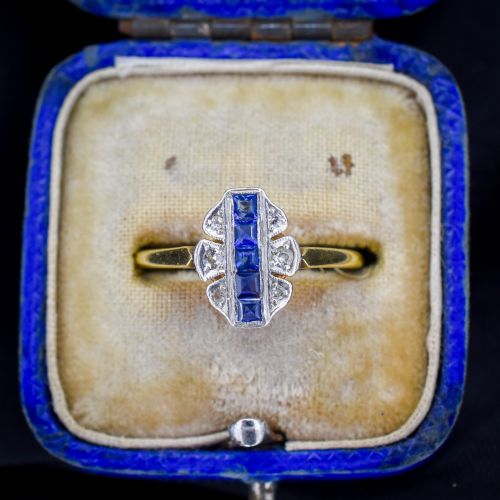
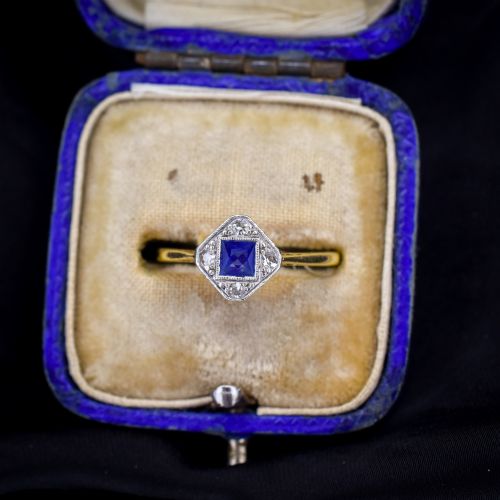
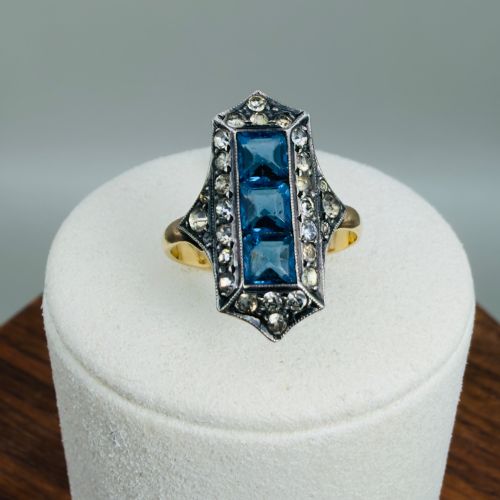
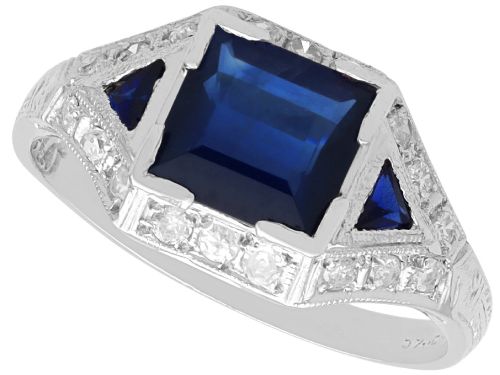
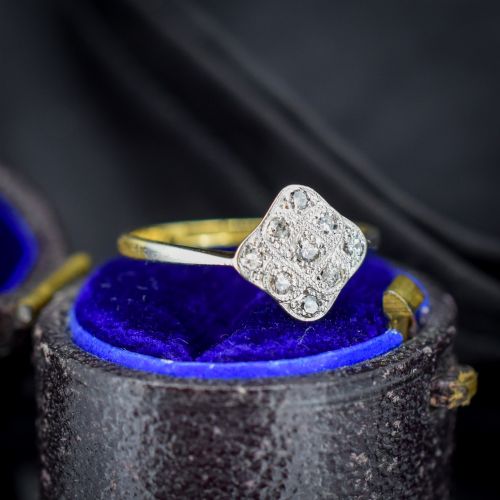
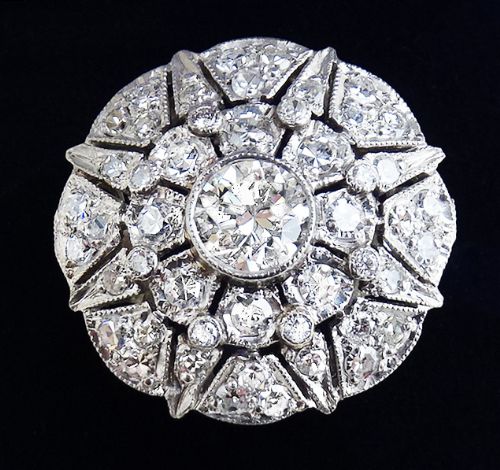
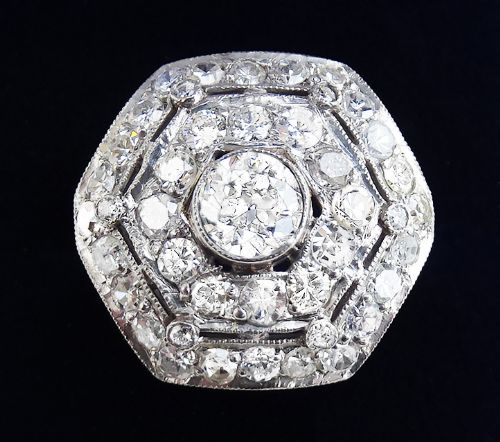
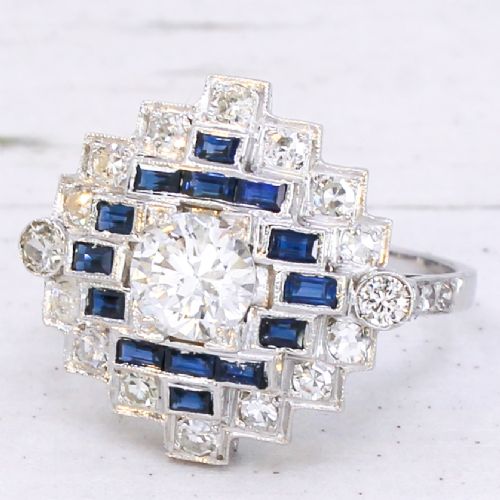
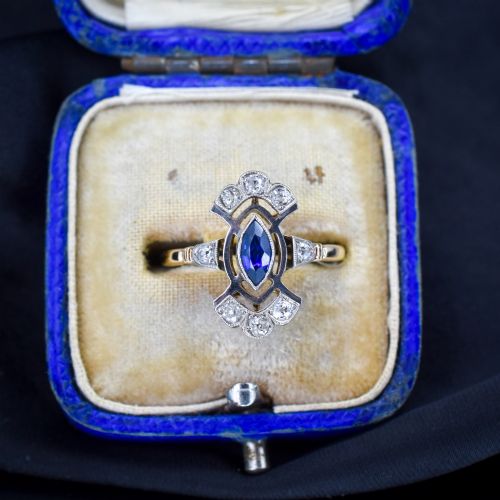
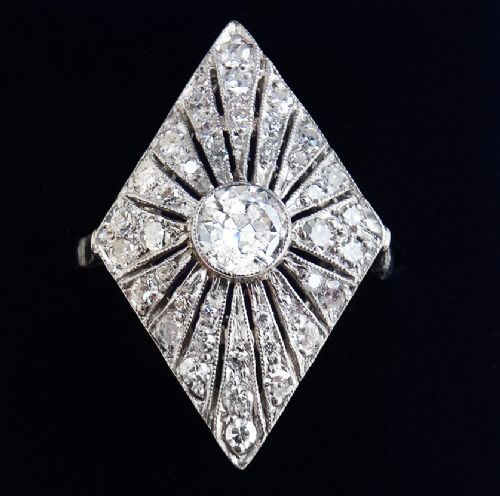
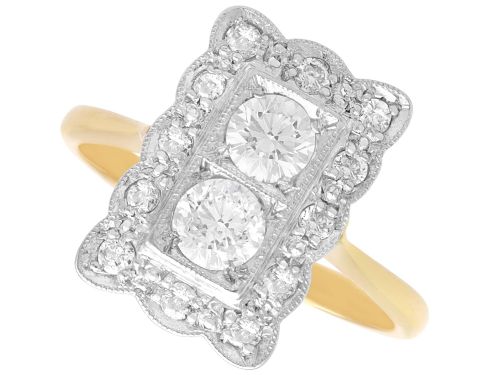
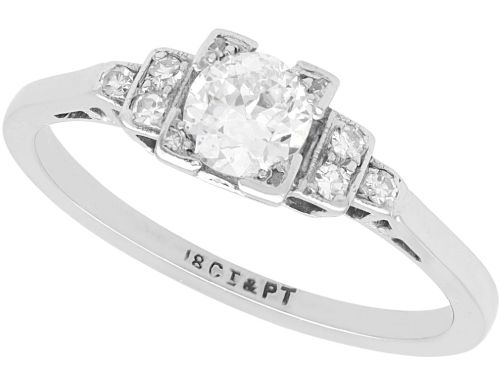
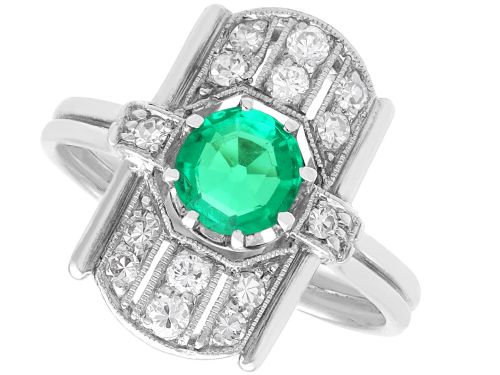
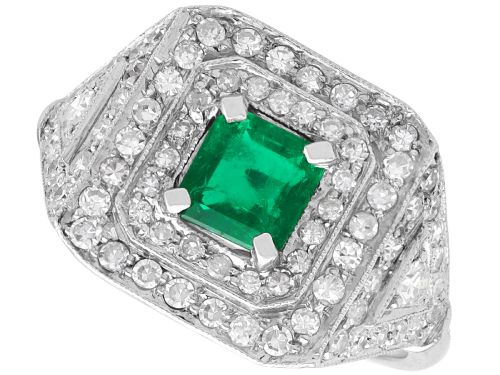
When searching for a geometric art deco ring, buyers encounter pieces defined by straight lines, chevrons, step cuts and angular stone arrangements. The selection spans dress rings, engagement rings and cluster rings originating primarily from the 1920s and 1930s. Platinum settings dominate the surviving examples, frequently paired with 18ct gold or white gold bands.
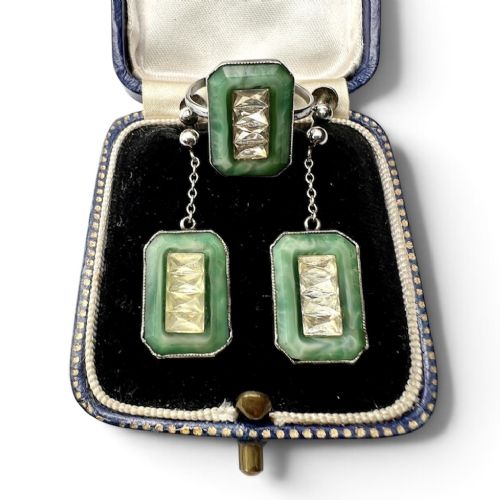
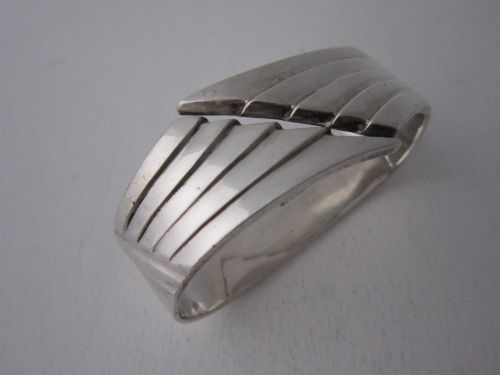
Beyond finger rings, the broader category occasionally yields silver napkin rings, jewellery sets, mirrors and table clocks sharing the same architectural vocabulary. Most finger rings feature central diamonds flanked by calibré-cut sapphires, emeralds or rubies arranged in symmetrical patterns. These configurations reflect the modernist rejection of Victorian ornamentation in favour of industrial precision.
How they were made
Platinum emerged as the preferred metal for securing stones during this period, allowing workshops to construct needle-thin claws and knife-edge bars without sacrificing strength. Goldsmiths combined platinum tops with 18ct yellow gold, white gold or palladium lower bands, balancing bright white metal against warmer tones. Stones were frequently old cut, transitional cut or step cut to fit rigidly geometric channels.
Master jewellers employed calibré cutting to shape coloured gemstones like sapphires, emeralds and rubies into exact triangles, trapezoids and rectangles. These small stones were then slotted tightly together with minimal metal showing between them to create unbroken blocks of colour. Enamel accents and black onyx inlay were added to heighten the graphic contrast against the central diamonds.
Geometric Art Deco Ring Retail Price Guide 2026
Typical asking prices for geometric art deco ring among the pieces listed under this phrase on Sellingantiques today, from the lower quarter to the upper quarter. They describe what is for sale here now, not the wider market.
Listings feature items dated across the 1920s, 1930s, 1940s, 1950s and 1960s, alongside Edwardian examples.
What varies in quality
Quality rests upon the precision of the stone layout and the crispness of the metalwork. Superior examples display perfectly matched calibré cuts where every gemstone edge meets its neighbour without gaps or uneven overhang. Master jewellers ensured that channel walls and millegrain borders remained uniform under magnification.
The choice of metal combination also dictates tier, with heavier platinum mountings on 18ct gold representing the higher echelon compared to simpler 9ct gold alloy settings. Furthermore, the presence of unheated natural gemstones or larger old-cut centre diamonds elevates a piece above standard commercial production.
H Samuel·R. E. Stone
The Geometric Art Deco Ring Glossary
- Calibré cut
- Small gemstones specifically cut and faceted to fit a precise geometric channel in a mounting. This technique creates continuous bands of colour in art deco jewellery.
- Old cut
- A diamond facet style popular before modern brilliant cutting standards were established in the mid-twentieth century. These stones feature smaller tables and higher crowns that produce a softer candlelit sparkle.
- Millegrain
- A decorative border of tiny raised metal beads running along the edges of platinum or gold settings. It softens the severe lines of geometric designs with subtle texture.
- Tank ring
- A bold, chunky ring style developed during the 1940s featuring heavy volumetric gold shaping inspired by military machinery. They often incorporate channel-set rubies or diamonds.
- Trilogy ring
- A ring set with three principal gemstones representing the past, present and future. In art deco variants, these stones are typically step-cut or flanked by geometric shoulders.
Geometric Art Deco Ring: Frequently Asked Questions
How do I wear a geometric art deco ring?
These rings work well worn alone on the hand so the angular lines and stone arrangements remain the main focus. Their low profile makes them suitable for daily wear alongside simpler wedding bands.
Because platinum and gold settings can catch on delicate fabrics, check the claws periodically if worn every day.
What is the difference between platinum and white gold in these rings?
Platinum is a naturally white, dense metal that does not lose its colour or require plating over time. White gold is an alloy mixed with other metals to achieve a pale tone and was often plated with rhodium.
Platinum allows for finer, stronger settings which jewellers favoured for intricate geometric designs.
How can I tell a 1920s ring from a later revival piece?
Original pieces show genuine wear commensurate with age, specific hand-cut gemstone shapes like old or transitional cuts, and period hallmarks. Construction methods often combine platinum tops with 18ct gold bands typical of the interwar years.
Revival pieces from the mid-century onward use different casting techniques and standardised modern cut stones.
What stones were used in art deco geometric jewellery?
Diamonds form the primary white stone choice, ranging from small accent melee to large central solitaires. Coloured gemstones such as sapphires, emeralds and rubies provide vivid contrast, frequently shaped into strict geometric cuts.
Opaque materials like black onyx and coloured enamel were also integrated to enhance the graphic, architectural aesthetic.